12 Open Layout Living Room Dining Room Ideas That Stop Your Space From Looking Empty
Introduction:
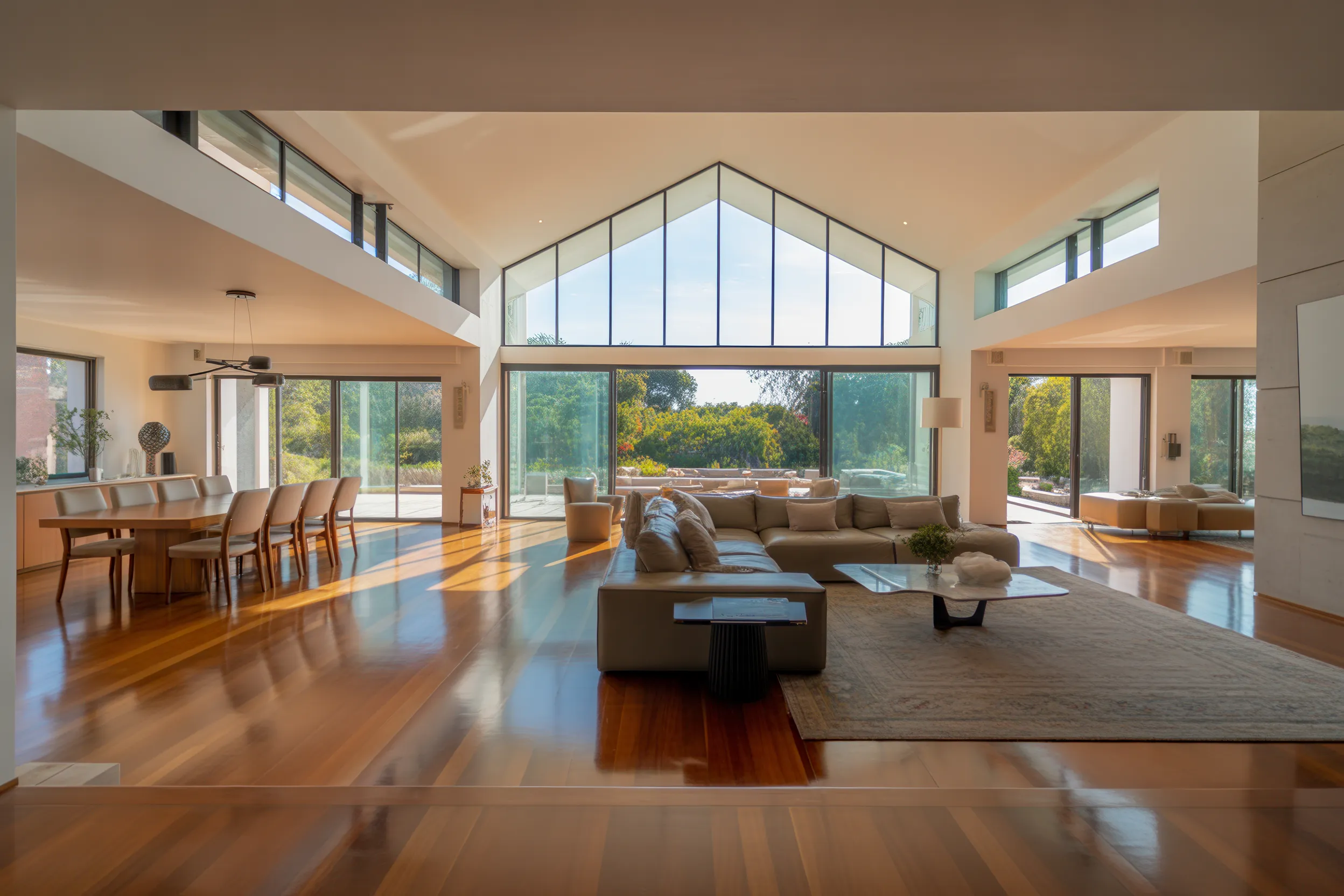
Open-plan living and dining rooms are among the most desirable architectural features in modern homes. Yet interior designers consistently report that nearly 68% of homeowners who opt for open layouts later struggle with the same problem: the space feels cavernous, cold, and undefined. Without walls to create natural boundaries, furniture floats aimlessly, conversations lack intimacy, and the room loses its sense of purpose.
According to a 2026 Houzz survey, open-plan living spaces are featured in 56% of newly renovated homes across the United States — making this one of the most common design challenges of our era. The average open-plan living-dining room spans between 400 and 700 square feet, yet most homeowners furnish it as if it were two separate 200 sq ft rooms, leaving dead zones that amplify that dreaded empty feeling.
This comprehensive guide presents 12 proven ideas — backed by design data, spatial psychology, and practical know-how — that will transform your open layout from an echoing void into a warm, layered, and visually rich environment.
| Stat | Figure | Source |
| % of new renovations featuring open plans | 56% | Houzz 2026 |
| Homeowners who feel their open space looks empty | 68% | Architectural Digest Survey |
| Average open-plan LR+DR combined area | 400–700 sq ft | NAHB 2026 |
| Increase in home value with well-designed open plan | Up to 7.4% | Zillow Research |
| Most cited open-plan design mistake | Lack of zone definition | Interior Design Magazine |
#1: Use Area Rugs to Anchor Each Zone
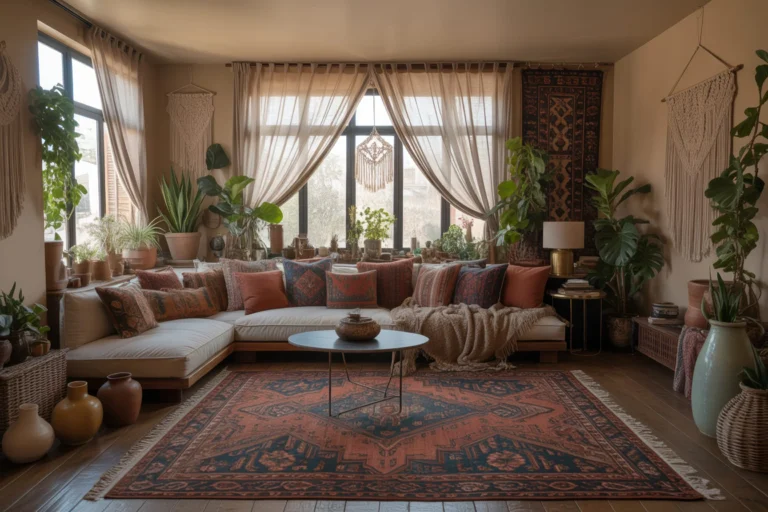
Interior designers unanimously agree: a well-placed area rug is the fastest, most affordable way to carve up an open-plan space. Rugs visually ‘floor’ a seating or dining arrangement, making each zone feel intentional and complete. Without a rug, sofas and dining tables appear to float, reinforcing that empty, unfinished look.
🛋️ Your sofa does the heavy lifting in an open layout — see 10 sectional ideas that define zones beautifully, anchor the space, and instantly upgrade how your whole living room looks and flows:
➤ 10 Sectional Sofa Living Room Ideas That Instantly Upgrade Your SpaceKey Design Rules for Rugs in Open Layouts
Living Room Rug Sizing: The standard rule is that all four legs of your sofa and chairs should sit on the rug, or at minimum the front two legs. For a typical open-plan living area, a 9×12 ft or 10×14 ft rug is ideal. A rug that is too small — such as a 5×8 ft — will make the furniture look like it is floating on a postage stamp.
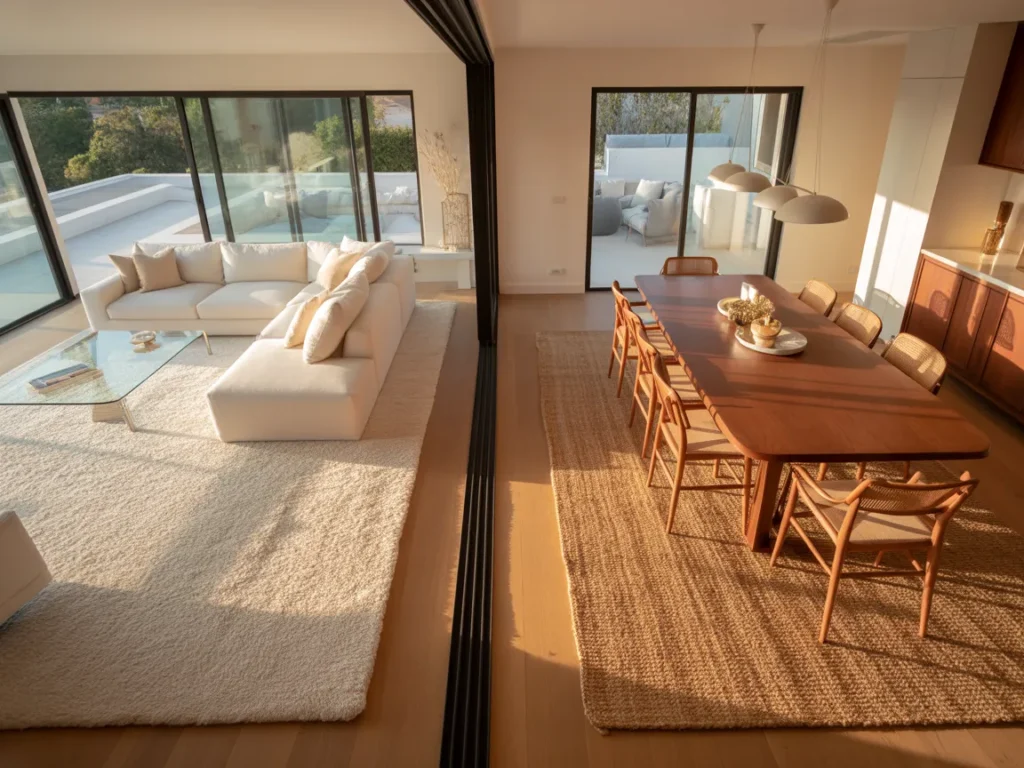
Dining Room Rug Sizing: The rug should extend at least 24 inches beyond each side of the dining table so chairs remain on the rug when pulled out. For a 6-person dining table (typically 36×72 inches), a minimum 8×10 ft rug is recommended.
| Space Zone | Recommended Rug Size | Room Size Fit | Style Tip |
| Living Area (sofa + 2 chairs) | 9×12 ft or 10×14 ft | 400–600 sq ft room | Low pile for easy traffic flow |
| Dining Area (6-seater table) | 8×10 ft minimum | Any open layout | Flat weave for easy cleaning |
| Dining Area (8–10 seater) | 9×12 ft or larger | Larger open plans | Jute or sisal for texture |
| Transitional/bridge zone | 2×8 ft runner | Between zones | Coordinates both rugs |
#2: Define Zones with a Statement Sofa Back
In rooms without walls, furniture itself must create boundaries. One of the most elegant and practical solutions is to position a sofa with its back facing the dining zone. This creates a soft, permeable ‘wall’ that separates living from dining without closing off light or airflow.
Studies in environmental psychology show that humans feel more comfortable in spaces that offer a sense of enclosure — a concept called ‘prospect and refuge.’ A sofa placed as a zone divider creates a sense of refuge for the living area while keeping the visual connection intact.
Sofa Placement Strategies
The Float Method: Pull the sofa away from the wall by at least 12–18 inches and orient it so its back faces the dining table. Style the sofa back with a console table (32–36 inches high) behind it, which also adds a functional surface for lamps, books, and decor.
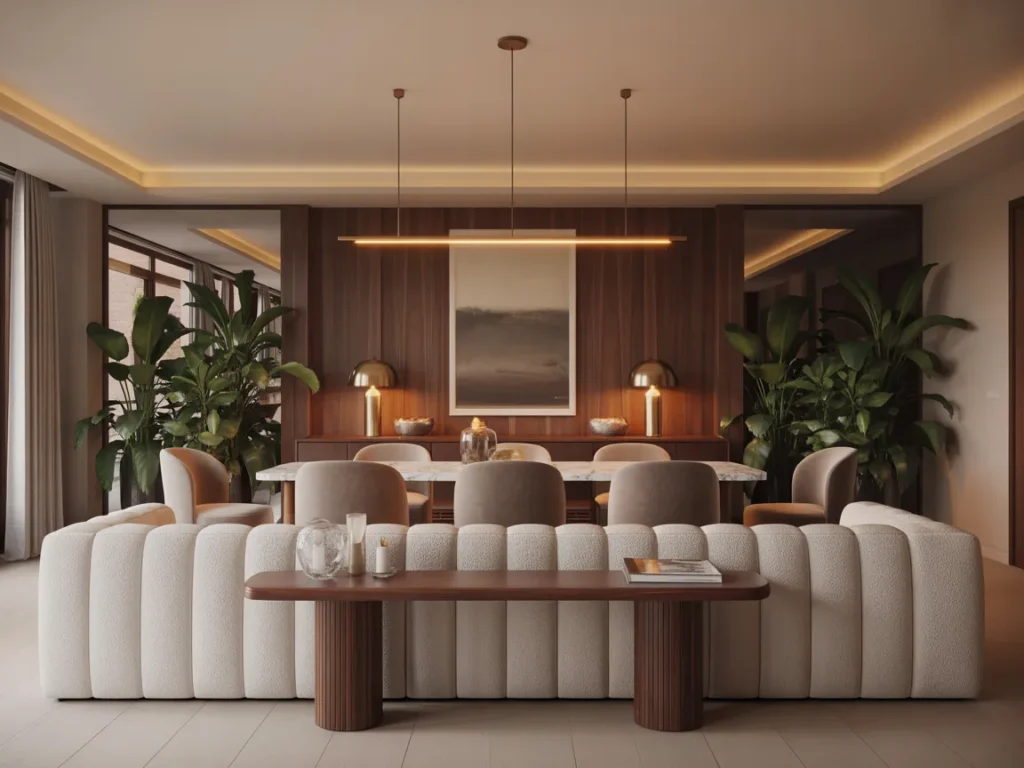
The L-Shape Anchor: Use an L-shaped sectional to create a natural enclosure around a coffee table, with the longer arm pointing toward the dining zone, softly suggesting a boundary.
| Sofa Type | Zone Separation Power | Best For | Avg. Price Range |
| Straight 3-seater sofa | Medium | Smaller open layouts | $600–$2,500 |
| L-shaped sectional | High | Large open plans | $1,200–$6,000 |
| Curved/arc sofa | High (visual) | Contemporary homes | $1,800–$8,000 |
| Loveseat pair | Low-Medium | Studio apartments | $400–$2,000 |
#3: Layer Your Lighting for Each Zone
Lighting is one of the most underestimated tools in interior design. In open layouts, a single overhead light fixture is a guaranteed recipe for a flat, institutional-looking space. The WELL Building Standard and leading lighting designers recommend a three-layer approach: ambient, task, and accent lighting — each serving a distinct purpose.
🕯️ Space defined — now make it feel irresistibly warm. These 18 designer-recommended cozy living room ideas add the layers of texture, light, and softness that turn a great layout into a space you never want to leave:
➤ 18 Cozy Living Room Design Ideas – Designer RecommendedThe Three Layers Explained
Layer 1 — Ambient (General): Ceiling fixtures, recessed lights, or a large pendant that provides overall illumination. Recommended: 10–20 lumens per square foot for living areas, 20–30 for dining.
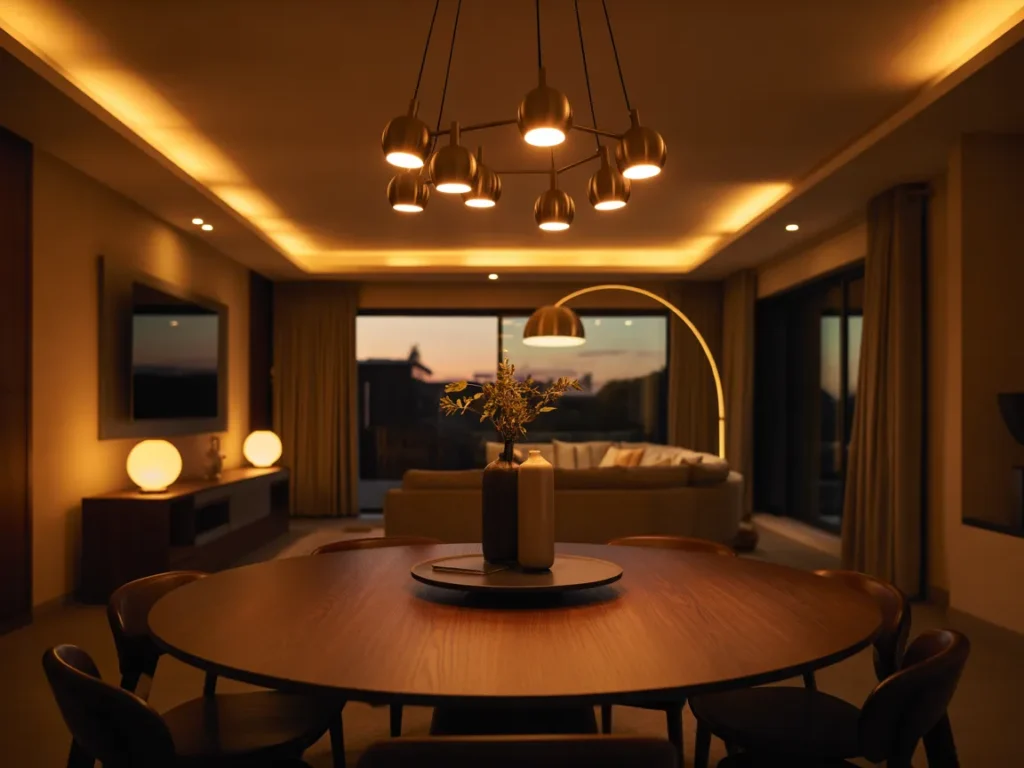
Layer 2 — Task: Focused lighting for functional activities. Over the dining table, a pendant hung 30–36 inches above the surface is standard. For reading areas, floor lamps or sconces at 42 inches height work best.
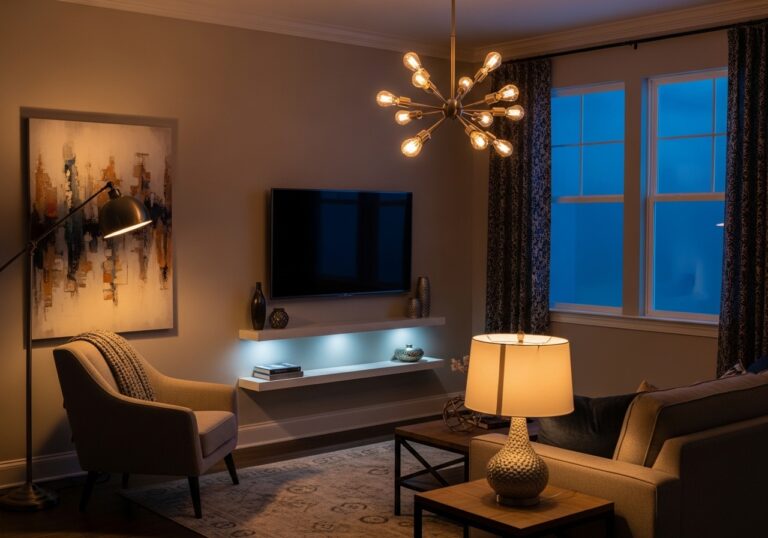
Layer 3 — Accent: Decorative lighting that adds warmth and visual depth — table lamps, wall sconces, LED strip lights under shelving, and candles. Accent lighting makes an open space feel layered and inhabited rather than empty.
| Lighting Type | Placement | Wattage/Lumens | Zone |
| Large pendant (dining) | 30–36″ above table | 800–1200 lumens | Dining |
| Recessed ceiling lights | Every 4 ft on ceiling | 600 lumens each | Both zones |
| Floor lamp (arched) | Corner behind sofa | 800 lumens | Living |
| Table lamp (console) | Sofa back console | 450 lumens | Transition |
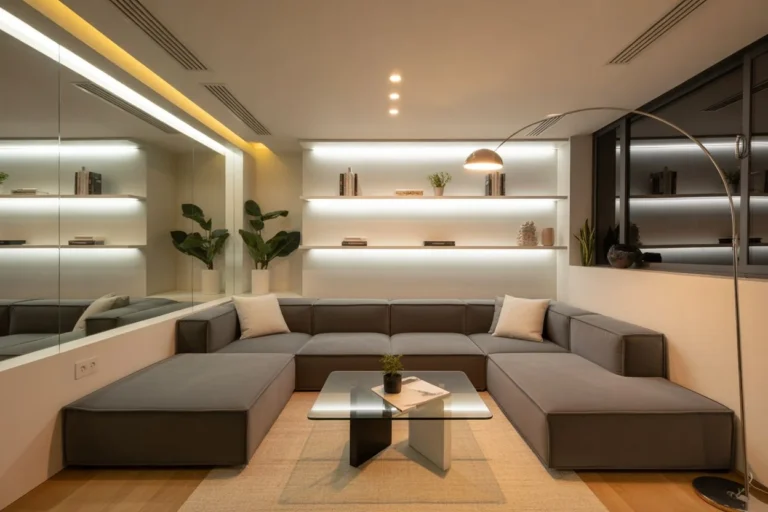
| LED shelf lighting | Bookcase/media unit | Warm 2700K | Living/Accent |
| Pendant cluster | Above kitchen island | 1200+ lumens | Kitchen-adjacent |
#4: Introduce a Bookcase or Open Shelving Unit as a Divider
A floor-to-ceiling or half-height open bookcase is one of the most architecturally satisfying ways to define zones in an open-plan space. Unlike a solid wall, open shelving preserves light and sightlines while creating a clear psychological and visual boundary. Interior design experts at Elle Decor note that styled bookshelves increase a room’s perceived warmth and ‘lived-in’ quality dramatically.
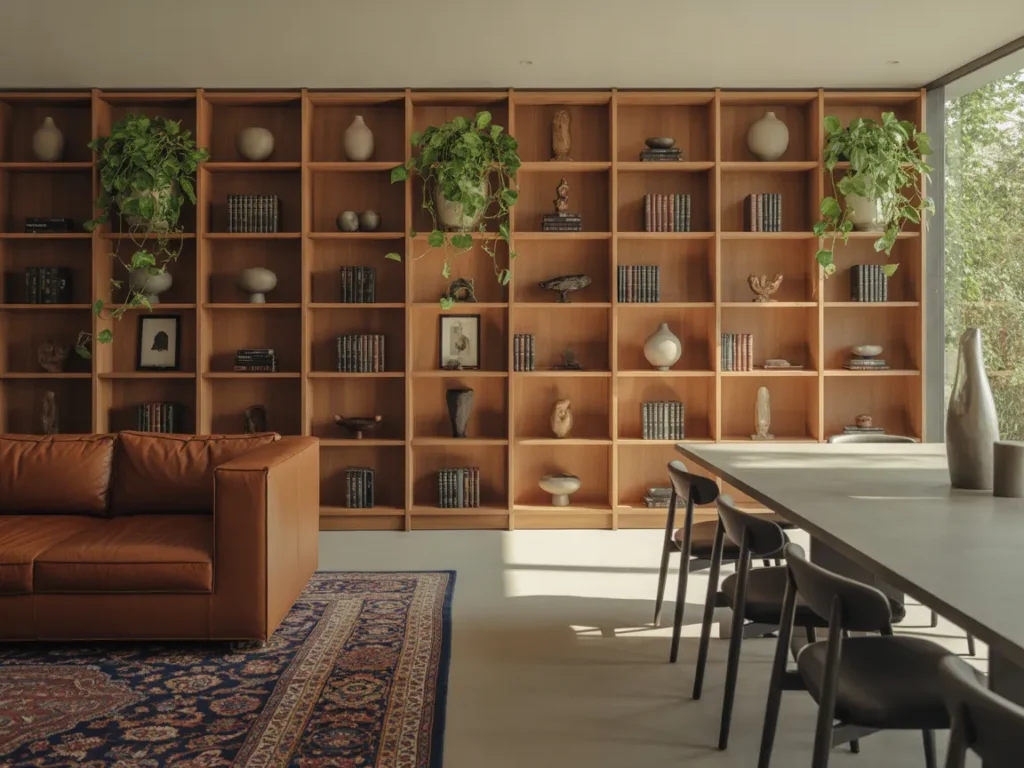
According to a National Association of Realtors report, homes with built-in or stylized shelving units sell for 3–5% more than comparable homes without them, reflecting how strongly buyers associate this feature with quality and thoughtfulness.
Bookcase Divider Design Tips
Height matters: A full 8-foot bookcase reads as architectural and permanent. A 5-foot unit creates a visual separation while keeping the room feeling open above.
Style it 60/40: Fill 60% of shelves with books and meaningful objects, leaving 40% open for breathing room. Avoid cluttered shelves — they negate the spacious feeling you are trying to achieve.
#5: Apply Distinct Paint Colors or an Accent Wall per Zone
Color is one of the fastest and most budget-friendly ways to define separate areas in an open layout. Painting the dining zone’s feature wall a different shade from the living zone creates an immediate visual cue that tells the brain: these are two distinct spaces that happen to share one room.
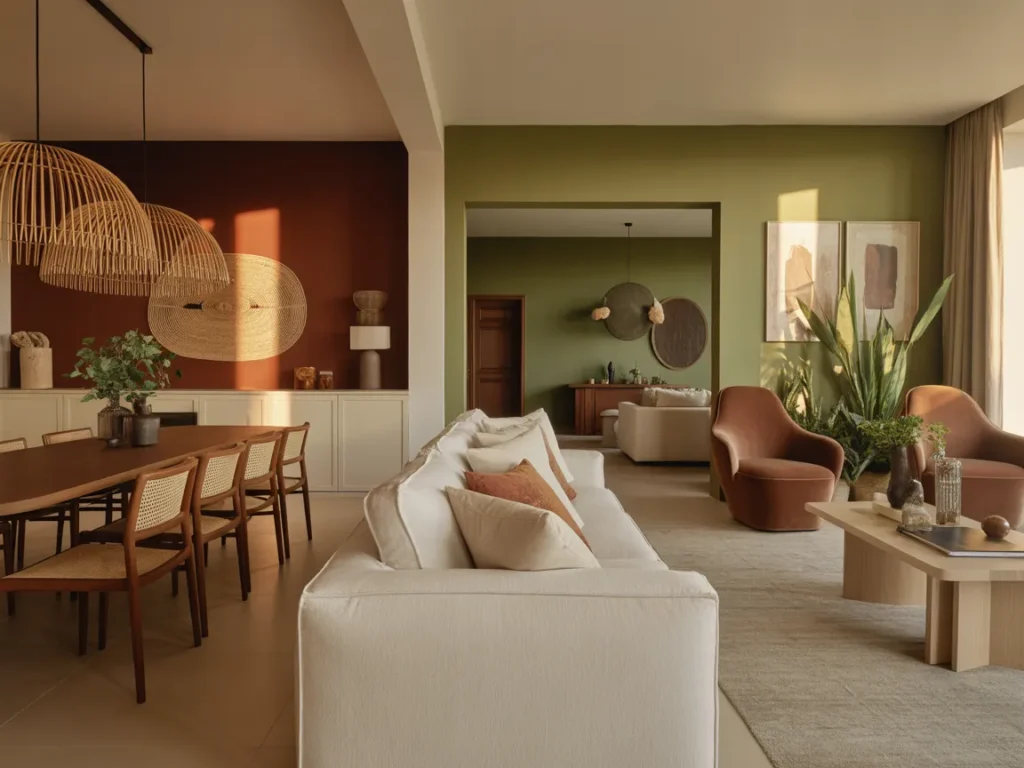
Research from the University of British Columbia found that warm colors (terracotta, mustard, warm brick red) stimulate social interaction and appetite — making them ideal for dining zones. Cool, calming tones (sage green, dusty blue, warm grey) promote relaxation — perfect for living areas.
| Zone | Recommended Color Family | Effect | Popular 2025–26 Shades |
| Dining Zone | Warm terracotta, deep ochre, burgundy | Stimulates appetite & conversation | Sherwin-Williams ‘Cavern Clay’, BM ‘Spice’ |
| Living Zone | Sage green, warm taupe, dusty blue | Promotes relaxation | Farrow & Ball ‘Mizzle’, BM ‘Hale Navy’ |
| Ceiling (both) | Warm white or matching wall +10% lighter | Raises perceived ceiling height | Benjamin Moore ‘White Dove’ |
| Trim/molding | Bright white or cream | Unifies both zones | SW ‘Extra White’, BM ‘Chantilly Lace’ |
#6: Use a Dining Table as a Visual Centerpiece
In open layouts, the dining table is not just functional furniture — it is a statement piece that anchors the entire dining zone and prevents it from looking underfurnished. Designers consistently report that undersized dining tables are one of the top three reasons open-plan spaces look empty and sparse.
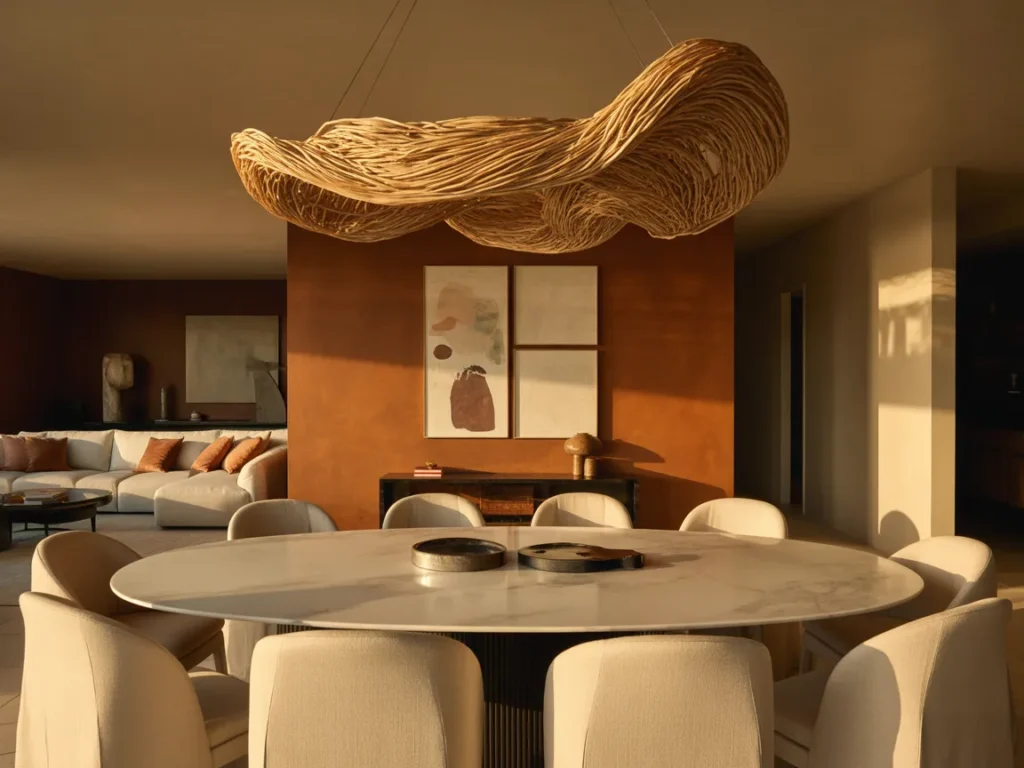
Dining Table Size Guide by Room Footprint
| Dining Zone Footprint | Recommended Table Size | Seats | Best Shape |
| 10×10 ft | 36×60 in (3×5 ft) | 4–6 | Rectangular or oval |
| 10×12 ft | 36×72 in (3×6 ft) | 6 | Rectangular |
| 12×12 ft | 42×84 in (3.5×7 ft) | 6–8 | Rectangular or round (54 in) |
| 12×14 ft | 42×96 in or 54″ round | 8–10 | Oval or large round |
| 14×16 ft+ | 48×108 in or extendable | 10–12 | Rectangular extendable |
Pro tip: A round or oval dining table in a square dining zone creates elegant tension and prevents the boxy, rigid look that rectangular tables can produce in symmetrical spaces. Round tables also improve conversation flow — research from Cornell University’s hospitality school shows that diners at round tables report 22% more satisfying social interactions than at rectangular ones.
#7: Bring in Tall Indoor Plants and Greenery
Biophilic design — the practice of integrating nature into interior spaces — is not merely aesthetic. A landmark study published in the Journal of Environmental Psychology found that indoor plants reduce perceived space emptiness by up to 37%, increase feelings of wellbeing by 47%, and make rooms feel more complete and ‘finished’ even without additional furniture.
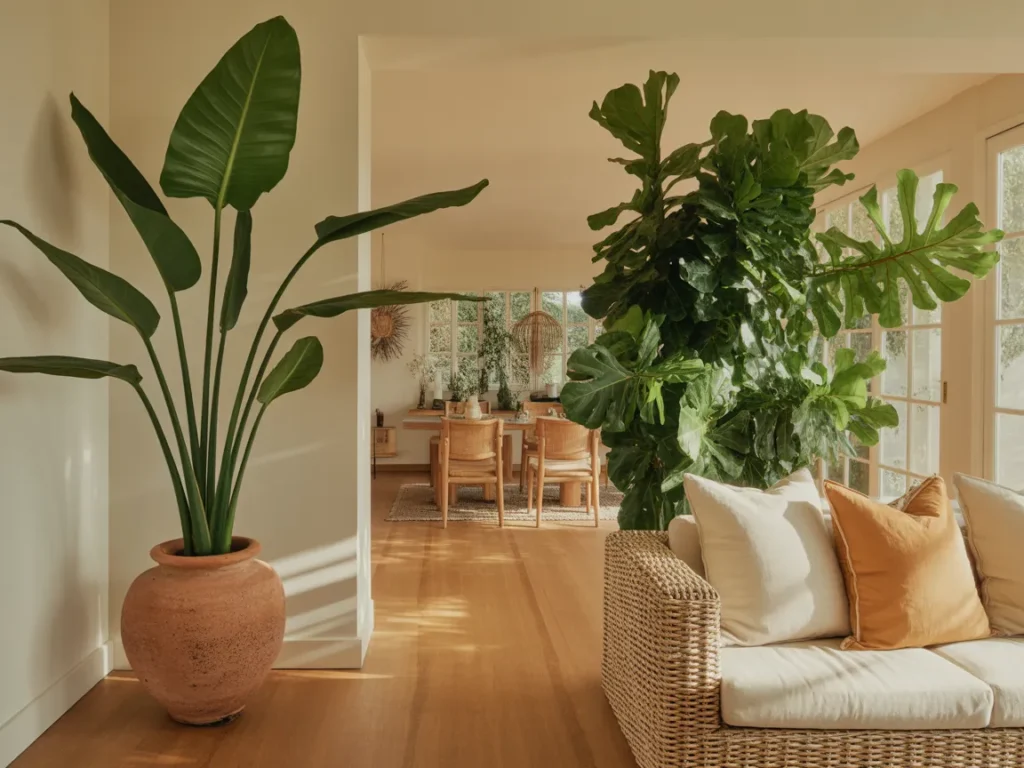
In open-plan spaces specifically, tall statement plants (5–8 ft) serve double duty: they fill vertical dead zones that are common in high-ceilinged spaces, and they create soft, organic visual barriers between living and dining zones.
Best Statement Plants for Open-Plan Spaces
| Plant | Mature Height | Light Need | Best Placement | Maintenance |
| Fiddle Leaf Fig | 6–10 ft | Bright indirect | Corner behind sofa | Medium |
| Bird of Paradise | 5–8 ft | Bright indirect/direct | Zone transition area | Low |
| Monstera Deliciosa | 4–6 ft (indoors) | Medium indirect | Beside shelving | Low |
| Areca Palm | 6–8 ft | Bright indirect | Dining zone corner | Medium |
| Rubber Plant | 4–6 ft | Low to medium | Dark corner of LR | Very Low |
| Snake Plant | 3–5 ft | Any light | Zone divider/accent | Very Low |
#8: Hang Artwork and Gallery Walls Strategically
Bare walls in an open-plan space are one of the most common visual mistakes. Walls are the vertical ‘canvas’ of a room — leaving them empty makes even a well-furnished space look incomplete and devoid of personality. A well-curated gallery wall or a single large-format artwork can transform a blank wall into a visual anchor that makes the entire zone feel complete.
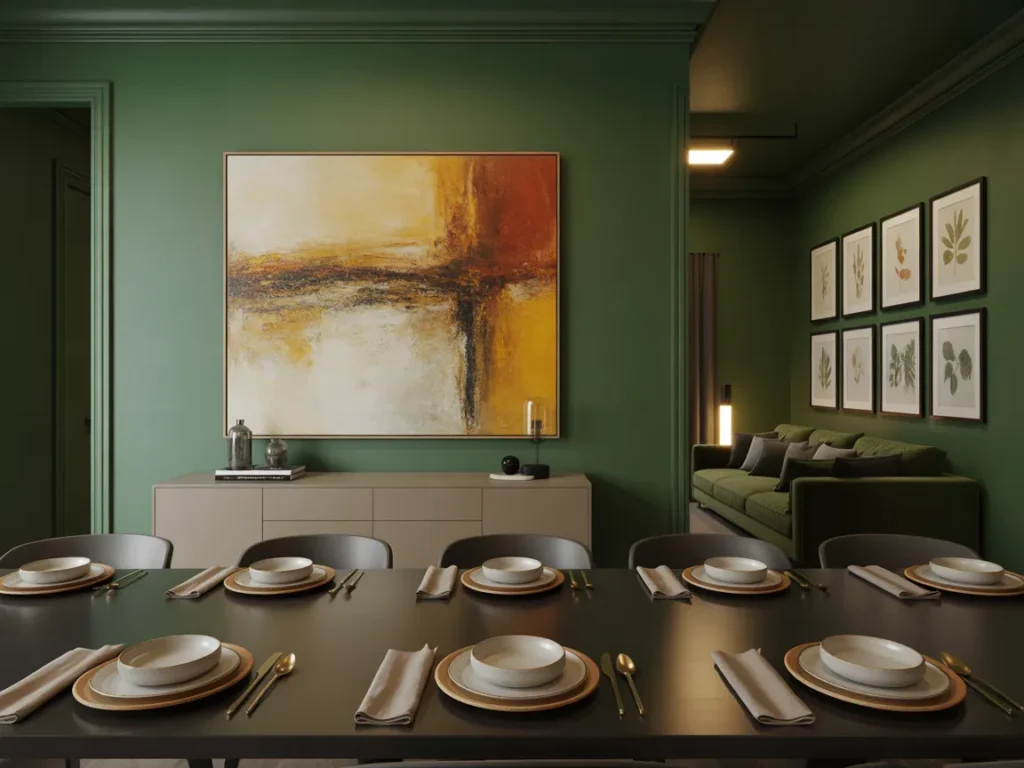
According to ArtMoney’s 2025 consumer survey, 71% of interior designers rate wall art as one of the top three elements that make a room feel finished. The average spend on art for a combined living-dining room renovation is $800–$2,500, yet the visual return is consistently rated as among the highest of any decor investment.
Artwork Sizing Guidelines
Single large piece: Aim for artwork that occupies 60–75% of the wall width above a sofa or console. For a standard 84-inch sofa, a piece 50–60 inches wide is ideal.
Gallery wall: Works best on the dining zone’s feature wall. Mix sizes but maintain a consistent color palette or frame style. The eye needs a ‘lead’ piece — one artwork that is noticeably larger than the others.
#9: Install a Statement Ceiling Feature
Interior designers refer to the ceiling as the ‘fifth wall’ — yet it is the most overlooked surface in residential design. In open-plan spaces with standard 9-foot ceilings, an unadorned ceiling exacerbates the feeling of emptiness by giving the eye no visual stopping point. A statement ceiling treatment draws the gaze upward and adds a layer of architectural richness that makes the space feel complete and considered.
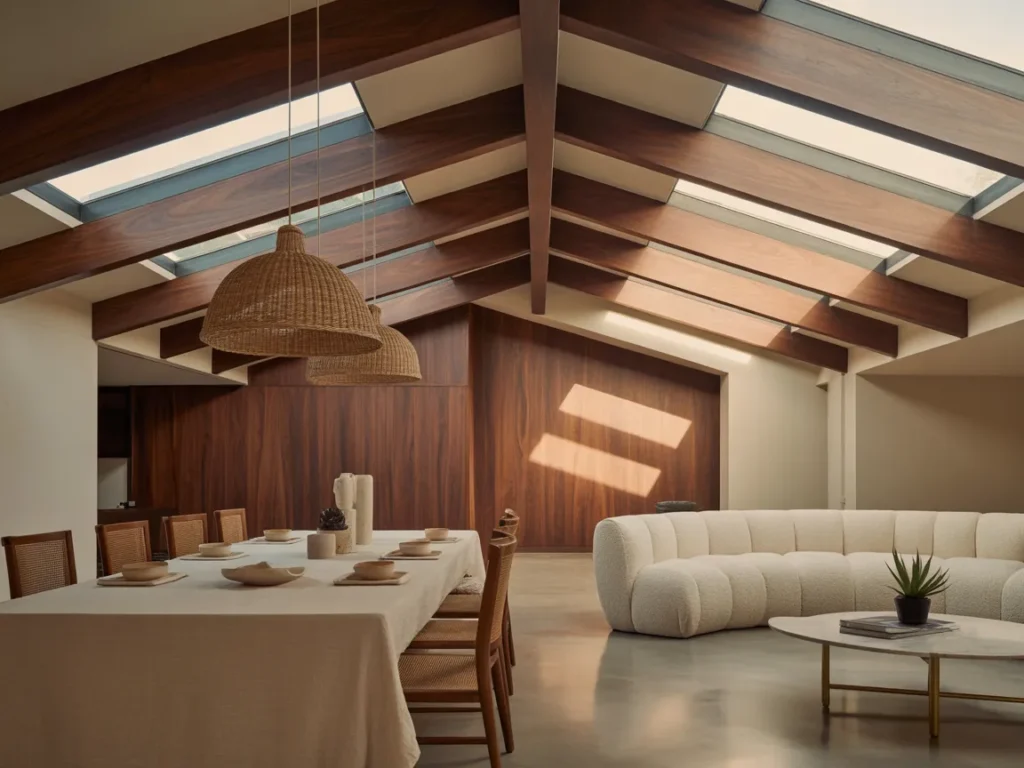
Statement Ceiling Options and Cost Estimates
| Ceiling Treatment | Avg. Cost (DIY) | Avg. Cost (Pro) | Visual Impact | Best For |
| Exposed wooden beams | $300–$800 | $1,500–$4,000 | Very High | Rustic/farmhouse/warm modern |
| Coffered ceiling | $500–$1,500 | $3,000–$8,000 | Very High | Traditional/transitional |
| Shiplap or planked | $200–$600 | $800–$2,000 | High | Coastal/Scandinavian |
| Bold paint color | $50–$150 | $200–$500 | High (low cost!) | All styles |
| Wallpaper (ceiling) | $100–$400 | $400–$1,200 | Medium-High | Eclectic/maximalist |
| Pendant cluster | $200–$2,000+ | N/A (fixture) | High | Modern/transitional |
#10: Incorporate a Console Table and Transitional Styling
One of the root causes of that ’empty’ feeling in open layouts is the dead zone — the undefined space between the back of the sofa and the dining table. Without deliberate intervention, this no-man’s-land becomes a visual gap that makes both zones look isolated and the room look unfinished.
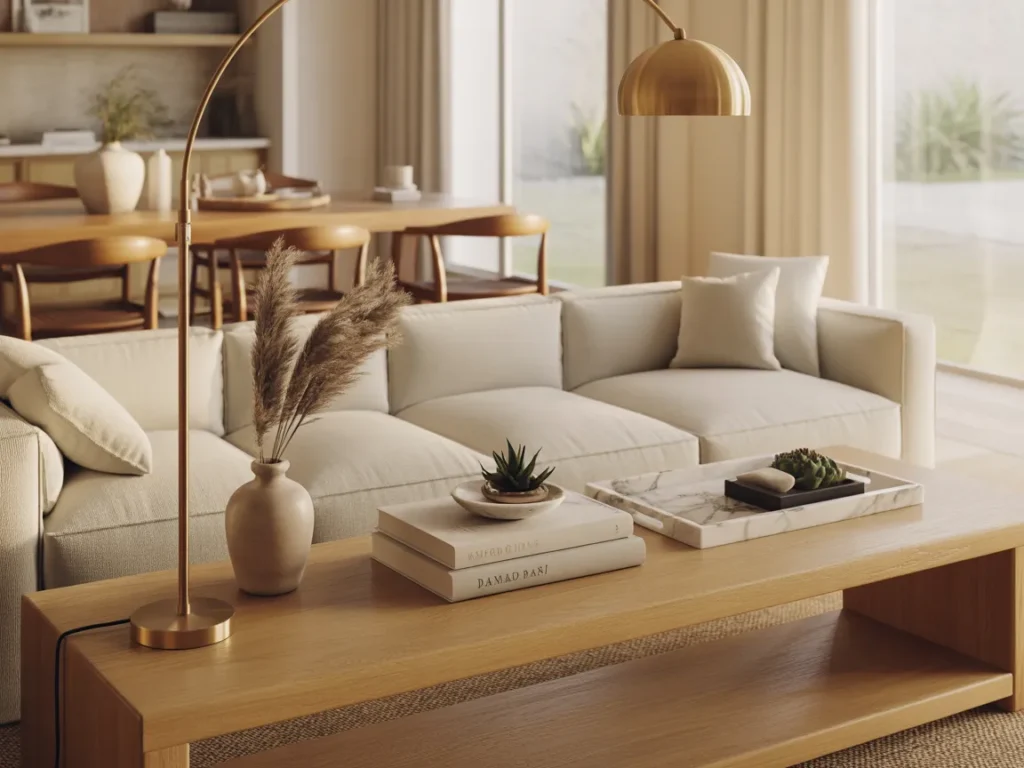
The solution is a console table (also called a sofa table) positioned directly behind the sofa, parallel to its back. A console table typically measures 28–36 inches high, 48–72 inches wide, and just 12–16 inches deep — enough to hold lamps, plants, books, and decorative objects without impeding traffic flow.
Console Table Styling Formula: The Rule of Three
Style your console in groups of three items at varying heights: (1) tall — a lamp or tall vase with branches, (2) medium — a stack of books or a framed photo, (3) low — a small tray with candles or a trailing plant. This creates visual rhythm and prevents the table from looking like an afterthought.
#11: Use Textiles and Soft Furnishings to Add Warmth and Layers
Open-plan spaces, especially those with hard flooring, high ceilings, and large windows, tend toward acoustic emptiness and thermal coldness. Textiles — curtains, throw blankets, cushions, upholstered chairs, and table runners — are the primary antidote. They absorb sound, add visual texture, and signal to the brain that a space is lived-in and warm.
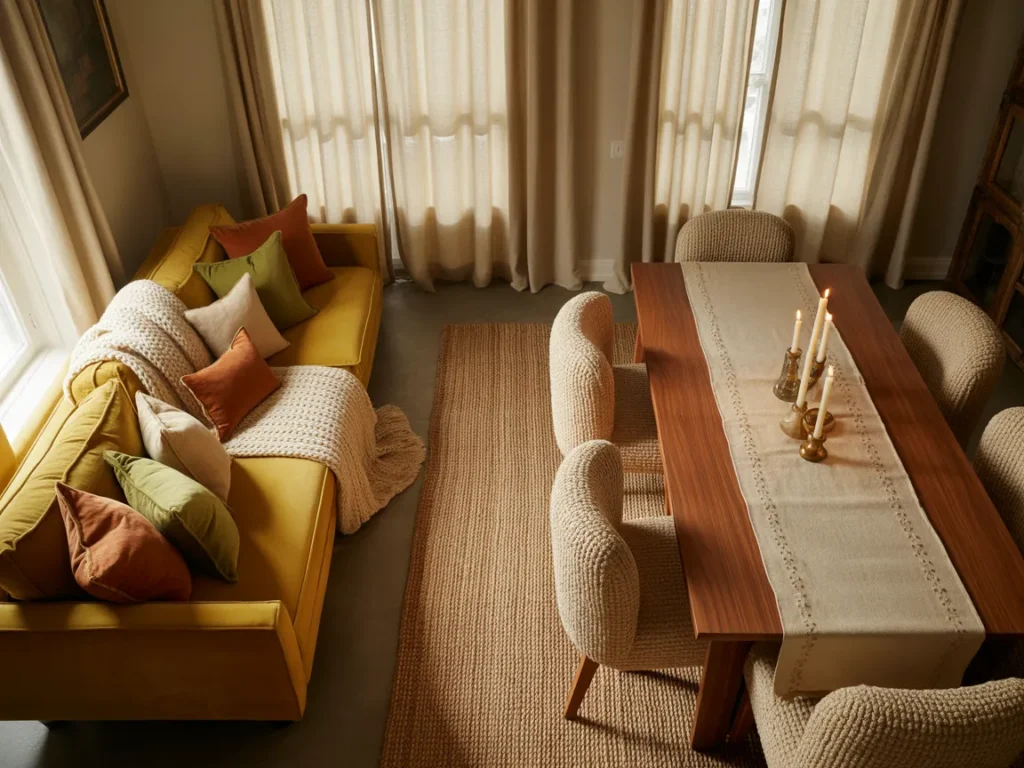
Interior designer Kelly Wearstler notes that layering a minimum of five distinct textile textures in a room is the baseline for achieving that coveted ‘designer’ look. Research from the Textile Institute shows that rooms with rich textile layering are consistently rated as 40% more comfortable and inviting than sparsely furnished equivalents.
The Open-Plan Textile Checklist
| Textile Item | Recommended Quantity | Zone | Key Tip |
| Curtain panels (floor-to-ceiling) | 2–4 panels per window | Both | Hang rod at ceiling height to maximize height illusion |
| Throw blankets | 2–3 draped on sofa | Living | Contrast texture — chunky knit + linen + velvet |
| Decorative cushions | 6–9 (odd numbers) | Living | Mix 3 sizes: 12″, 18″, 22″ squares |
| Table runner | 1 per dining table | Dining | 60% of table length, texture contrast to tablecloth |
| Upholstered dining chairs | All or 2 head chairs | Dining | Fabric chairs bridge living/dining aesthetically |
| Area rugs (see Idea #1) | 1 per zone | Both | Must anchor all furniture legs (or front two) |
#12: Create a Reading Nook or Accent Corner
In most open-plan living-dining rooms, corners are the forgotten zones — awkward spaces that accumulate clutter or remain depressingly empty. Yet a thoughtfully designed accent corner or reading nook does more than just fill space: it gives the room a sense of narrative and completeness, as if every inch has been considered.
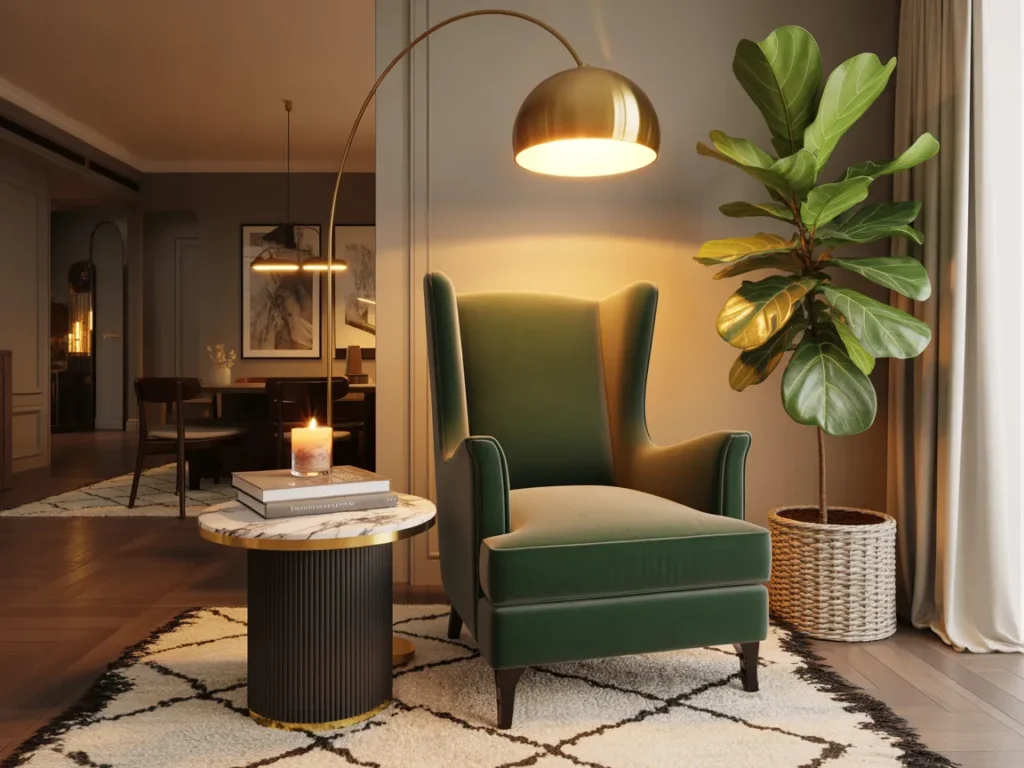
According to Architectural Digest, accent corners featuring an armchair, floor lamp, small side table, and a bookcase or art piece are among the most photographed and aspirational interior design vignettes on platforms like Pinterest (where ‘reading nook’ receives over 2.4 million saves monthly) and Instagram.
How to Build the Perfect Accent Corner in 5 Steps
Step 1 — Choose your chair: A wingback, club chair, or accent chair with interesting upholstery (velvet, boucle, or patterned fabric) serves as the focal point. Budget: $300–$2,000.
Step 2 — Add a floor lamp: Position an arched or gooseneck floor lamp to the left or right of the chair at 58–65 inches height. This provides functional reading light and vertical visual interest.
Step 3 — Side table: A small round or drum side table (18–22 inches diameter) holds books, a candle, and a beverage. Avoid anything too large — it should feel like a companion to the chair, not compete with it.
Step 4 — Anchor with a small rug: A 4×6 ft accent rug under the chair grounds the vignette and ties it into the larger rug schema of the room.
Step 5 — Add a vertical element: A floor plant, a tall stack of books, or a small gallery of 3–5 framed prints on the wall behind the chair completes the vignette and draws the eye upward.
Complete Summary: All 12 Ideas at a Glance
| # | Idea | Budget Range | Difficulty | Impact |
| 1 | Area Rugs to Anchor Zones | $150–$2,000 | Easy | ★★★★★ |
| 2 | Sofa as Zone Divider | $600–$6,000 | Easy | ★★★★☆ |
| 3 | Layered Lighting (3 layers) | $200–$3,000 | Medium | ★★★★★ |
| 4 | Bookcase/Shelving Divider | $300–$3,500 | Medium | ★★★★☆ |
| 5 | Distinct Paint Colors/Accent Wall | $50–$400 | Easy | ★★★★☆ |
| 6 | Statement Dining Table | $500–$5,000 | Easy | ★★★★★ |
| 7 | Tall Indoor Plants | $50–$500 | Easy | ★★★★☆ |
| 8 | Artwork & Gallery Walls | $100–$2,500 | Easy | ★★★★☆ |
| 9 | Statement Ceiling Feature | $50–$8,000 | Hard | ★★★★★ |
| 10 | Console Table at Sofa Back | $150–$1,500 | Easy | ★★★☆☆ |
| 11 | Textiles & Soft Furnishings | $200–$3,000 | Easy | ★★★★★ |
| 12 | Reading Nook / Accent Corner | $300–$2,500 | Easy | ★★★★☆ |
Conclusion:
The empty-feeling open layout is one of the most solvable problems in interior design — and the 12 ideas in this guide give you a complete toolkit. The key insight is this: open-plan spaces do not need more furniture, they need more definition, more layering, and more intentionality.
Start with the highest-impact, lowest-cost interventions: anchor rugs, a strategic sofa position, a statement dining table, and layered lighting. These four moves alone will transform how your space looks and feels. Then layer in plants, textiles, artwork, and accent corners as your budget and creativity allow.
Remember that the goal is not to fill the space with objects — it is to create a space that tells a story, invites you in, and makes every zone feel purposeful. With these 12 ideas, your open-plan living and dining room will never feel empty again.