14 Minimalist Bathroom Ideas for a Calm, Clutter-Free Space
INTRODUCTION
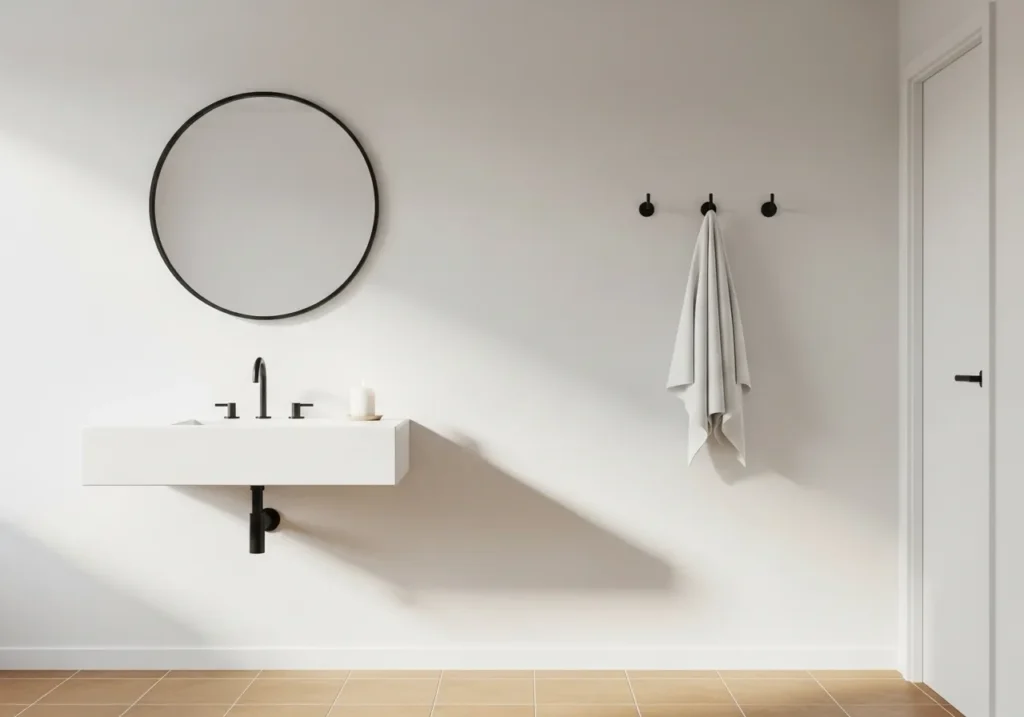
A minimalist bathroom isn’t about spending more — it’s about choosing less. When every surface, fixture, and object earns its place, the bathroom stops being a storage room you happen to shower in and becomes a calm, restorative space that sets the tone for your entire day. These 14 ideas will help you get there, one intentional edit at a time.
1. Stick to a One- or Two-Color Palette
The fastest way to make a bathroom feel calm and intentional is to ruthlessly limit the color palette. When every surface, towel, and accessory shares the same one or two tones, the eye has nowhere to snag — the space simply reads as peaceful. Minimalism isn’t about emptiness; it’s about visual harmony, and color is where that harmony starts.
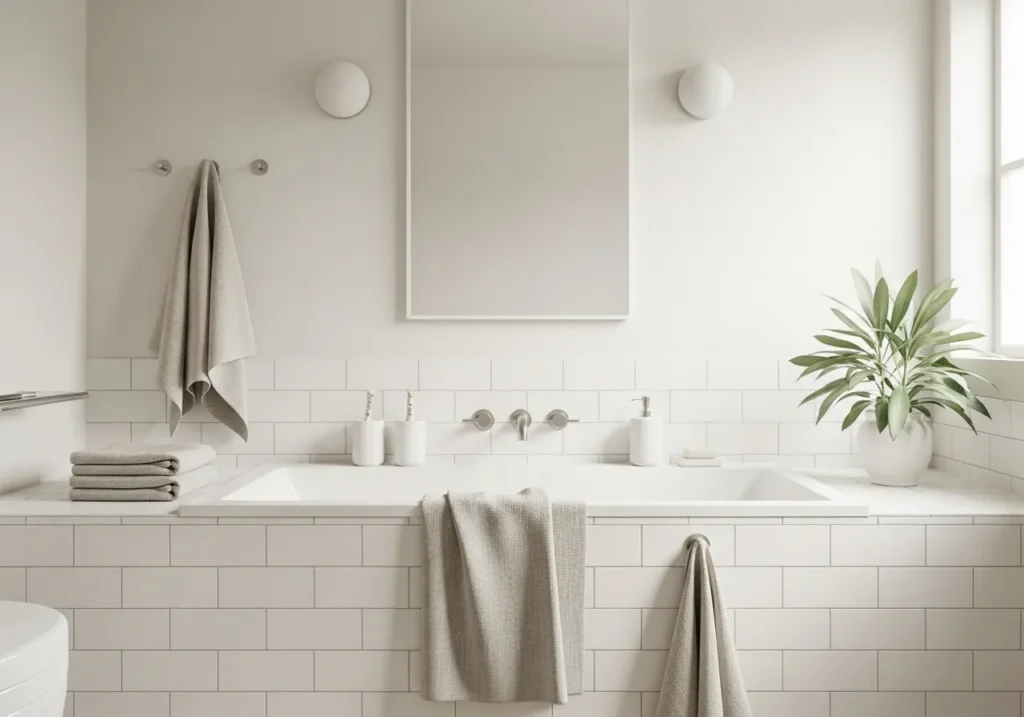
Choose a dominant neutral — white, warm linen, soft grey, or matte black — and allow one accent tone at most. Apply that palette consistently to towels, soap dispensers, candles, and storage. Even the color of your toothbrush matters; if it clashes, swap it or store it out of sight.
2. Clear the Counter Completely
A completely clear counter is the single most dramatic minimalist move you can make in a bathroom. When the countertop has nothing on it — or only one or two intentional objects — the entire room shifts from chaotic to composed. It forces you to be selective about what earns visible space, which is exactly the point of minimalism.
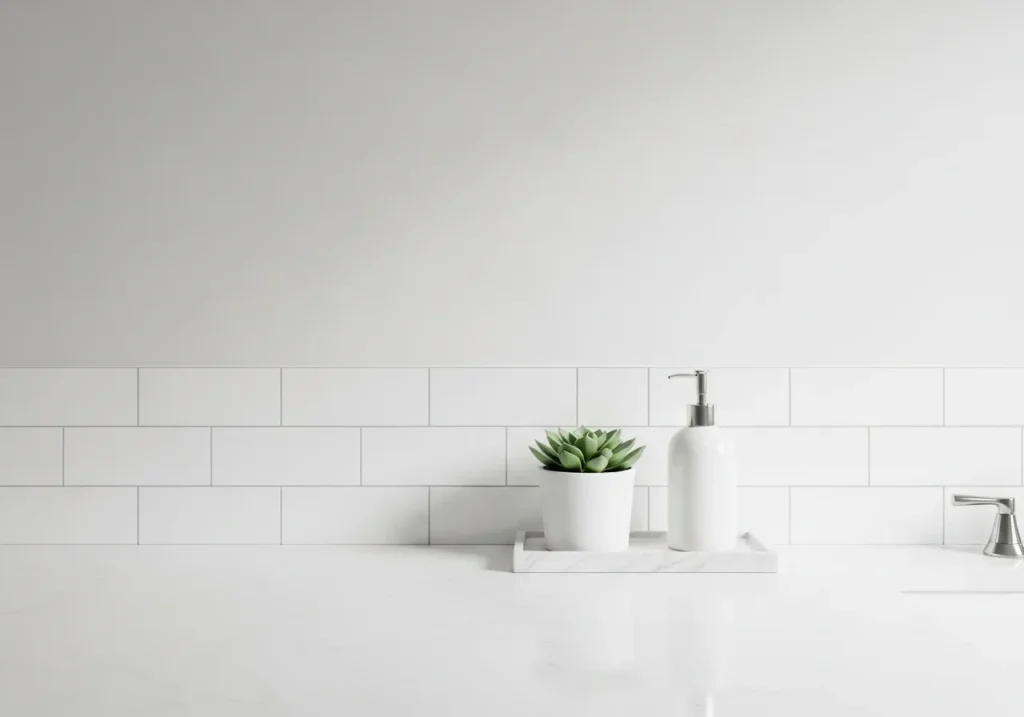
Move everything off the counter and into drawers, cabinets, or under-sink storage. Then, return only the items you use every single day — nothing else. Allow yourself one small tray with a maximum of three objects to keep the surface from feeling sterile while still maintaining the calm.
3. Use Concealed Storage Everywhere
Visible clutter is the enemy of a minimalist bathroom, and the solution is hiding as much as possible behind closed doors. Cabinets, drawers, recessed shelves, and mirrored medicine cabinets all move products out of sight while keeping them fully accessible. When storage is concealed, even a small bathroom feels deliberately spacious.
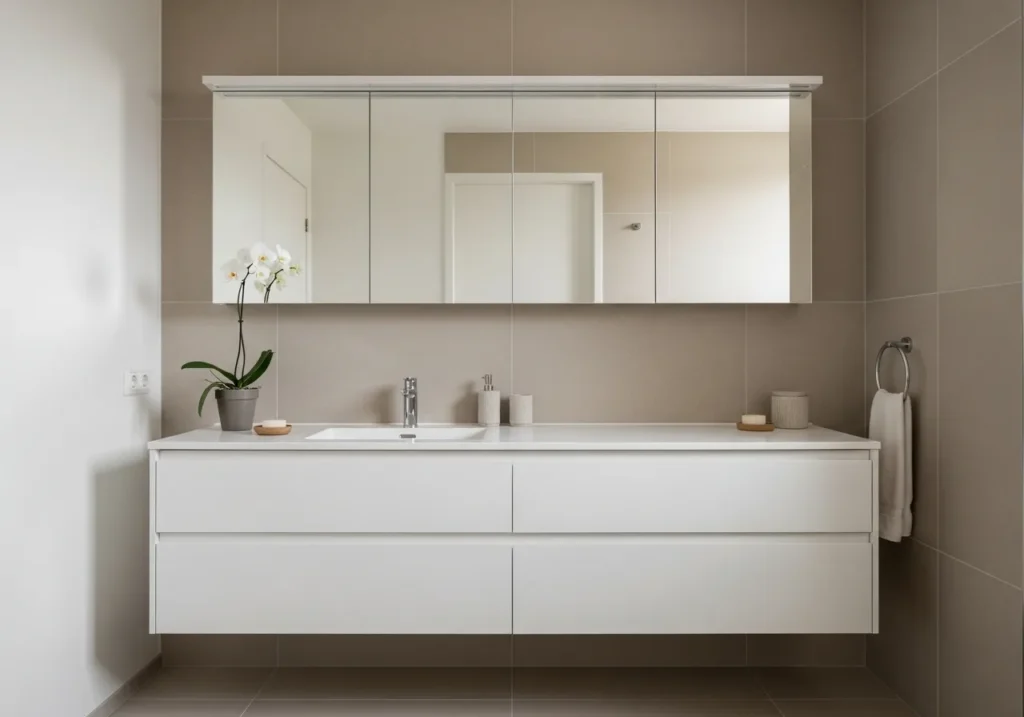
Audit every item on your open shelves and find it a home behind a door instead. If you lack cabinet space, invest in a small under-sink pull-out system or an over-toilet cabinet with doors rather than open shelving. The rule: if it has a label, a pump, or a barcode, it belongs inside something closed.
4. Choose Fixtures in a Single Metal Finish
Mixing metal finishes — chrome faucet, brass towel bar, nickel drawer pulls — creates visual noise that undermines a minimalist look. Committing to one metal finish across every fixture ties the room together and signals that the space was deliberately designed rather than assembled piece by piece. It’s one of the details that separates a styled bathroom from a random one.
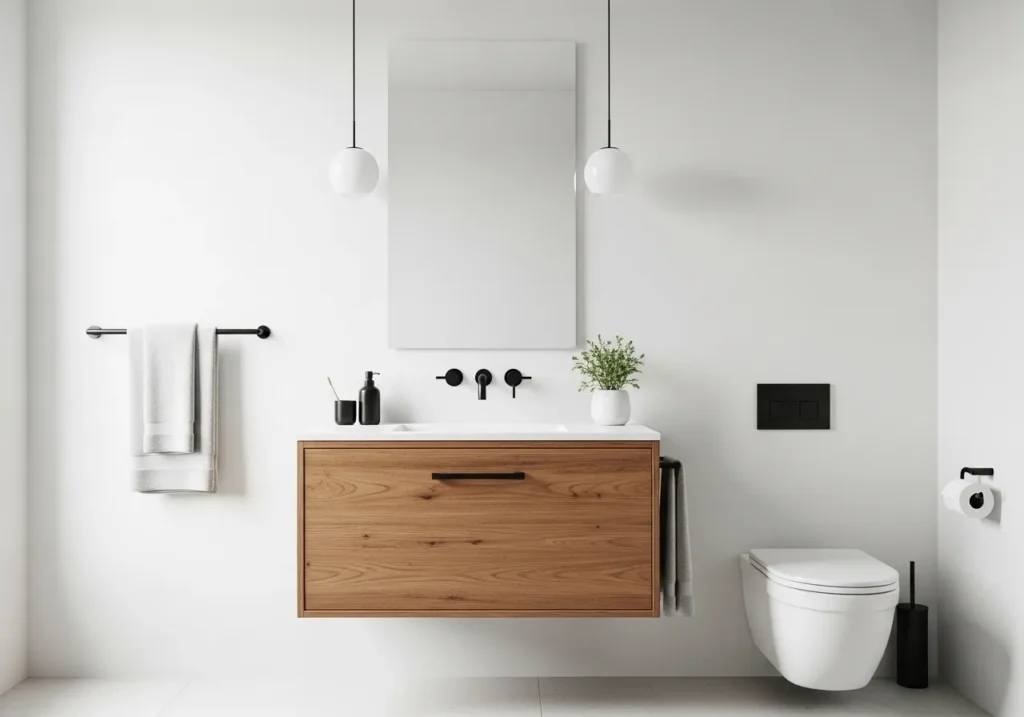
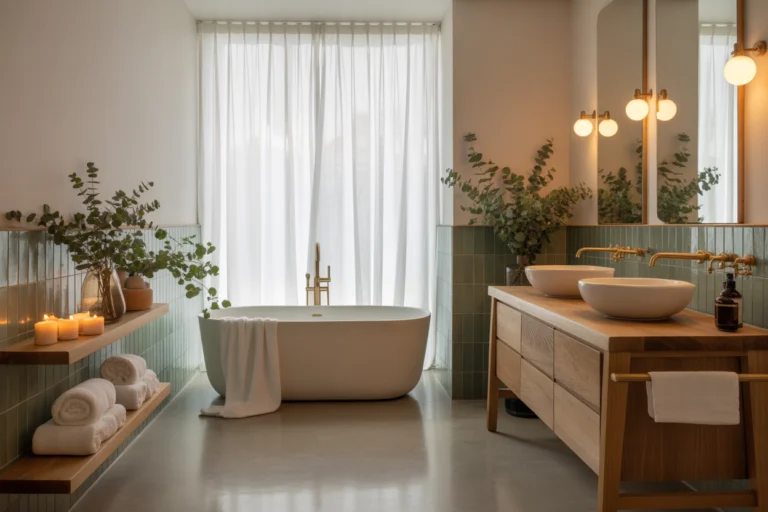
Pick matte black, brushed nickel, brushed gold, or polished chrome and apply it consistently to your faucet, towel bar, toilet paper holder, robe hook, and light fixtures. If you can’t replace everything at once, start with the most visible pieces — faucet and towel bar — and work outward. Matching finishes create cohesion that reads immediately as intentional.
5. Install Floating Shelves Instead of Bulky Furniture
Floating shelves visually lift storage off the floor, making the room feel larger and airier than freestanding furniture allows. The exposed floor space underneath creates a sense of openness that is central to minimalist design. They also force intentional curation — a floating shelf with five things on it is a display; with fifteen things, it’s chaos.
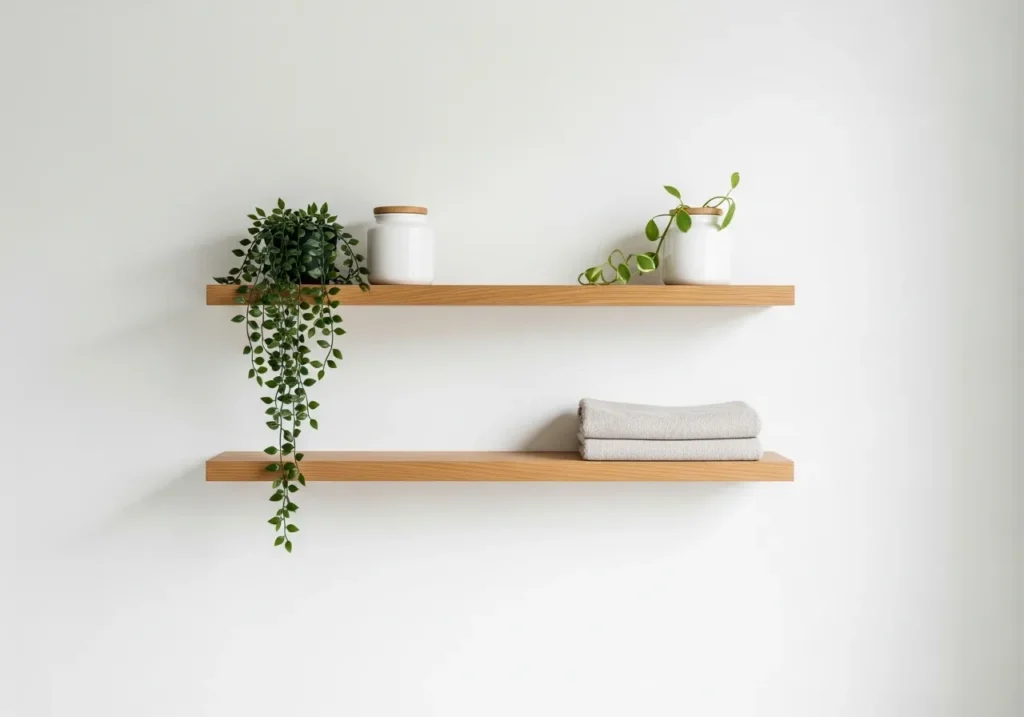
Install one or two floating shelves in a natural wood, white lacquer, or matte black finish and style them with maximum five objects total. Use one shelf for a plant, one towel roll, and one glass jar — then stop. Resist the urge to fill every inch; negative space on a shelf is not wasted, it’s deliberate.
6. Go Frameless on Your Mirror
A frameless mirror — or a mirror with a very thin, simple frame — keeps the wall feeling open and uncluttered in a way that ornate or heavy-framed mirrors cannot. The reflective
surface expands the room visually while the lack of frame means one fewer decorative element competing for attention. It’s a subtle choice with a significant calming effect.
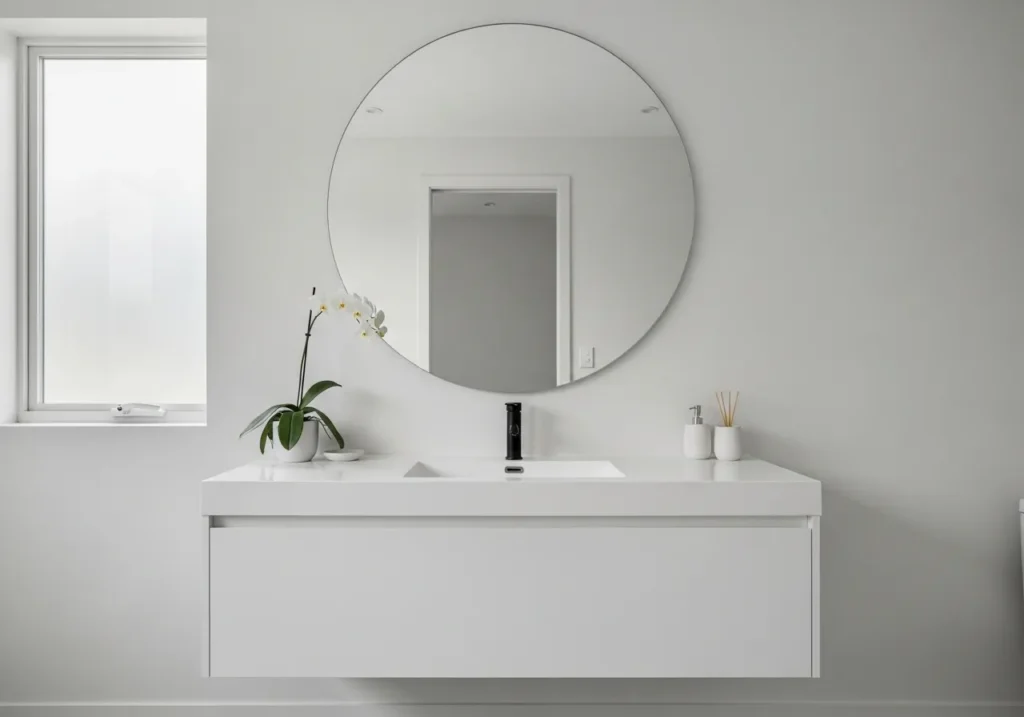
Replace an ornate or builder-grade framed mirror with a simple round, oval, or rectangular frameless version. Round mirrors in particular soften hard bathroom lines without adding visual weight. If budget is a concern, remove the existing frame and sand the edges smooth — a clean frameless look costs nothing but effort.
7. Use Large-Format Tiles to Reduce Visual Noise
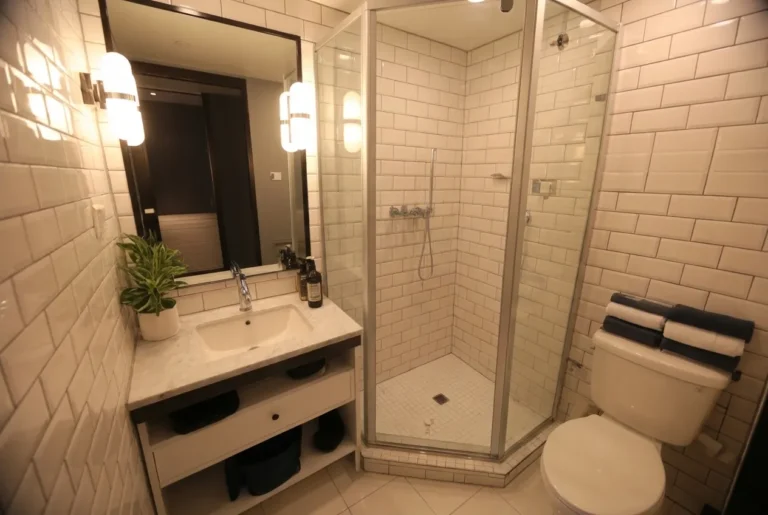
Small mosaic or subway tiles create dozens of grout lines that fragment a surface visually and make a space feel busier and smaller. Large-format tiles — 12×24 inches or bigger — have fewer grout lines, which means fewer visual interruptions and a much calmer, more expansive feel. The tile choice is one of the highest-leverage minimalist decisions in a bathroom.
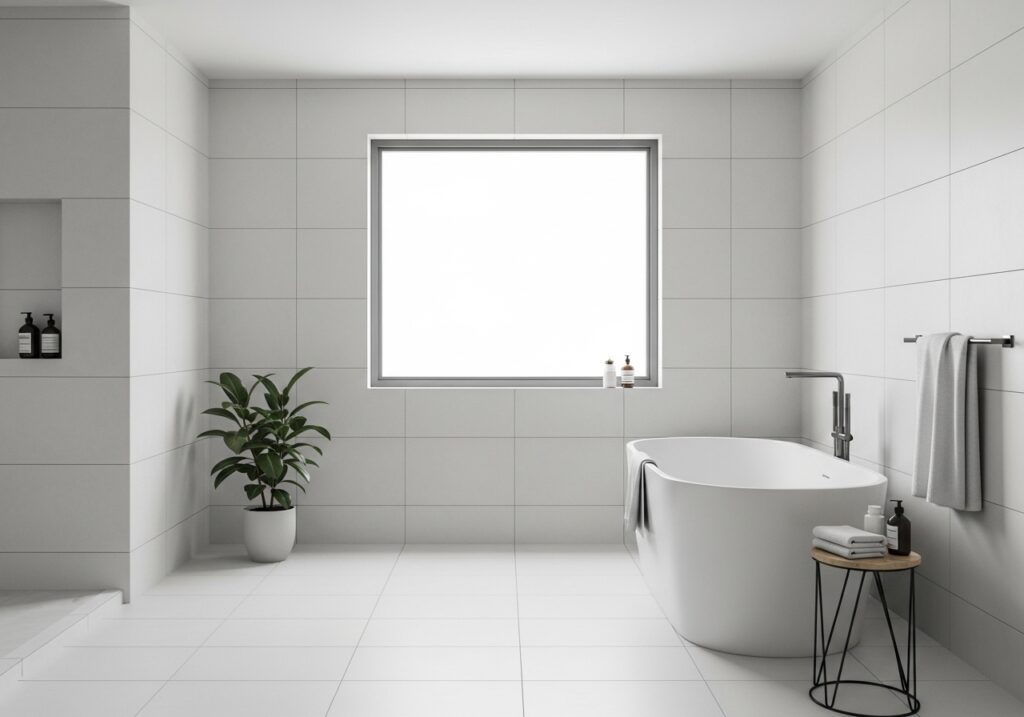
If you’re renovating, choose 24×48 or larger slabs in a single matte neutral — white, warm grey, or greige. If you can’t retile, minimize grout-line noise by deep-cleaning grout to uniform color and keeping the surrounding decor extremely simple. A single large-format tile feature wall behind the shower or tub can anchor the whole room without requiring a full retile.
8. Add One Living Plant as the Only Decor
In a minimalist bathroom, one well-chosen plant does more work than an entire shelf of decor objects. It introduces organic life, color, and softness while keeping the visual field clean and uncluttered. A single plant signals that the room was styled with intention — not decorated with accumulation.
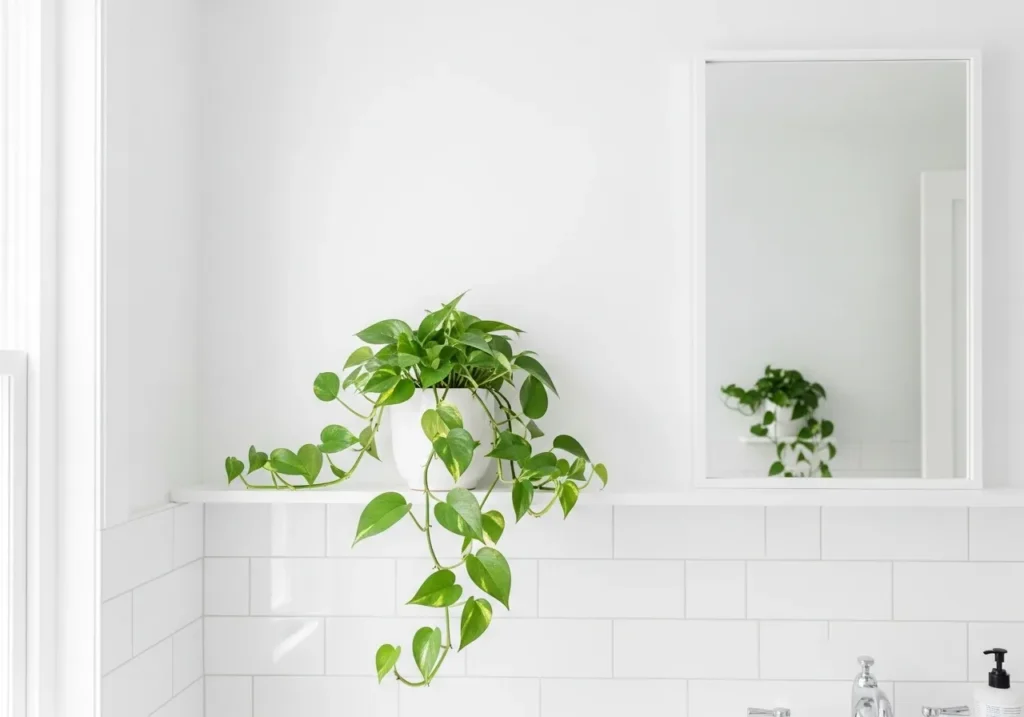
Choose a plant that thrives in humidity with indirect light: pothos, snake plant, ZZ plant, or a trailing string of pearls. Place it in a single white, terracotta, or matte black pot with no saucer clutter. Position it in one deliberate spot — on the counter, on a shelf, or hung from a ceiling hook — and let it be the room’s only living accent.
9. Decant Products into Matching Containers
Branded product packaging — with its colorful labels, varied sizes, and loud typography — is one of the biggest sources of visual noise in any bathroom. Decanting shampoo, conditioner, soap, and lotion into matching dispensers or bottles immediately quiets the space and creates a cohesive, spa-like environment. It’s the difference between a shelf of products and a styled bathroom.
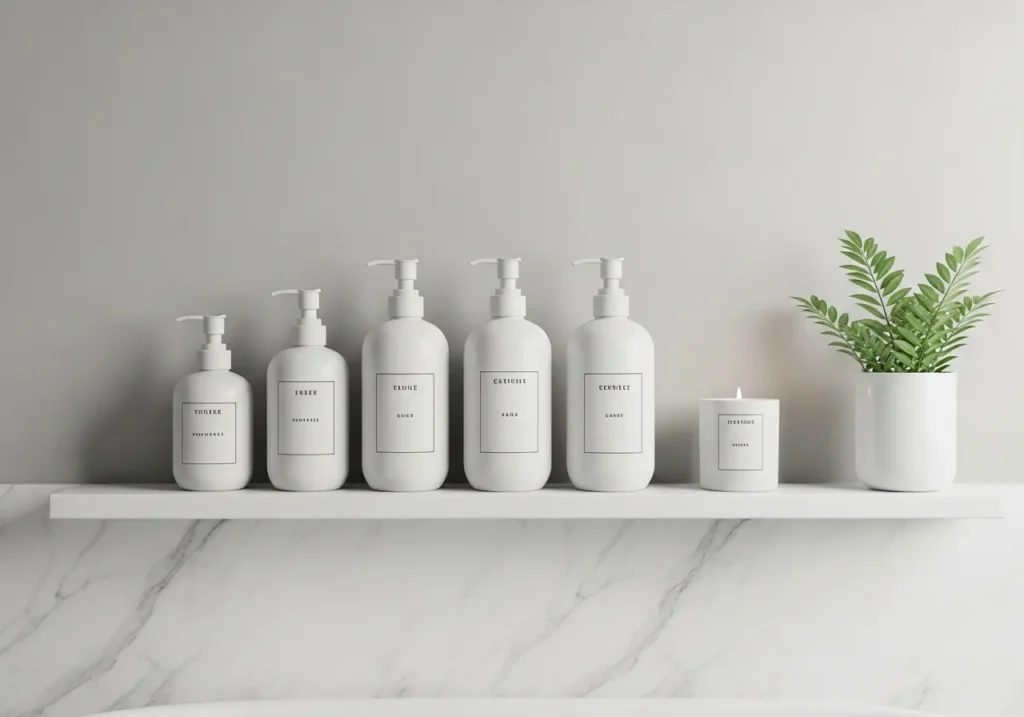
Invest in a set of matching pump dispensers, glass bottles, or ceramic jars in white, clear, or matte black for your most-used products. Label them with minimalist adhesive labels or leave them unlabeled if you can remember what’s inside. Do the same for the shower — three matching bottles on a caddy look infinitely calmer than seven different branded containers.
10. Choose a Floating Vanity Over a Floor-Standing One
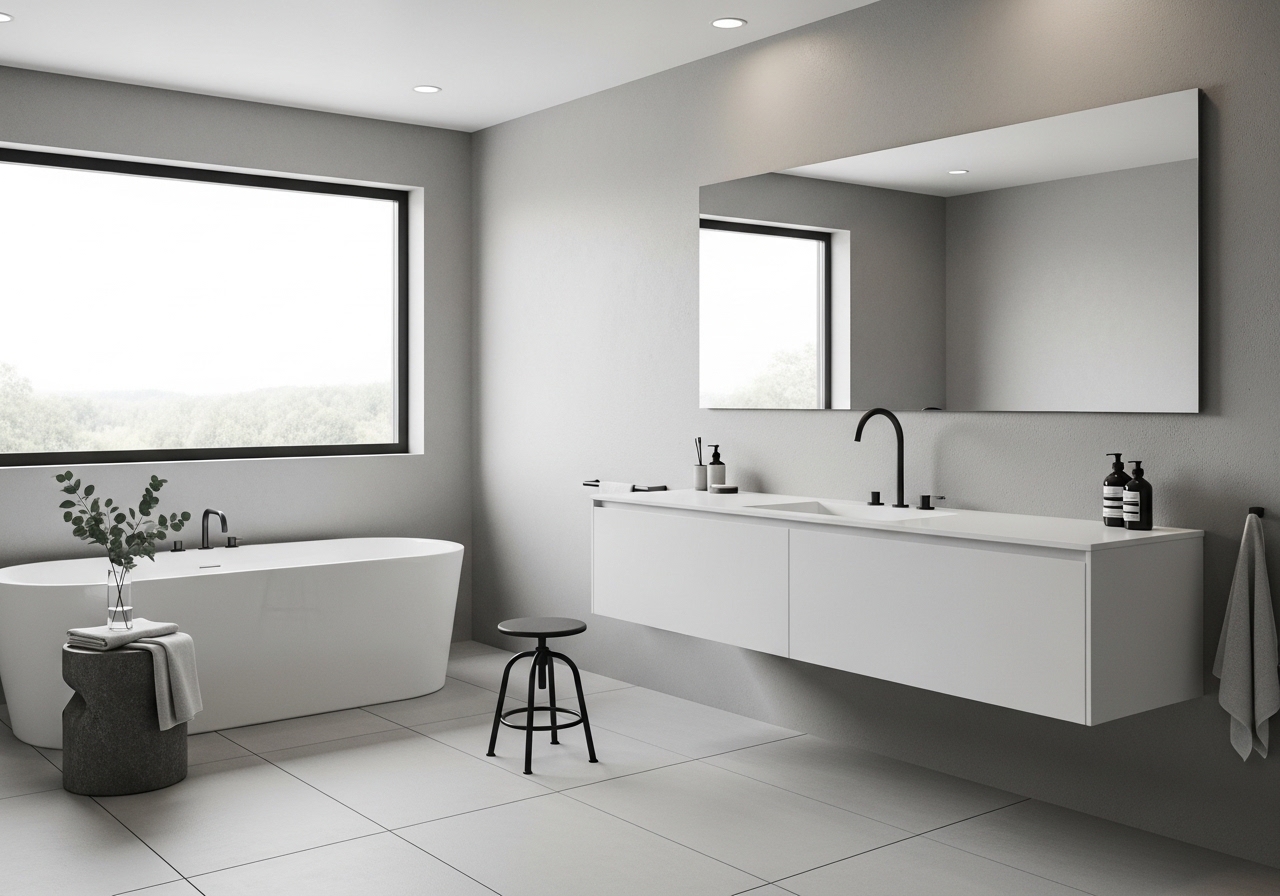
A floating or wall-mounted vanity lifts the cabinet off the floor, exposing the ground beneath it and making the bathroom feel significantly more spacious and airy. The uninterrupted floor plane is a hallmark of minimalist interior design — it signals openness and deliberate space management. Even in a small bathroom, a floating vanity can make the room feel twice its size.
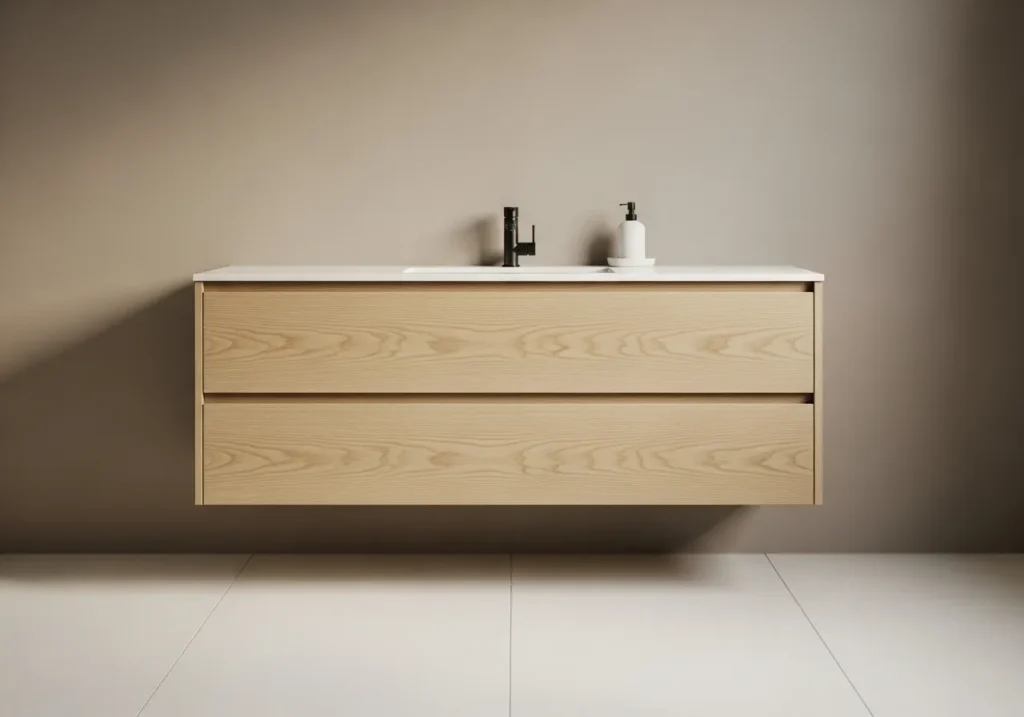
When choosing or replacing a vanity, opt for a wall-mounted version with flat-front drawer fronts and no visible hardware, or minimal hardware in a single metal finish. Keep the area beneath it completely clear — no baskets, no bins, no extra items stored on the floor. The exposed floor space is not waste; it is the design.
11. Install Recessed Lighting for a Clean Ceiling
Surface-mounted light fixtures, dangling pendants, and ornate sconces add objects to the ceiling and walls that a minimalist bathroom doesn’t need. Recessed lighting disappears into the ceiling plane, providing clean, even light without any fixture competing for visual attention. The result is a room that feels lit from within rather than decorated with light.
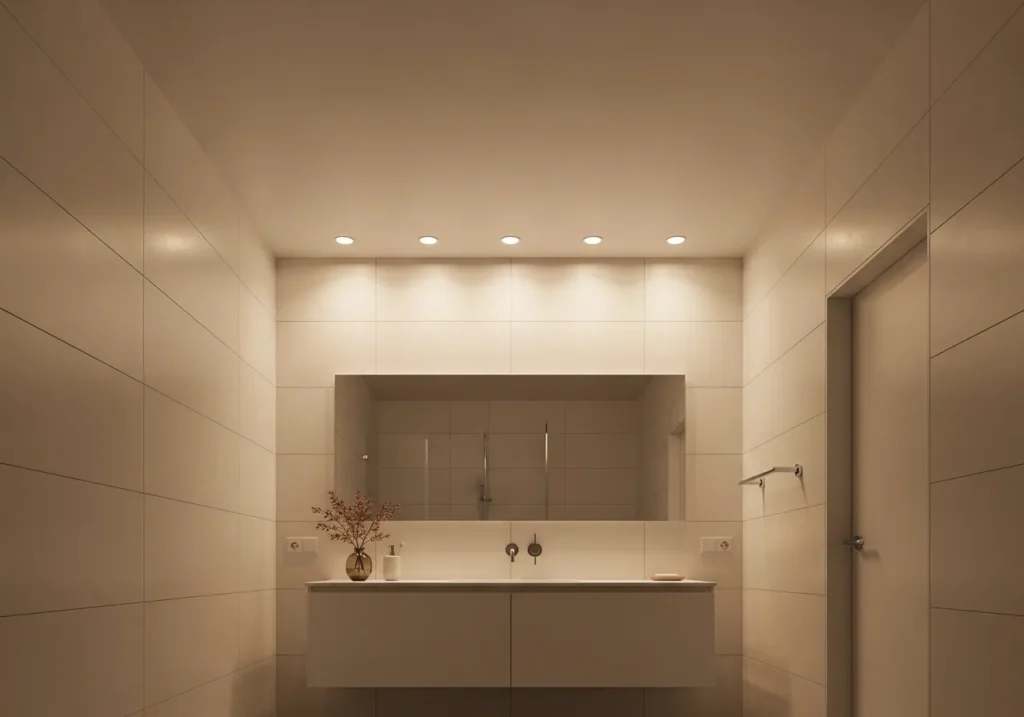
Install warm-white recessed LEDs (2700–3000K) evenly spaced across the ceiling for shadow-free, flattering illumination. If wall sconces are necessary at the mirror, choose the slimmest, most architectural option available — a single thin bar of light rather than decorative sconces. Dimmable lighting adds atmosphere and reinforces the calm, controlled feel of the space.
12. Keep Towels Folded and Color-Matched
Towels are one of the most visible soft furnishings in a bathroom, and when they are mismatched or haphazardly hung, they instantly undermine even the most carefully styled space. Towels in a single color — white, stone, or sage — folded or hung with precision
create a calm visual baseline that ties the room together. It’s a free upgrade that requires only consistency.
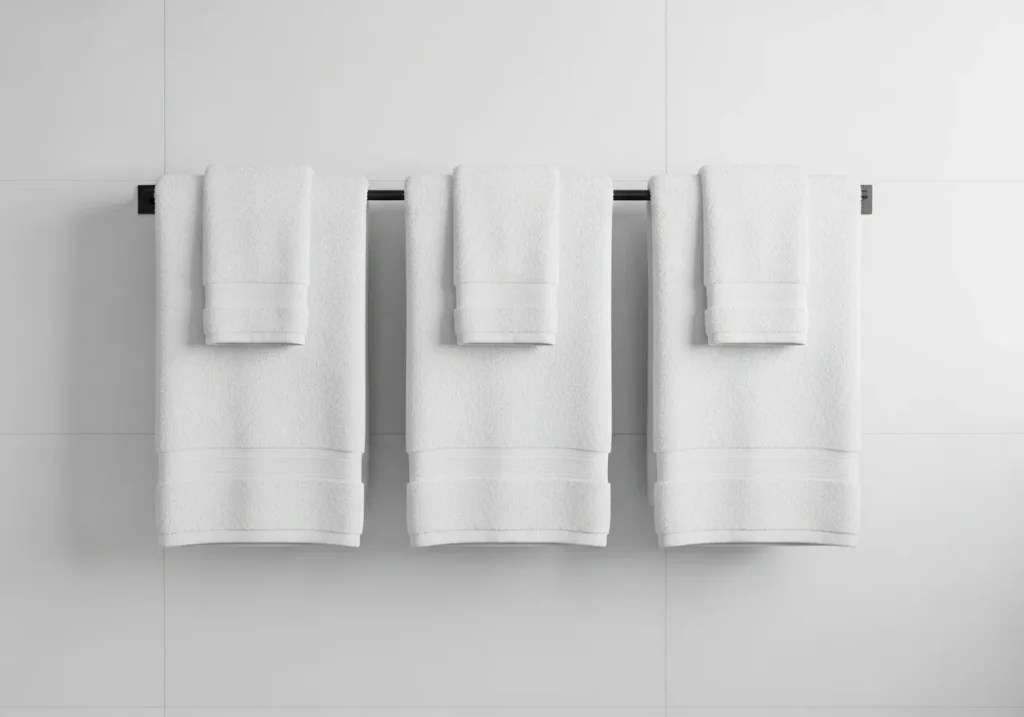
Choose two or three towels in the exact same color and fold them identically — whether that’s a tri-fold, roll, or simple hang. Replace any towel that is worn, stained, or a different color, even if it is still functional. Store extra towels behind closed doors so only the displayed set is ever visible, maintaining the clean, curated look at all times.
13. Use a Shower Curtain in a Solid Neutral
A patterned or bright shower curtain can dominate a bathroom’s visual field and make it feel smaller and busier than it actually is. A solid neutral curtain — white linen, cream cotton, or warm grey — recedes into the background and allows the architecture and carefully chosen details to breathe. It’s a small swap with an outsized calming effect on the entire room.
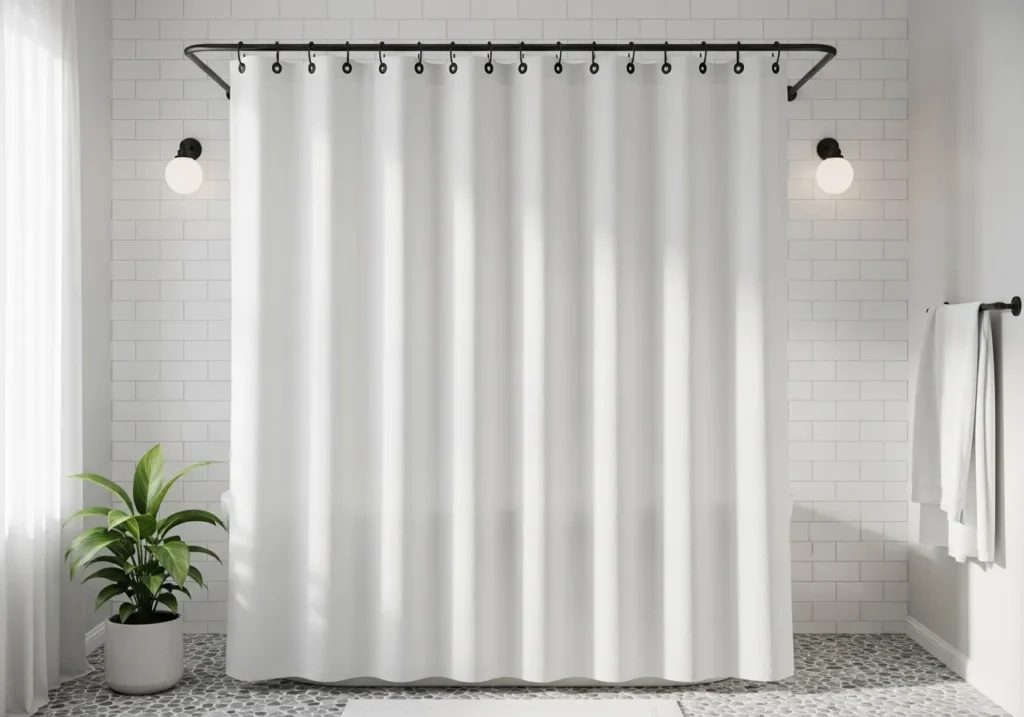
Replace any patterned or colored shower curtain with a simple white, linen, or stone-grey solid. Choose a material with natural texture — waffle cotton, linen, or Belgian flax — for a tactile quality that reads as intentional rather than plain. Keep the curtain rings or hooks in a single metal finish to match your other fixtures throughout the bathroom.
14. Edit Relentlessly — Remove More Than You Think
The most important minimalist bathroom idea is not a product or a design choice — it’s a practice. Every object in a bathroom should earn its place by being either used daily or genuinely beautiful. Most bathrooms have twice as many items as they need, and the path to calm is simply removing half of them and not bringing them back.
Take everything off every surface and out of every visible area, then return only what you use in the last seven days. Anything that hasn’t been touched goes into a box — if you don’t miss it in a month, donate it. Repeat this edit quarterly, because clutter accumulates quietly and the only thing standing between your bathroom and calm is the habit of removal.