18 Japandi Living Room Design: Minimalist, Cozy & Functional Style
Introduction:
Your living room sees you at your most vulnerable. It’s where you collapse after long days, where you laugh with people you love, and where you finally exhale. Yet most of us fill this sacred space with clutter that whispers constant demands. Japandi design asks a simpler question: what if your room could be both beautiful and peaceful?
This hybrid aesthetic blends Japanese minimalism with Scandinavian warmth. It’s not about cold emptiness or depressing beige walls. Instead, it creates spaces that feel intentional, grounded, and genuinely used. The result? A living room that calms your nervous system while looking effortlessly elegant. Let me walk you through 18 practical ideas you can start implementing today.
1. Low-Slung Furniture That Grounds Your Space
Low furniture creates a sense of connection to the earth and makes rooms feel more spacious and serene.
Low seating is foundational in Japanese design. When furniture sits closer to the ground, your eyes naturally relax and scan a wider plane. A sofa at standard height suddenly feels less imposing. Floor-level coffee tables create intimacy without bulk.
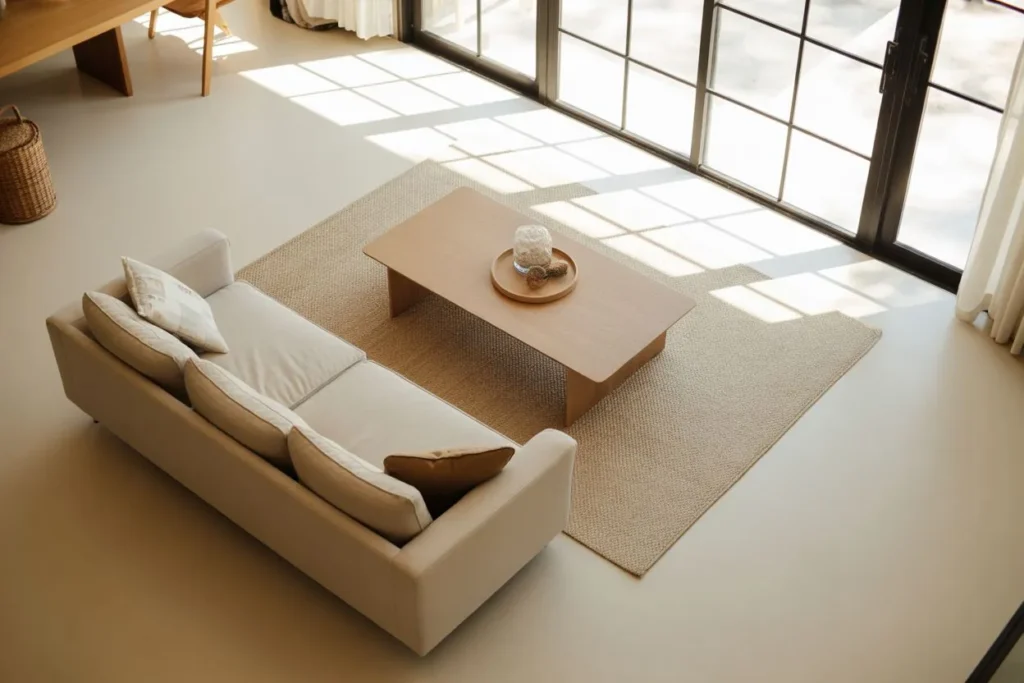
This isn’t about sacrificing comfort. Choose a low sofa with deep seats and quality cushioning so you can actually sink in. Pair it with a wooden coffee table that sits just 12-14 inches high. Your legs stretch naturally, your sightlines open up, and the room instantly breathes. Over time, this subtle shift retrains your body to settle rather than tense.
🪴 Love Japandi’s calm, clutter-free philosophy? These minimalist living room ideas take smart storage even further — keeping your space serene and beautifully organized:
➤ 21 Minimalist Living Room Ideas with Smart Storage Solutions2. Layered Lighting Creates an Evening Sanctuary
Layered lighting with warm tones transforms your room from harsh to healing.
Japandi spaces reject the stark overhead light that dominates modern homes. Instead, three layers work together: ambient warmth from paper lanterns or linen-shaded floor lamps, task lighting from table lamps for reading, and accent lighting from candles or string lights.
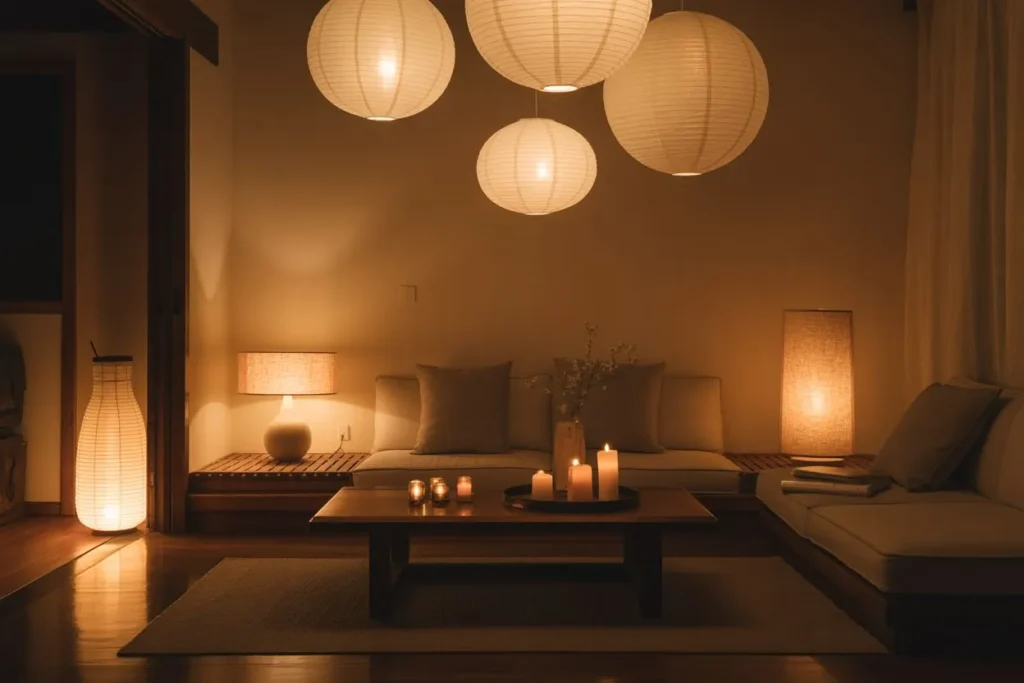
The key is warmth. Avoid cool white LEDs. Choose bulbs that measure 2700K-3000K (warm white). Paper lanterns diffuse light softly while maintaining that natural material aesthetic. Strategic candles add depth and actually improve your circadian rhythm by mimicking sunset. One client told me she couldn’t sleep until we switched to warm lighting at night. Her anxiety dropped within a week.
3. Natural Wood as Your Anchor Material
Natural wood in mixed tones creates warmth and grounding without heaviness.
Wood grounds a Japandi space like nothing else. But here’s what most guides miss: you’re not matching everything. Instead, layer light oak, medium walnut, and pale bamboo throughout the room. This mirrors how nature actually works, not the sterile matching of furniture showrooms.
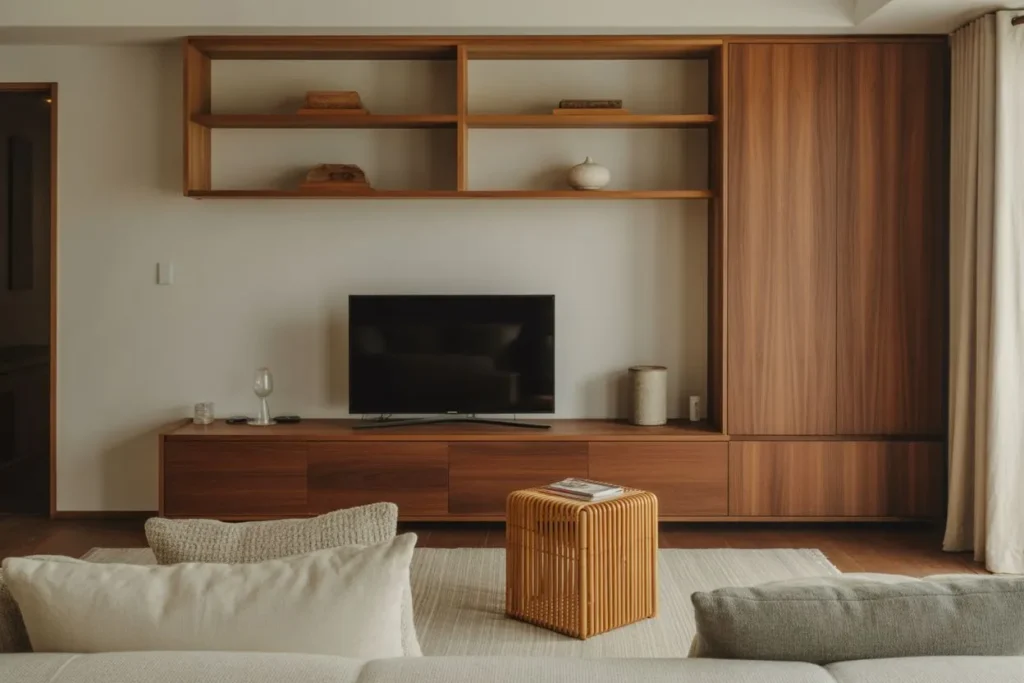
Your TV stand might be pale oak. A floating shelf becomes walnut. The coffee table shifts to bamboo. This variety keeps the eye engaged while maintaining cohesion. Wood also ages beautifully, developing a patina that celebrates imperfection rather than hiding it. That scratch? It becomes proof of a life actually lived in the space. That weathering? It’s called wabi-sabi, and it’s the opposite of your Pinterest-perfect showroom.
🪵 Drawn to the natural wood, warm neutrals, and organic textures in this guide? Organic modern design speaks the same language — grounded, natural, and beautifully calm:
➤ 23 Organic Modern Living Room Styling Tips with Natural Materials4. Negative Space as an Active Design Element
Empty space isn’t wasted space; it’s where your mind rests.
Most people decorate by filling. Japandi works the opposite way. The Japanese concept of “ma” refers to negative space as meaningful emptiness. A blank wall. An empty corner. A shelf that’s intentionally sparse. This isn’t minimalism as deprivation; it’s minimalism as breathing room for your attention.
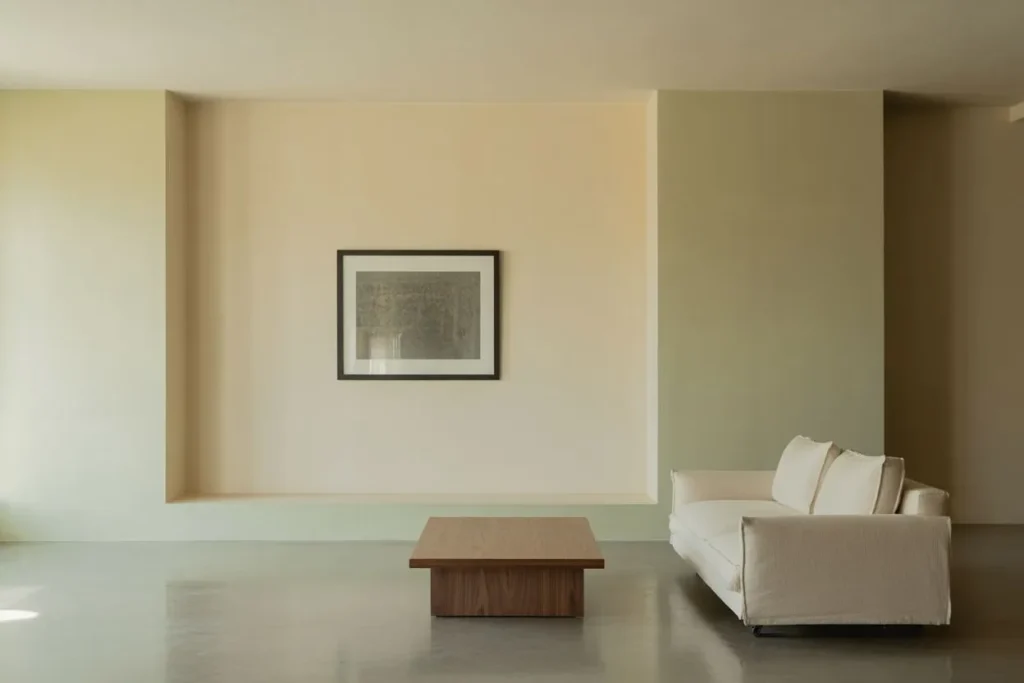
When your eyes have somewhere to rest, your mind follows. There’s no constant stimulation demanding engagement. A wall with two art pieces instead of seven shifts your entire neurological response. Test this yourself: spend five minutes in a crowded room, then five in a sparse one. Notice how differently your body feels. That exhale you’re chasing? That’s negative space working.
5. Woven Textiles That Invite Touch
Natural fiber textiles like linen and jute add warmth and texture without visual noise.
Your room needs to be touchable. This is where Scandinavian warmth enters the picture. Linen throws, jute rugs, and cotton cushions make a space feel lived-in rather than untouchable. These materials feel substantial under your fingers and improve with time rather than deteriorate.
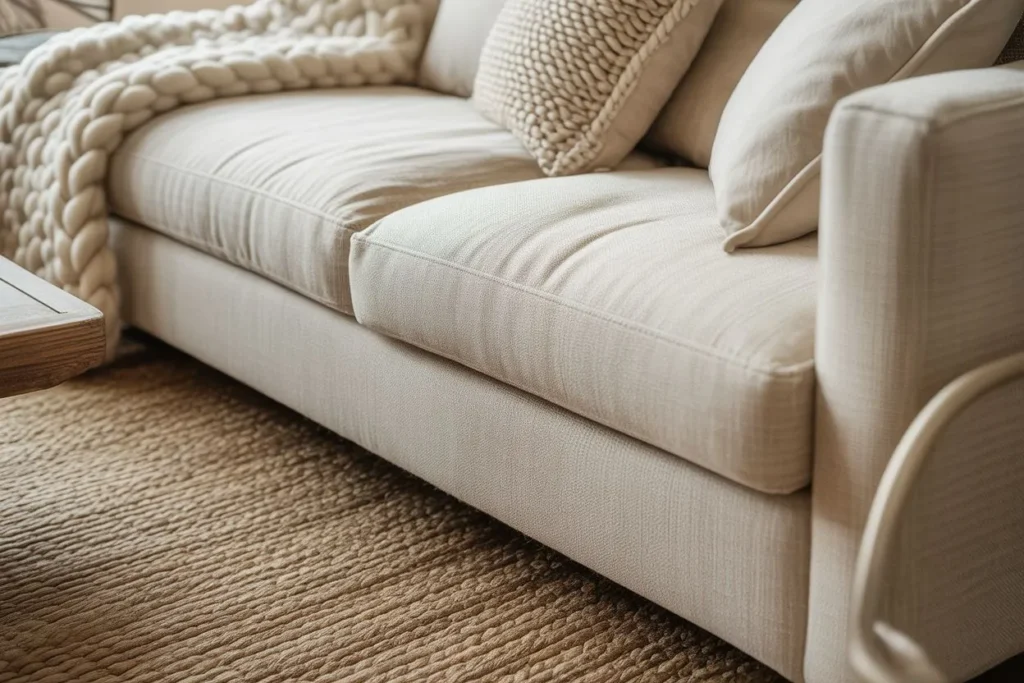
A cream linen sofa feels different from microfiber. It breathes. It wrinkles in ways that feel intentional. A jute rug grounds the seating area while being durable enough for daily use. Woven textiles also diffuse light differently than synthetic fabrics, creating softer shadows and deeper coziness. Layer them: one linen throw across the sofa back, a chunky knit blanket draped over one arm, linen curtains that filter light rather than block it. Suddenly the room has texture and warmth instead of sterile simplicity.
6. One Statement Plant That Becomes a Focal Point
A single mature plant creates more impact than scattered small ones.
Don’t fill the room with trailing vines and ten different pots. Choose one substantial plant. An olive tree in a ceramic pot. A mature rubber plant in a corner. A sculptural bamboo arrangement on a floating shelf. One plant demands attention and changes the entire energy of a room.
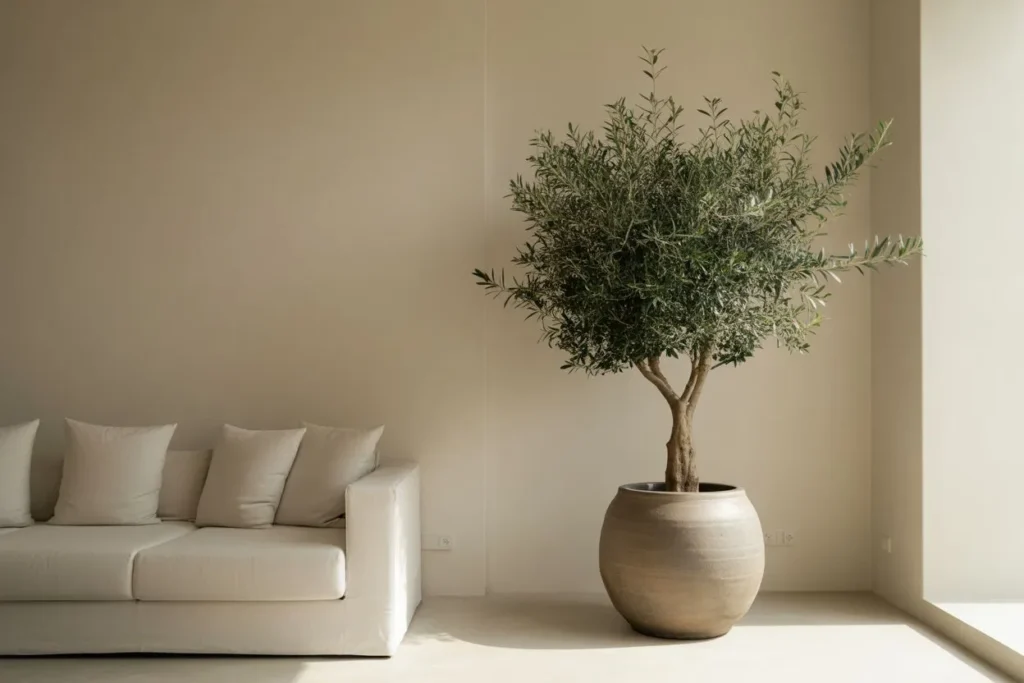
This shift from quantity to quality mirrors Japandi philosophy. That single plant becomes a meditation object, something your eye returns to throughout the day. It breathes life into the space while keeping visual clutter minimal. The Japanese art of ikebana (flower arrangement) teaches us that absence makes presence powerful. One perfect branch in a vase of water does more work than a chaotic bouquet.
7. Shoji Screens for Soft Privacy Without Barriers
Shoji screens partition spaces while maintaining flow and allowing light diffusion.
If your living room connects to another space, a shoji screen solves that without closing things off completely. These sliding screens originated in Japan and work beautifully in modern homes where open-concept design is standard. They filter light while allowing it through, partition sound softly, and cost far less than installing a wall.

More importantly, they feel alive to a room. Unlike solid doors, shoji screens create a sense of mystery and depth. Light changes throughout the day as it passes through. You get privacy without heaviness. Some screens are solid, some are translucent, and some feature traditional wooden lattice patterns. Choose based on how much light you want to preserve.
8. Ceramic Vessels as Quiet Art
Handcrafted ceramics work harder than decorative objects by adding texture, purpose, and soul.
This is where functionality becomes beauty. A ceramic vase isn’t just holding flowers; it’s teaching your eye about imperfection and craft. Handmade ceramics have slight irregularities, uneven glazing, and raw edges. These aren’t flaws; they’re signatures of human hands at work.
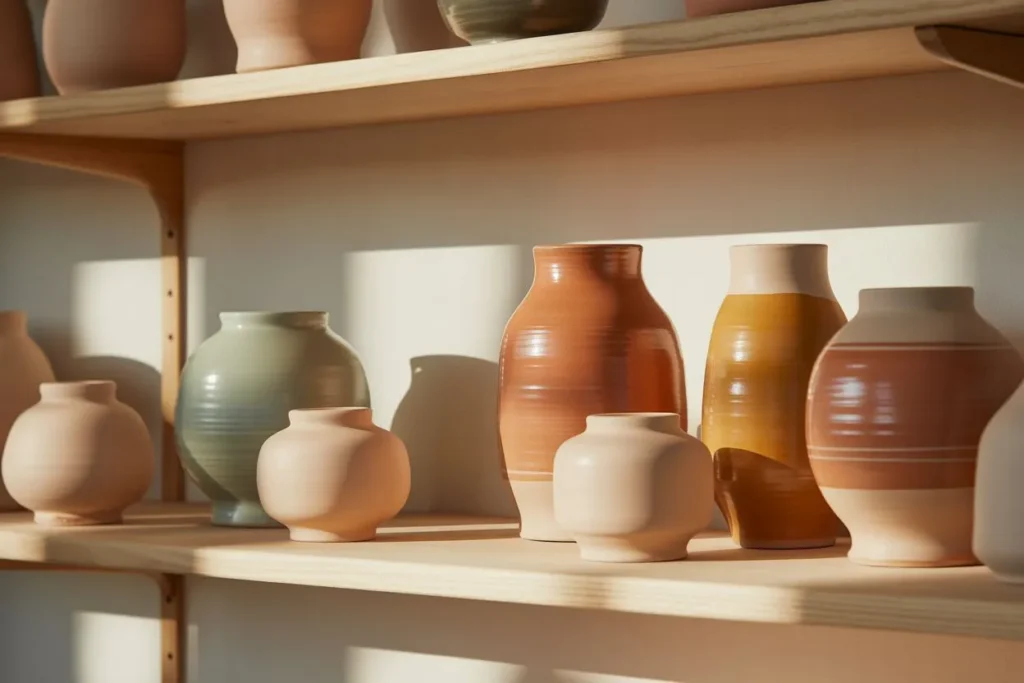
Display ceramics on floating shelves, low side tables, or grouped on a console. The color palette matters: raw clay tones, soft grays, muted blues, off-whites. Each piece should have a reason to exist (even if that reason is “I love how it feels in my hands”). This circles back to wabi-sabi, that Japanese principle of finding beauty in impermanence and imperfection. Your collection grows slowly, intentionally, never forced.
9. A Meditation Nook Carved From Unused Space
A dedicated corner for stillness combats daily anxiety without requiring extra square footage.
You don’t need a meditation room. You need a corner. Find an awkward nook, a window seat, or an underused section of your living room. Place a low cushion there. Hang a small pendant light above. Add nothing else. This becomes your exhale space.

The magic is consistency. Your brain learns this corner means rest. No screens. No productivity. Just being. When anxiety hits or overwhelms creeps in, you have a physical destination for calm. Many people find that simply having this space shifts their entire nervous system. You don’t even have to use it daily for the benefit to register. Its existence as a possibility is enough.
10. A Low Bookshelf That Functions as a Room Divider
Low shelves create zones without closing the space and display your life beautifully. Instead of a solid wall divider, use a bookshelf at roughly 36-42 inches tall. It defines your living room from adjacent spaces while keeping sightlines open and light flowing. Books, ceramics, small plants, and negative space intermix on the shelves, creating texture without clutter.
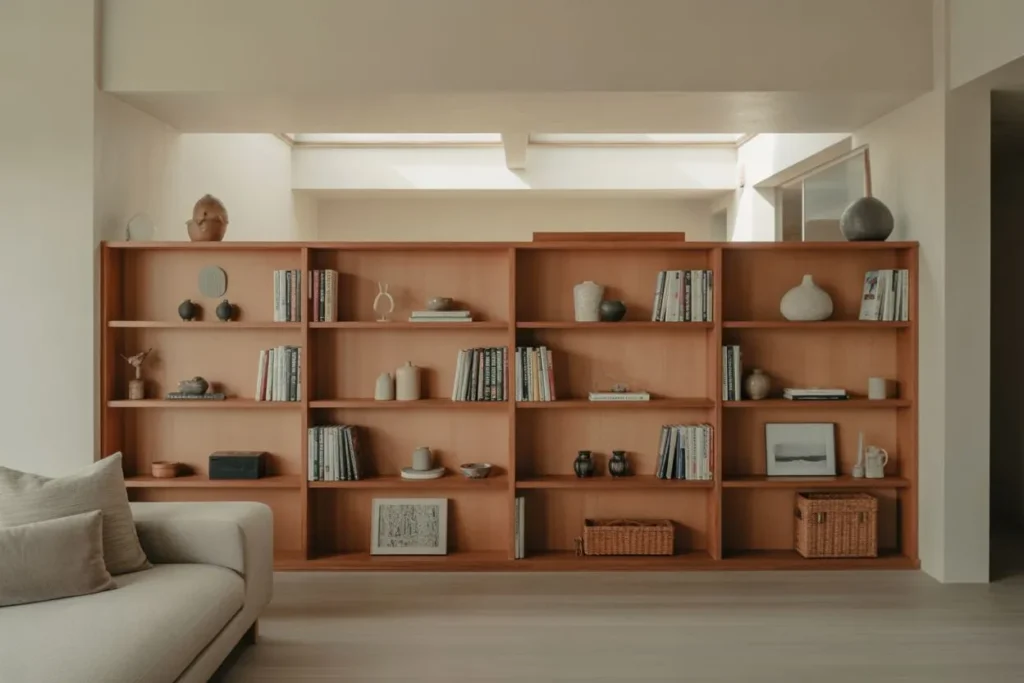
The arrangement matters. Group books by height and color. Leave gaps. Mix in objects: a ceramic vessel, a wooden sculpture, a framed photo. The eye should be able to rest on empty shelf space as easily as it rests on objects. This prevents that “everything’s competing for attention” feeling that makes spaces feel chaotic even when they’re minimal.
11. Warm Neutral Color Palette With Intentional Depth
Layered neutrals in various tones create visual interest without the chaos of bold colors.
Stop thinking beige equals boring. A Japandi palette includes oatmeal, sand, ash gray, mushroom, warm off-white, and soft taupe. Within these seemingly similar tones lie different temperatures and depths. Layer them strategically.
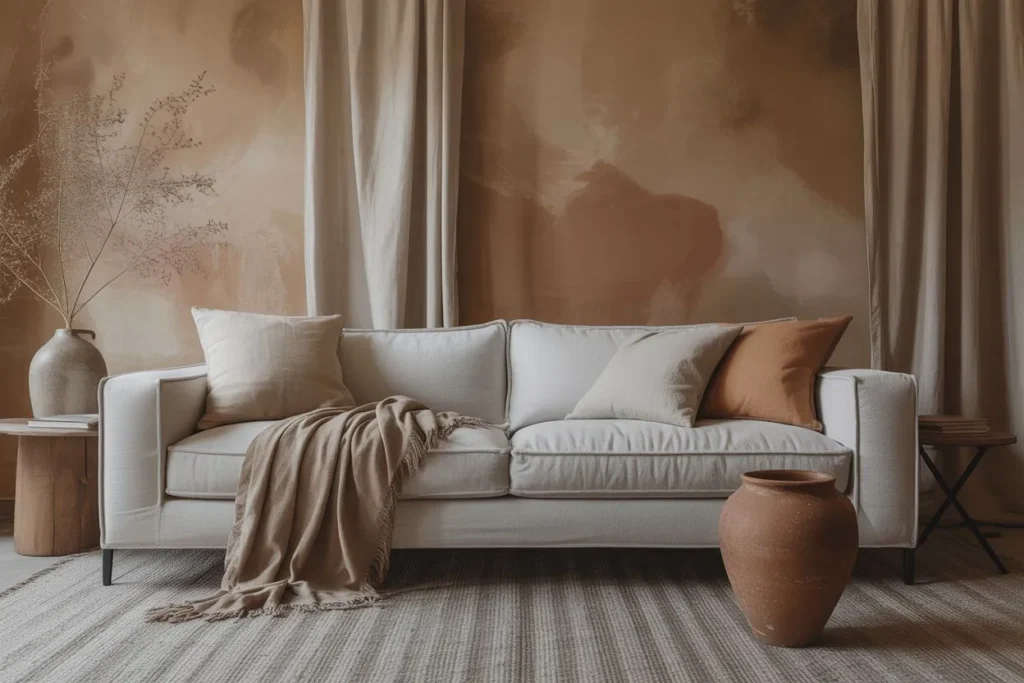
Your walls might be soft mushrooms. Your sofa is warm oatmeal. Your rug shifts toward ash gray. A throw blanket picks up sand tones. Suddenly you have richness without a single “pop” of color. This approach feels sophisticated precisely because it requires restraint. Bold colors are easy; making neutrals sing is the actual skill. If color calls to you, introduce it through accessories: one muted rust cushion, a soft terracotta pot, a charcoal-gray artwork. Keep it sparse enough that warm neutrals still dominate.
12. A Live-Edge Wooden Coffee Table as Functional Sculpture
Live-edge wood celebrates natural form and serves your daily life simultaneously.
A live-edge table isn’t just furniture; it’s a conversation between craft and nature. One side follows the organic edge where bark fell away. The surface is smooth and functional. Beneath, the wood grain tells stories of growth rings and wood character. This single piece can anchor your entire living room aesthetic.
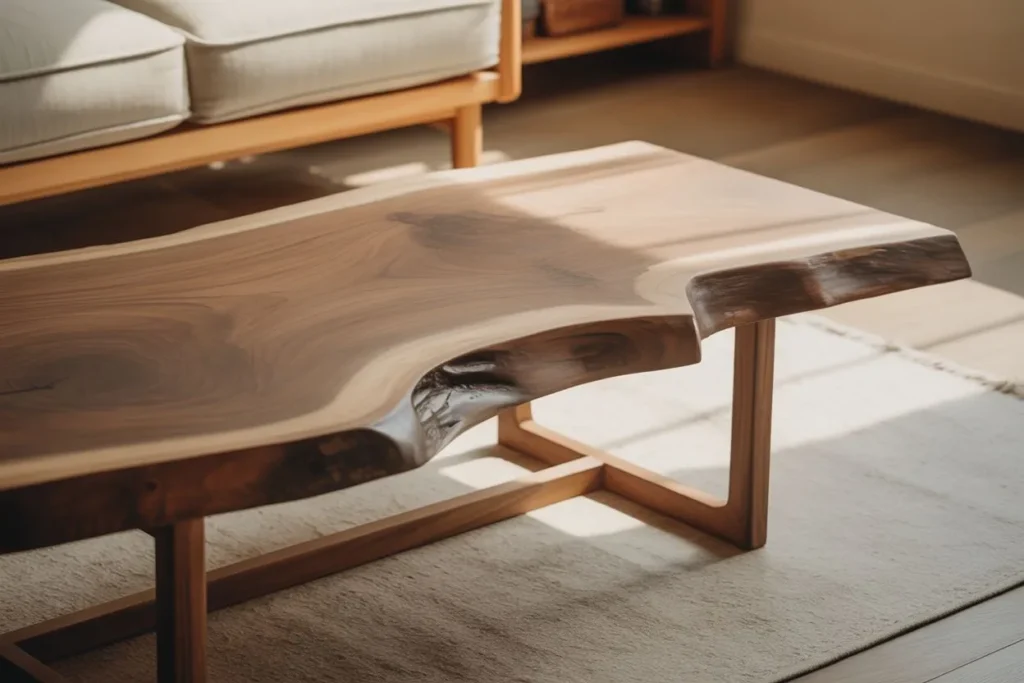
Pair it with tapered legs, keep the top clear of clutter, and let it speak. This table shows the Japandi philosophy in action: functional, beautiful, honest about its materials, and imperfect by design. Every live-edge piece is singular. Your table will never be replicated. That uniqueness matters, especially in a world of mass production.
13. Large Windows Maximizing Natural Light and View
Unobstructed windows connect your living room to nature and reduce dependency on artificial lighting.
Japandi isn’t about closing the world out; it’s about letting nature in. If you have large windows, treat them as your main design element. Minimal window coverings. Simple linen curtains that filter rather than block light. Open blinds during the day so the outside becomes part of your interior.
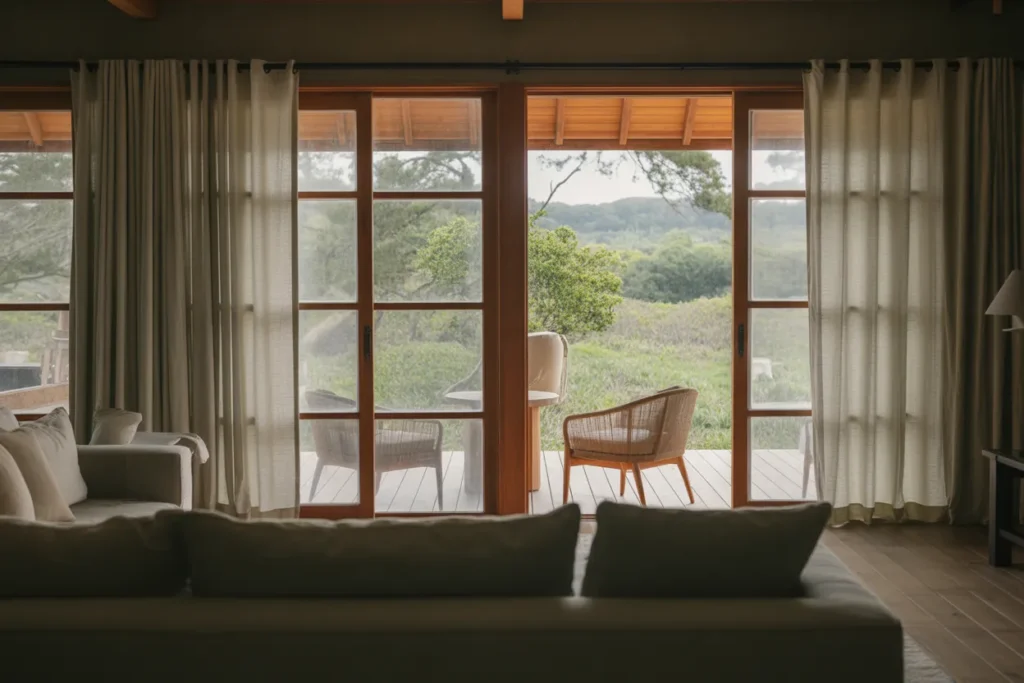
This connection to nature calms your nervous system on a level your conscious mind might miss. Your circadian rhythm aligns with actual daylight. Your eyes get to rest on distant objects rather than focusing on indoor surfaces all day. If privacy is an issue, opt for translucent films or shoji screens rather than heavy curtains. Let light be your design.
14. Minimal Wall Art With Intentional Spacing
One or two thoughtfully chosen artworks create more visual power than a gallery wall.
Gallery walls don’t belong in Japandi spaces. They create visual noise that contradicts the entire philosophy. Instead, choose one meaningful piece. A single-line ink drawing. A nature photograph in a simple frame. An abstract piece that echoes your color palette. Mount it with breathing room around it, letting the wall speak as loudly as the artwork.
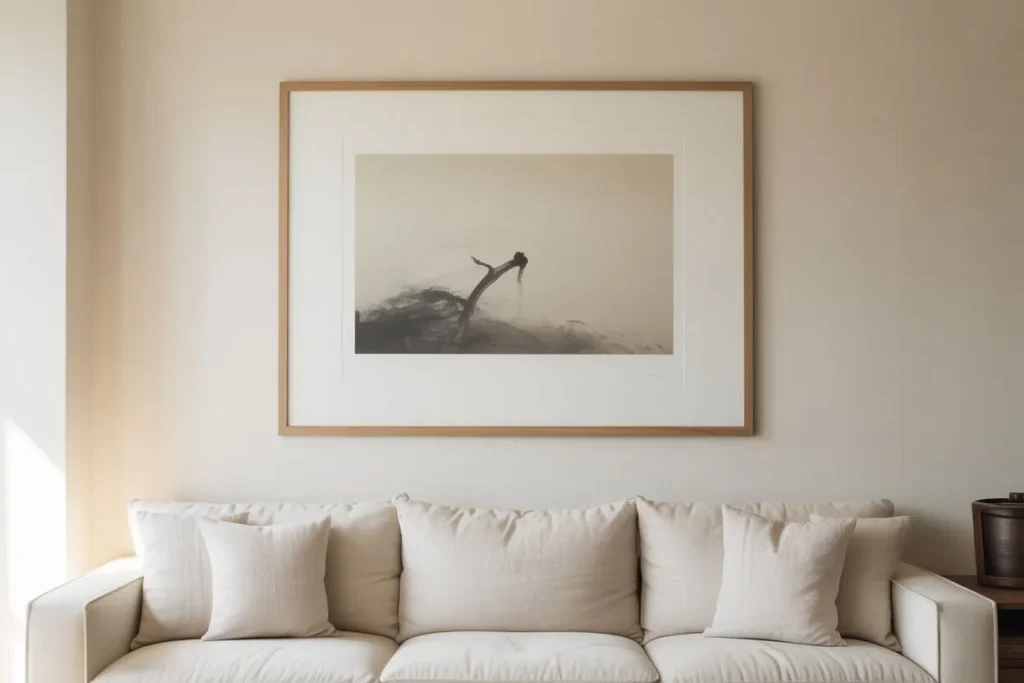
If you want two pieces, place them far apart rather than together. Let negative space define the relationship. Frames should be simple: natural wood, matte metals, or no frame at all. The artwork shouldn’t compete with the room; it should complement it, appearing to belong there rather than imposed upon it.
15. A Low Console Table for Intentional Display
A spare console holds essential items while doubling as an aesthetic focal point.
If you have wall space above a sofa or behind a chair, a low console table works beautifully. Keep items minimal: perhaps three objects, one small lamp, nothing more. This arrangement requires restraint but rewards it with elegance.
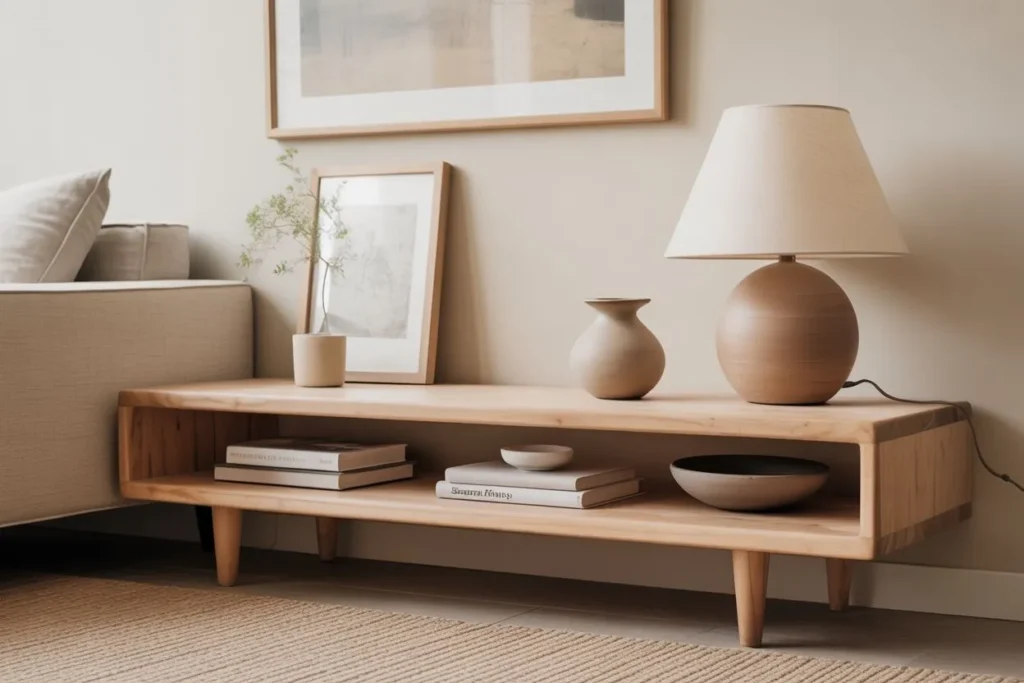
The table itself becomes important. Natural wood with clean lines. A single drawer for hidden storage. Tapered legs that keep the visual weight low. What you display matters more than how much you display. A ceramic vessel. A simple lamp. A single book. Arranged with intention and negative space between them. This setup teaches your eye to appreciate specificity over abundance.
16. Layered Rugs for Texture and Zone Definition
Overlapping rugs in natural fibers create warmth and define spaces without hard divisions. One rug feels sparse. Two rugs layered create richness and functionality. Start with a larger jute rug as your anchor. Layer a smaller wool rug on top, creating a softer seating area for your furniture. The contrast in textures is what matters: rough jute meets soft wool. Natural fibers only.
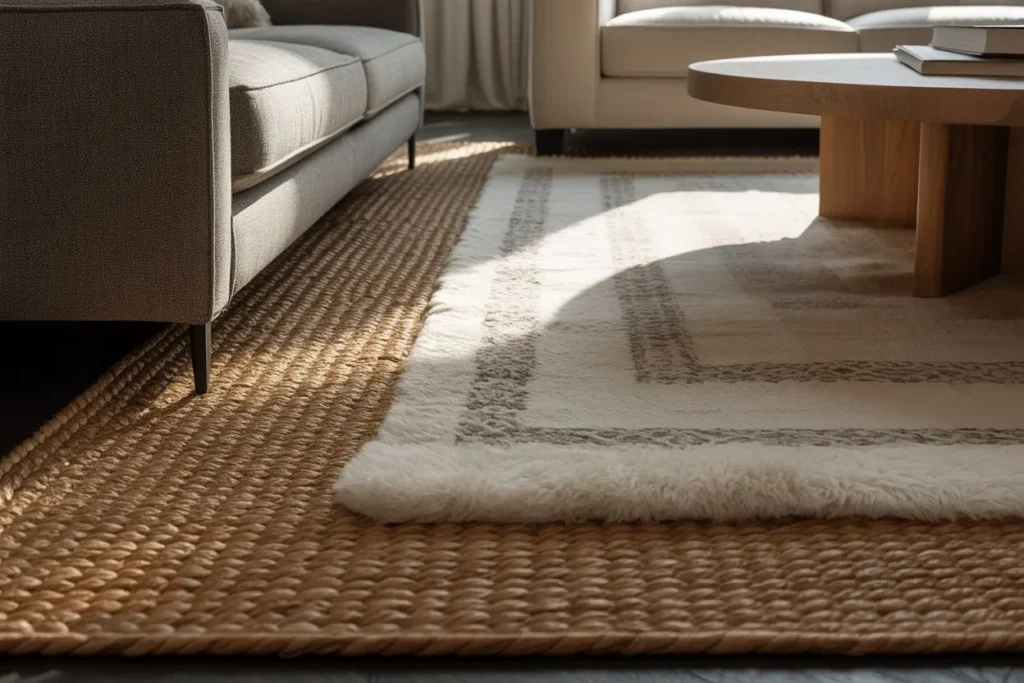
This layering technique adds warmth without visual chaos. It softens the room acoustically, improving how sound travels. It creates a gentle visual boundary around your seating area without the abruptness of a single rug edge. The cost is often lower than buying one expensive rug, and the effect is far more interesting.
17. A Minimal Storage Wall That Hides Everything
Built-in storage with plain doors keeps visual chaos hidden while maximizing functionality.
Japandi spaces appear calm because chaos is hidden, not eliminated. Built-in shelving with simple wooden doors or matte panels stores everything necessary: media, books, blankets, seasonal items. The doors close, and your room returns to serenity.
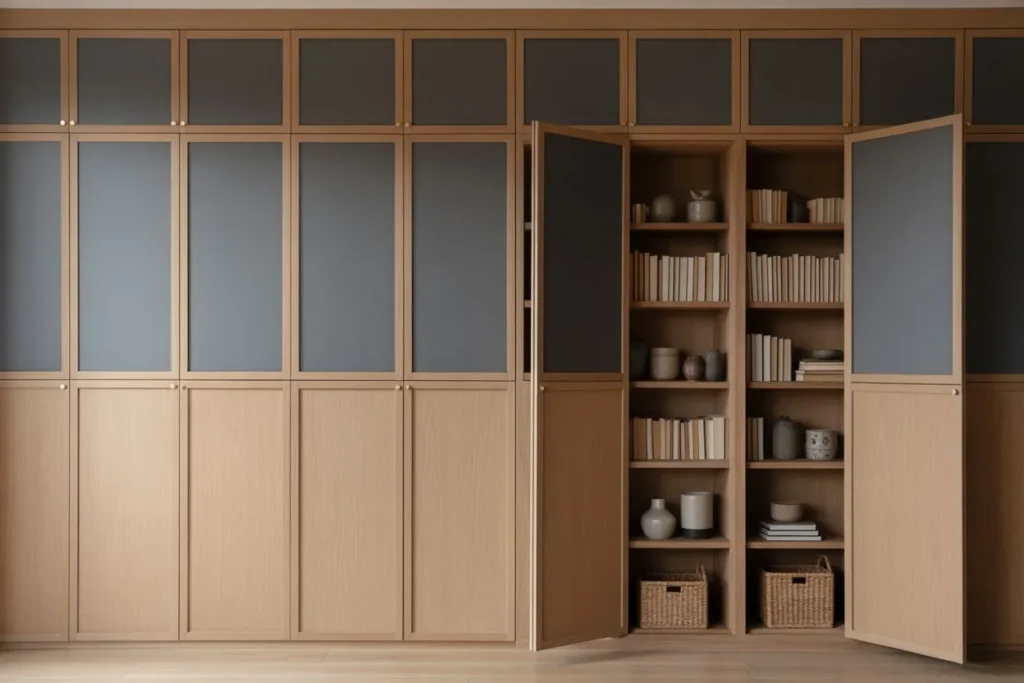
This requires planning but pays dividends in daily peace. When you have dedicated storage, things don’t migrate to surfaces. Your living room can actually function without looking cluttered. The storage wall itself becomes an architectural feature: simple hardware, clean lines, natural wood finish. It integrates into the room rather than screaming “storage unit.”
18. A Fireplace or Focal Heating Element for Warmth and Gathering
A fireplace provides both physical and psychological warmth, becoming a natural gathering point.
Fire is primal. It draws us. In Japandi design, a fireplace becomes the perfect focal point precisely because it’s functional and naturally beautiful. Whether a traditional fireplace, modern gas insert, or tabletop fire feature, the warmth it provides matters on multiple levels.
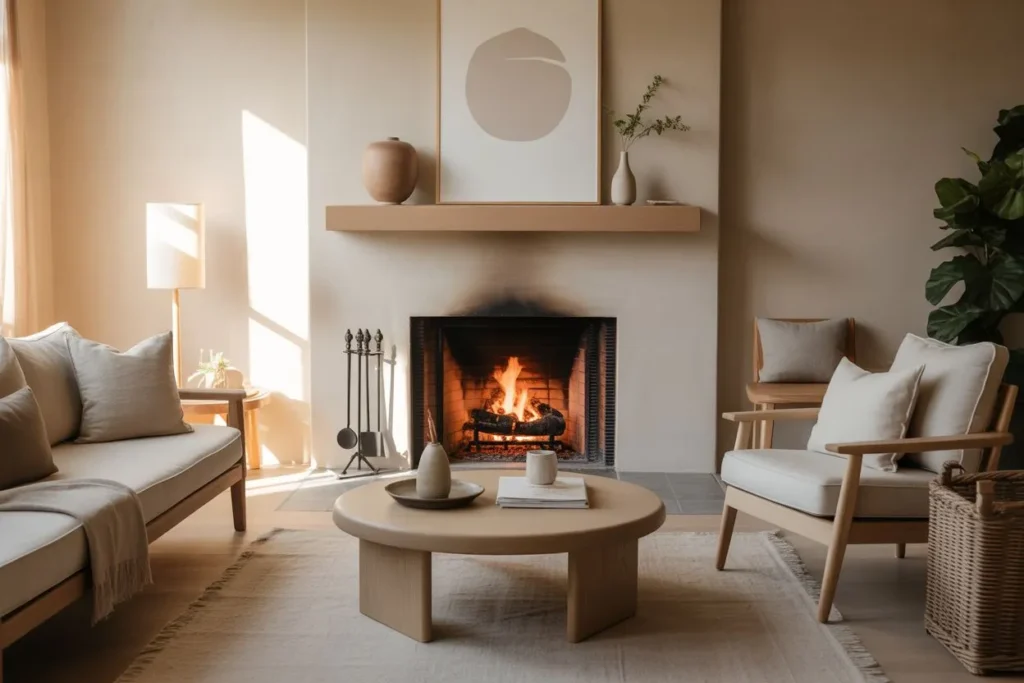
Physically, it heats the space. Psychologically, it signals safety and comfort. Visually, it becomes the anchor point where everything else arranges itself. The simple act of gathering around a fire realigns people with slower rhythms. Screens fade from importance. Conversation deepens. This single element can transform your entire relationship with the room, making it less about productivity and more about presence.
Conclusion:
You don’t implement all 18 ideas at once. This isn’t a checklist to complete but a language to learn. Start with what speaks to you. Maybe it’s the low furniture that feels more welcoming. Perhaps it’s a single statement plant. The meditation nook. One idea leads to another, and gradually your space transforms.
The goal isn’t perfection. It’s peaceful. Your living room should make you want to stay in it, to breathe deeply, to feel held by the space itself. Japandi design creates that feeling by honoring simplicity, respecting your attention, and celebrating the beauty of imperfect, impermanent, intentional living.