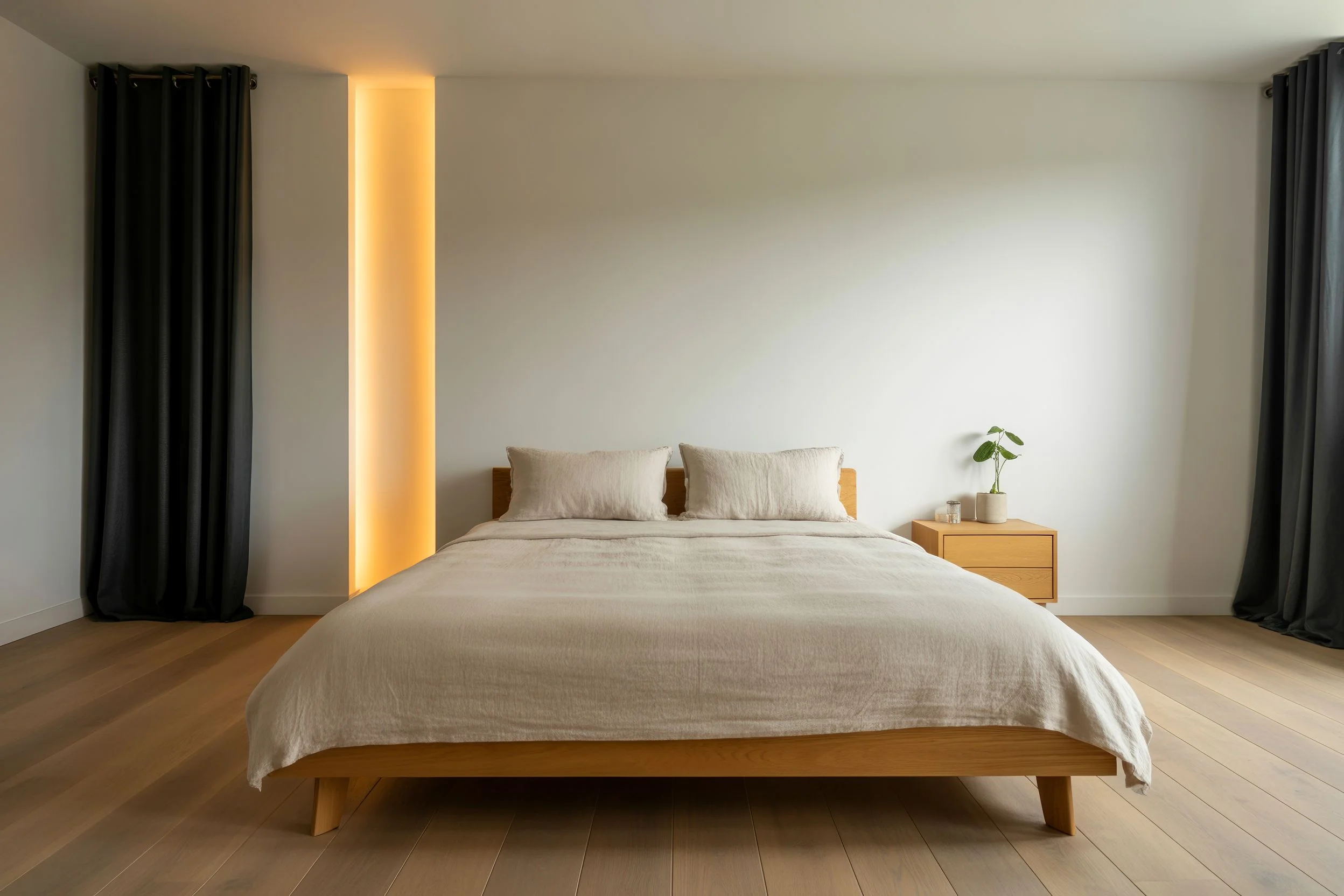
Minimalist Bedroom Setup Tips for a Clean and Calm Space
Why Your Bedroom Feels Cluttered (And How to Fix It)
A cluttered bedroom raises cortisol levels, making it harder to fall asleep and stay calm. Research from Princeton University found that visual clutter directly competes for your brain’s attention. A minimalist bedroom setup removes that mental noise. It gives your mind one clear signal: it’s time to rest.
Most people pile too much into their bedrooms without realizing it. Every extra item your eyes land on sends a small stress signal to your brain. Minimalism isn’t about owning less – it’s about owning only what serves you.
1. Start With a Neutral Color Palette
A neutral color palette is the foundation of every clean minimalist bedroom. Colors like warm white, soft beige, greige, and muted sage create a calming visual temperature in the room. They reflect natural light and make even small spaces feel open.
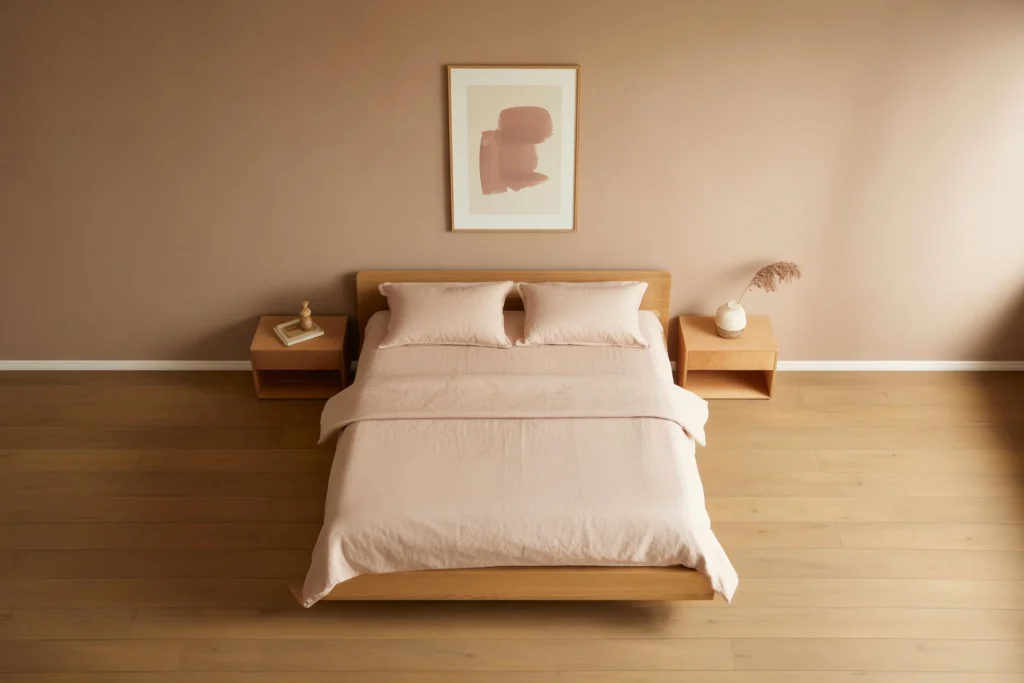
Neutral tones don’t just look good – they work psychologically. Studies in environmental psychology show that cool, muted colors lower heart rate and reduce anxiety. Stick to a maximum of three tones per room for a cohesive, uncluttered look.
2. Choose a Low-Profile Platform Bed
The best minimalist bedroom bed style is a low-profile platform bed. It sits closer to the floor, creates visual breathing room, and eliminates the need for a bulky box spring. Brands like IKEA’s MALM or Zinus platform beds are popular choices that balance budget and clean design.
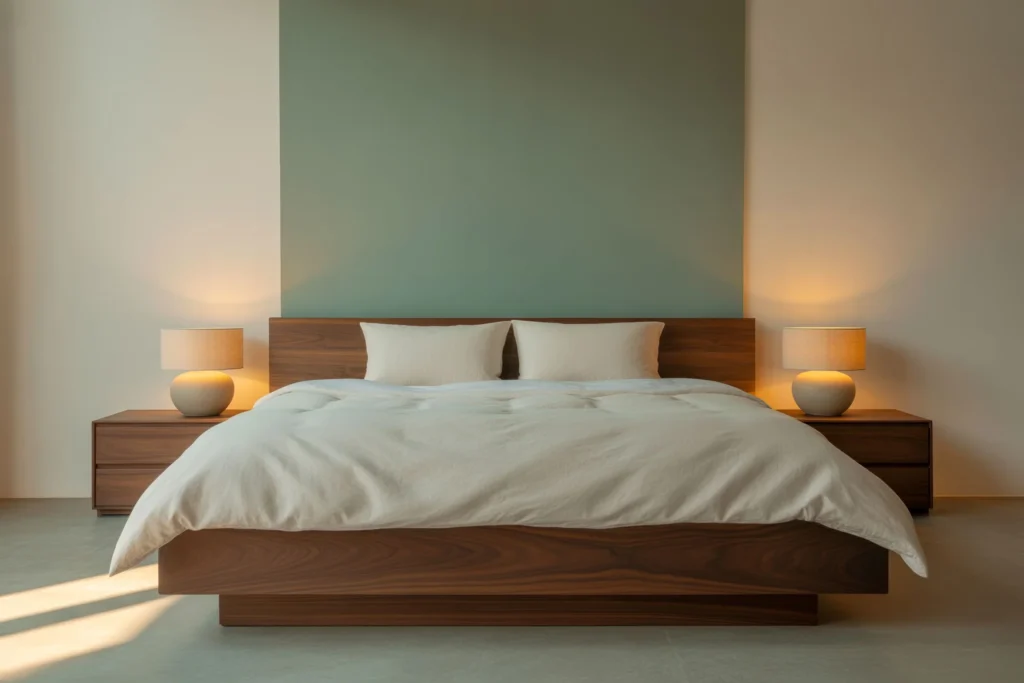
A platform bed keeps the room’s sightlines clean and open. It pairs perfectly with simple linen bedding and doesn’t demand extra accessories. Less visual height means the room feels larger and less heavy.
💰 Looking to decorate on a budget without compromising style? Explore our budget-friendly ideas:
➤ Budget-Friendly Bedroom Decor Ideas for a Stylish Look3. Use Only the Furniture You Actually Need
Minimalist bedroom furniture means keeping only the pieces that earn their place. A bed, one or two nightstands, and a dresser are usually enough. Every extra furniture piece adds visual weight and shortens the room’s breathing room.

Ask yourself: does this piece serve a daily purpose? If it collects more dust than use, it doesn’t belong. Empty floor space isn’t wasted space – it’s intentional calm.
4. Declutter Your Nightstand to One or Two Items
Your nightstand tells the real story of your bedroom habits. A lamp, a book, and maybe a glass of water – that’s all it needs. Anything more than three items creates micro-clutter that your brain registers even in low light.
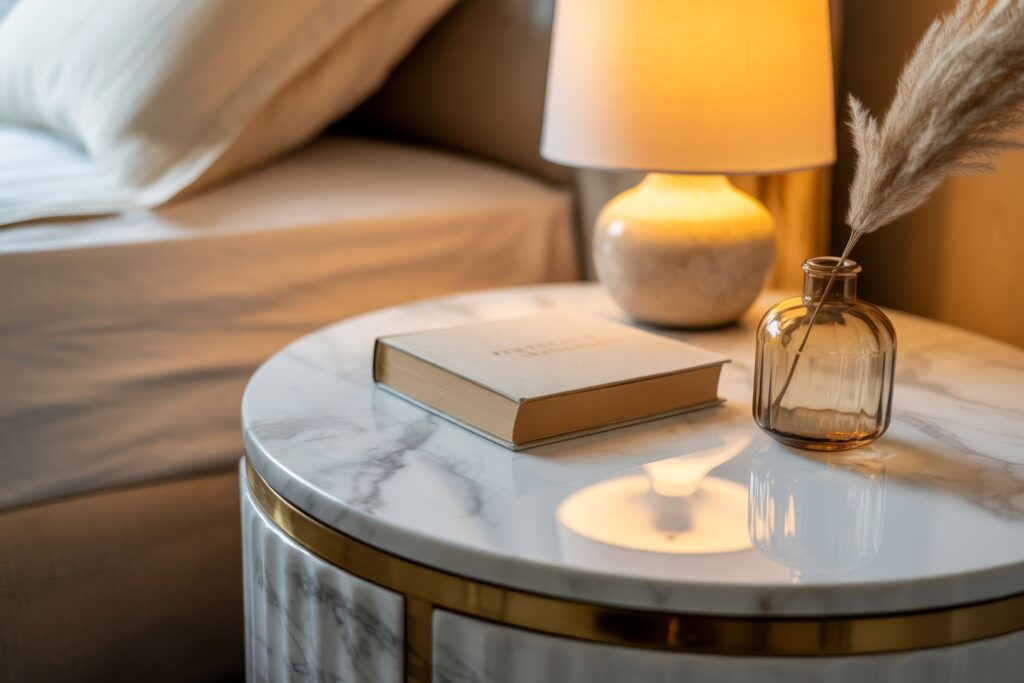
A clean nightstand signals to your brain that sleep is the priority here. It removes the temptation to scroll, fidget, or start tasks before bed. Keep it simple, keep it intentional.
5. Maximize Natural Light in Your Bedroom
Natural light is the most powerful design tool in a minimalist bedroom. It makes the space feel alive without adding any physical clutter. Sheer linen curtains or light-filtering blinds are the best window treatment for a clean, bright minimalist look.
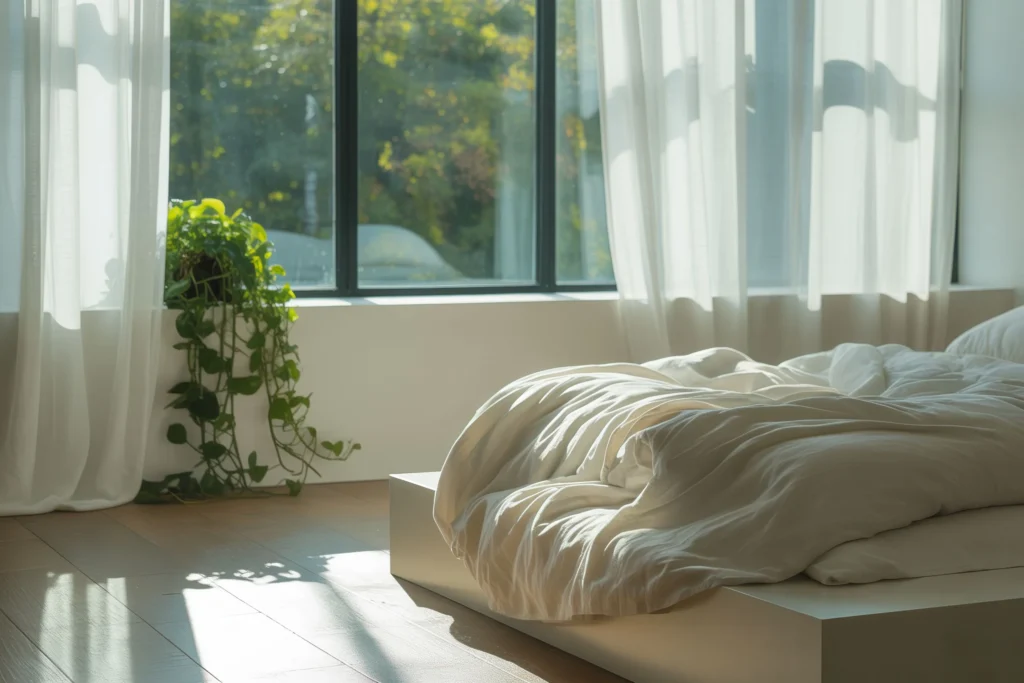
Heavy drapes block light and add visual bulk to the room. Swap them for white or off-white sheers that let the morning light do its job. Natural light also improves your circadian rhythm, which directly impacts sleep quality.
6. Follow the “One In, One Out” Rule for Bedroom Items
The one-in-one-out rule is a practical habit that keeps minimalist bedrooms from creeping back into clutter. Every time something new enters the room, something else leaves. It’s a maintenance habit, not a one-time project.

This rule works because it creates conscious decision-making around what you own. It stops passive accumulation before it starts. Most people find that after a few weeks, they naturally stop buying things they don’t truly need.
7. Use Hidden Storage to Keep Surfaces Clear
Hidden storage is the secret backbone of every clean minimalist bedroom. Under-bed storage drawers, built-in wardrobes, and storage ottomans keep daily items out of sight without demanding extra space. Clear surfaces are what make a room look minimalist at a glance.
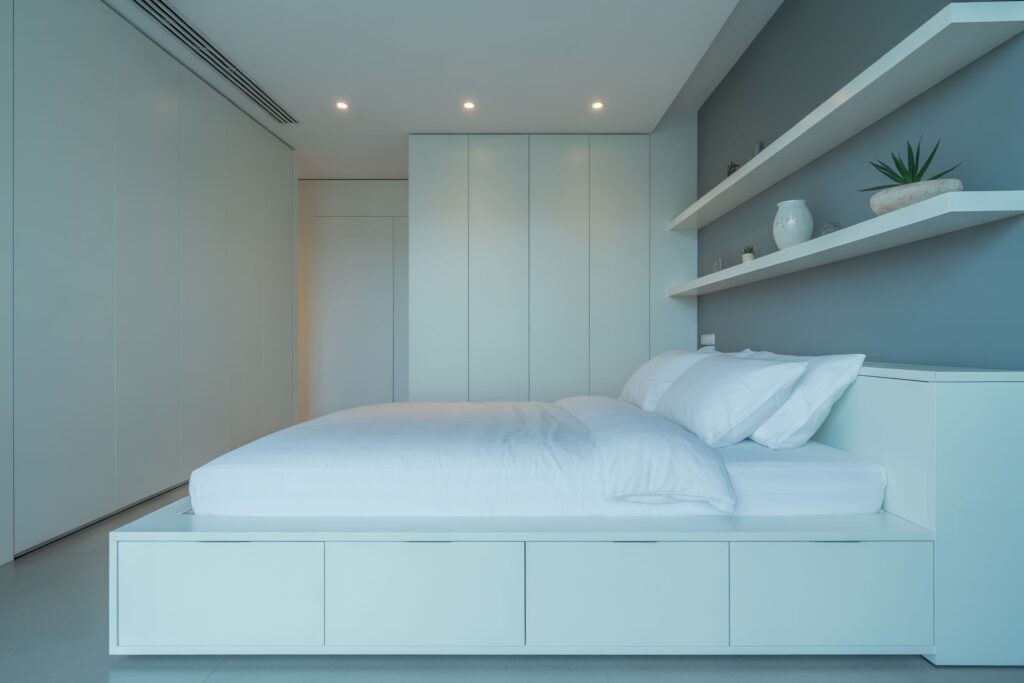
The goal is to make storage invisible. When guests walk in, they shouldn’t see where anything lives. This visual discipline is what separates a genuinely calm bedroom from one that just looks tidy in photos.
8. Stick to a “Less Is More” Wall Decor Approach
The best minimalist bedroom wall decor is one large statement piece or a small gallery of two to three coordinated prints. Overcrowded walls create the same mental noise as physical clutter. One well-chosen art piece adds personality without visual chaos.
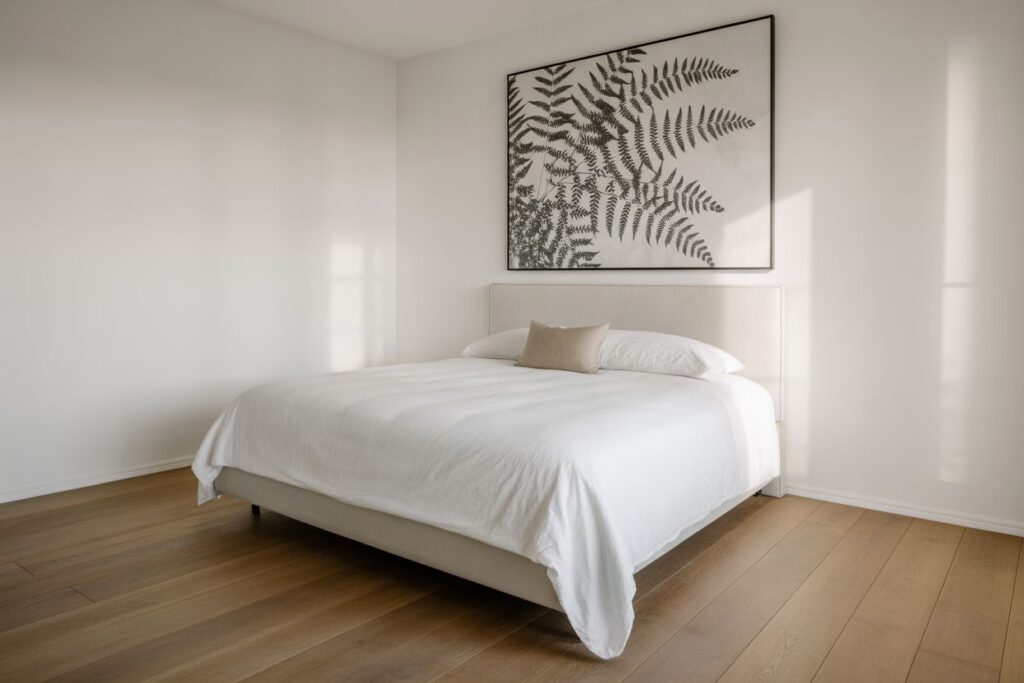
Choose art that feels calm – abstract forms, nature photography, or simple line drawings work well. Frames should match or stay within the same tonal family. Leave most of the wall empty; negative space is a design choice, not a mistake.
9. Bring in One or Two Natural Elements
Natural elements like wood, stone, linen, and plants give a minimalist bedroom warmth without clutter. A single trailing pothos plant, a small wooden tray, or a jute rug adds texture and life to neutral spaces. Nature-inspired details prevent the room from feeling cold or sterile.

Plants also improve air quality and have been shown to reduce stress. You don’t need a collection – one well-placed plant near a window is enough. Let it be a living detail, not a decorating project.
10. Keep Your Bedroom Tech-Free or Minimal
A tech-free bedroom is one of the most effective minimalist choices you can make for sleep. Screens, chargers, and devices add visual noise and disrupt melatonin production through blue light exposure. Even a single charging cable draped across a nightstand breaks the clean visual line of the room.
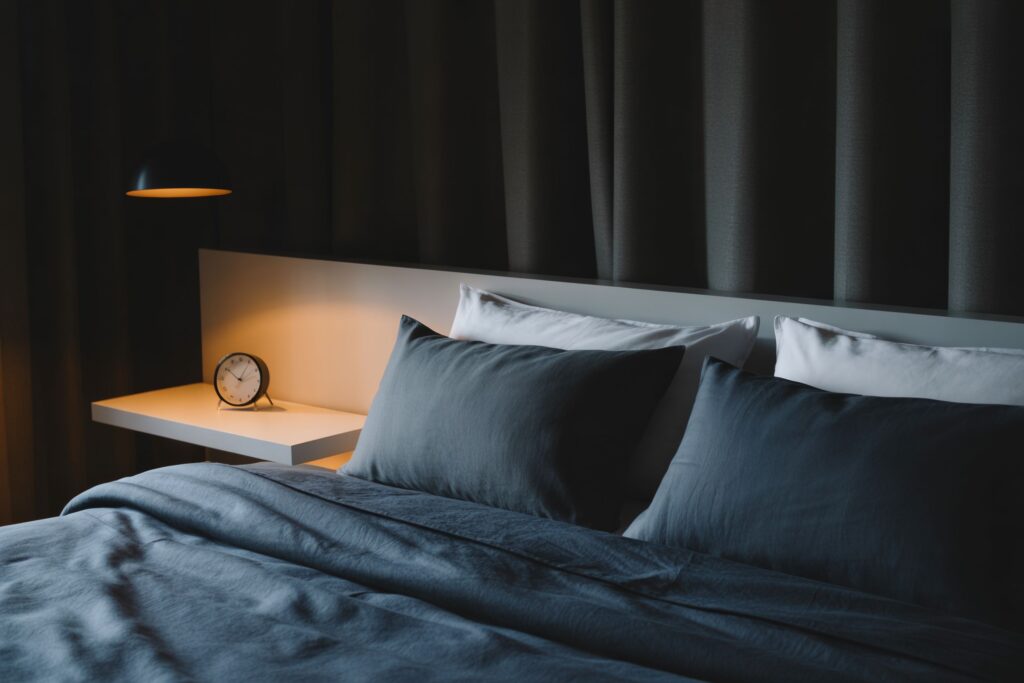
Charge your phone outside the bedroom or inside a drawer. If you use your phone as an alarm, switch to a simple analog clock instead. The fewer devices visible in the room, the faster your brain shifts into rest mode.
11. Choose Bedding That Feels as Good as It Looks
Minimalist bedding is about quality over quantity. A set of high-thread-count linen or cotton sheets in one neutral tone is far more effective than layered decorative pillows and throws. The bed is the room’s focal point – keep it clean, soft, and intentional.
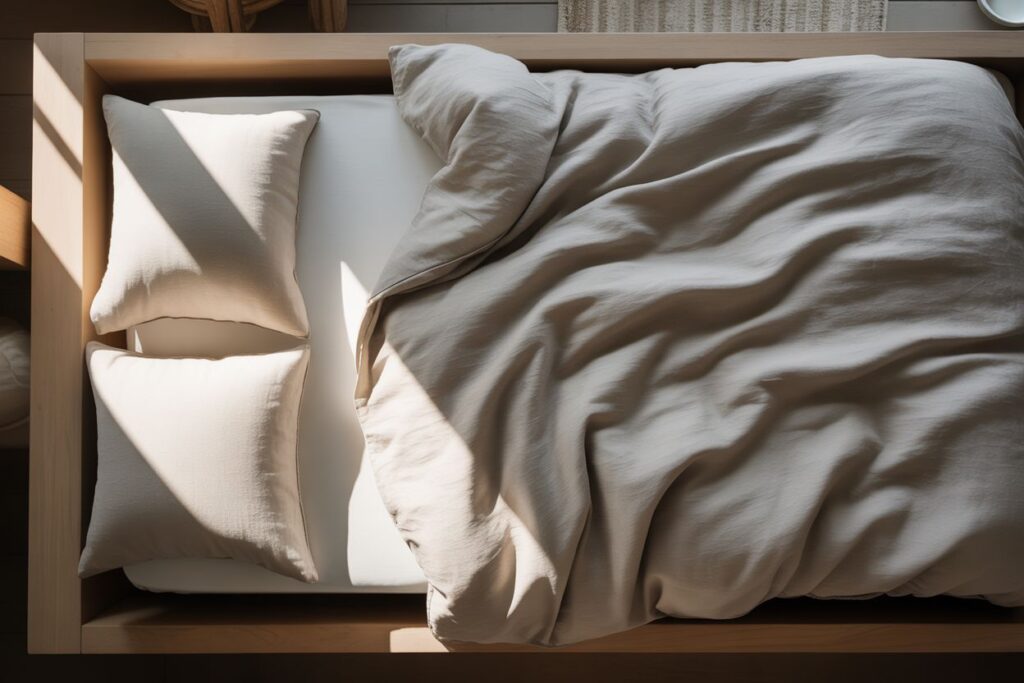
Stick to two to four pillows maximum. Decorative pillows that pile up and get removed every night are a daily chore, not a comfort. Simple bedding saves time and keeps the room looking calm at all times.
12. Use Warm, Layered Lighting Instead of Harsh Overhead Lights
Lighting in a minimalist bedroom should feel like a soft exhale, not a spotlight. Warm-toned bulbs (2700K to 3000K) create a calm, cozy atmosphere without adding physical clutter. A simple bedside lamp and one ambient light source is usually enough.

Avoid bright, cool-toned overhead lights in the evening. They signal “daytime” to your brain and delay sleep. Dimmer switches or smart bulbs with adjustable warmth give you full control over the room’s mood at any hour.
Final Thoughts:
A minimalist bedroom isn’t a design trend – it’s a daily decision to protect your rest and mental clarity. Each choice you make, from your bedding to your lighting, shapes how you feel when you wake up. Small, deliberate changes build a space that genuinely works for you.
You don’t need to redesign everything overnight. Start with one surface, one corner, or one habit. A calmer bedroom is closer than you think.