20 Small Living Room Ideas for Apartments & Tiny Homes
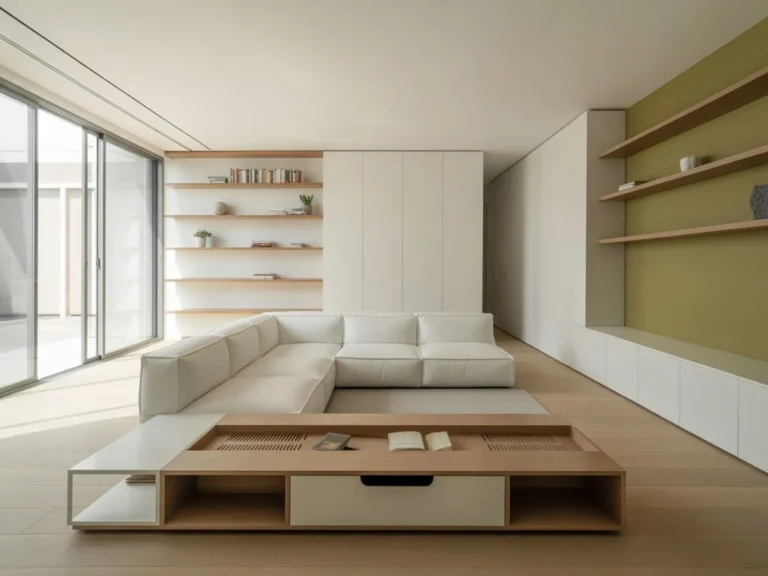
Small living rooms don’t have to feel like a compromise. With the right layout, color, and furniture choices, a tiny space can feel just as warm and stylish as a large one. These 20 ideas are practical, budget-friendly, and designed to work in real apartments and tiny homes – not just magazine shoots.
1. Use a Light Color Palette to Open Up the Space
A light color palette makes a small living room feel bigger without changing a single piece of furniture. Whites, soft creams, and pale grays reflect light and push walls back visually. It’s one of the fastest, most affordable changes you can make.
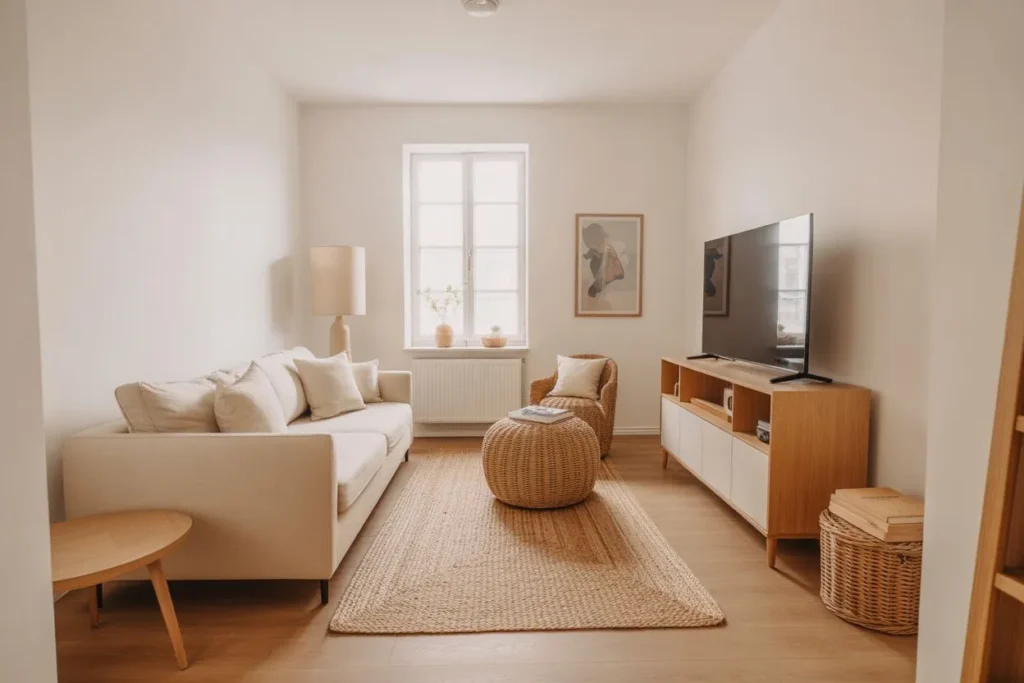
Paint isn’t the only way to do it. Light-colored sofas, rugs, and curtains all work together to create that open, breathable feel. Stick to two or three tones in the same family so the room stays cohesive and calm.
📐 Ready to go even further? These 15 contemporary layout solutions tackle small and awkward living rooms head-on — with practical fixes that actually work:
➤ 15 Contemporary Living Room Solutions for Small & Awkward Layouts2. Choose Furniture with Legs to Create Visual Space
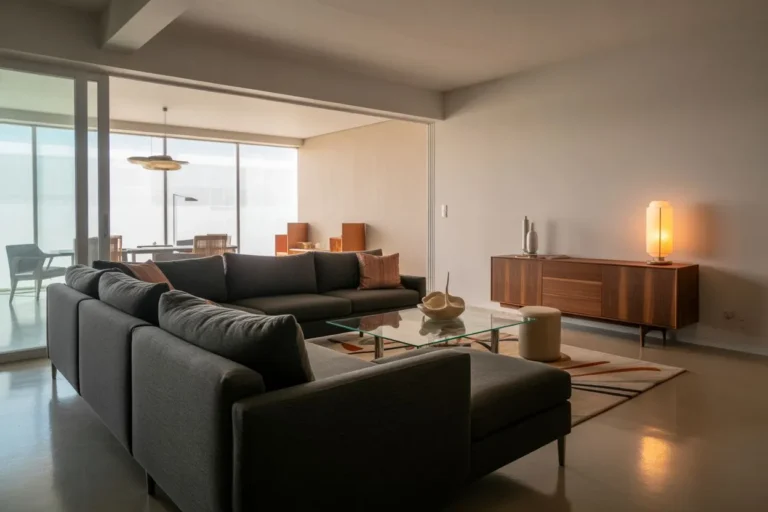
Furniture with exposed legs makes a small room feel less heavy. It lets light travel under the sofa and chairs, which tricks the eye into seeing more floor space. This is one of those little tricks that makes a big visual difference.
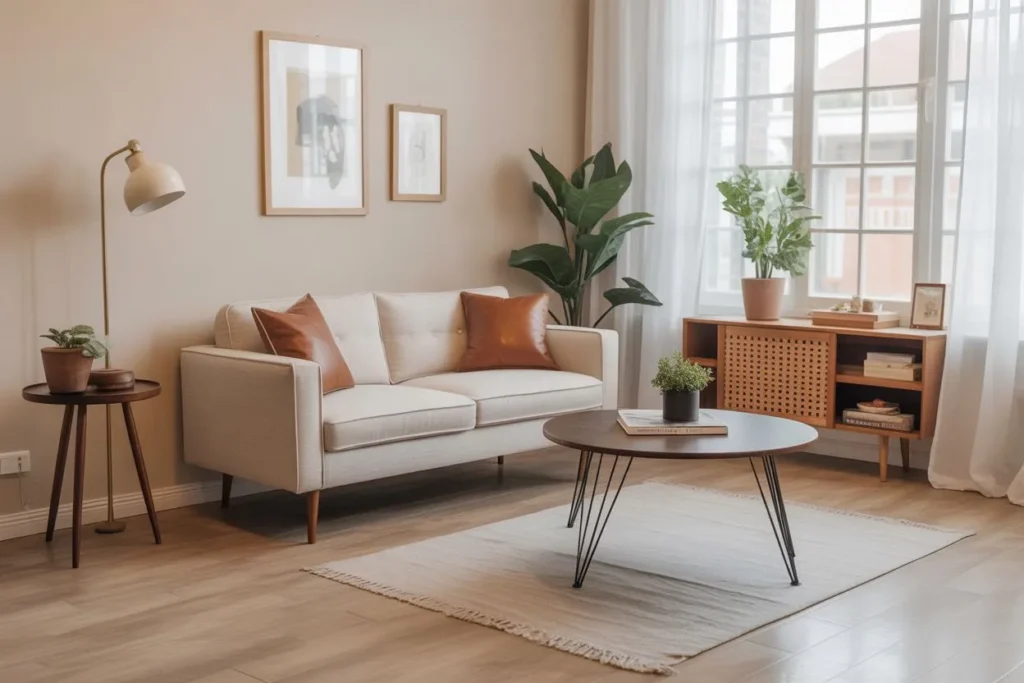
Look for sofas, armchairs, and coffee tables with slim, tapered legs. Avoid pieces that sit flat on the floor – they absorb space instead of sharing it. Even a few inches of clearance under your furniture changes the whole feel of a room.
3. Mount Your TV on the Wall to Free Up Floor Space
Wall-mounting your TV removes the need for a bulky TV stand or entertainment unit. It frees up floor space and draws the eye upward, making ceilings feel taller. It’s a clean look that works in almost every style of small living room.
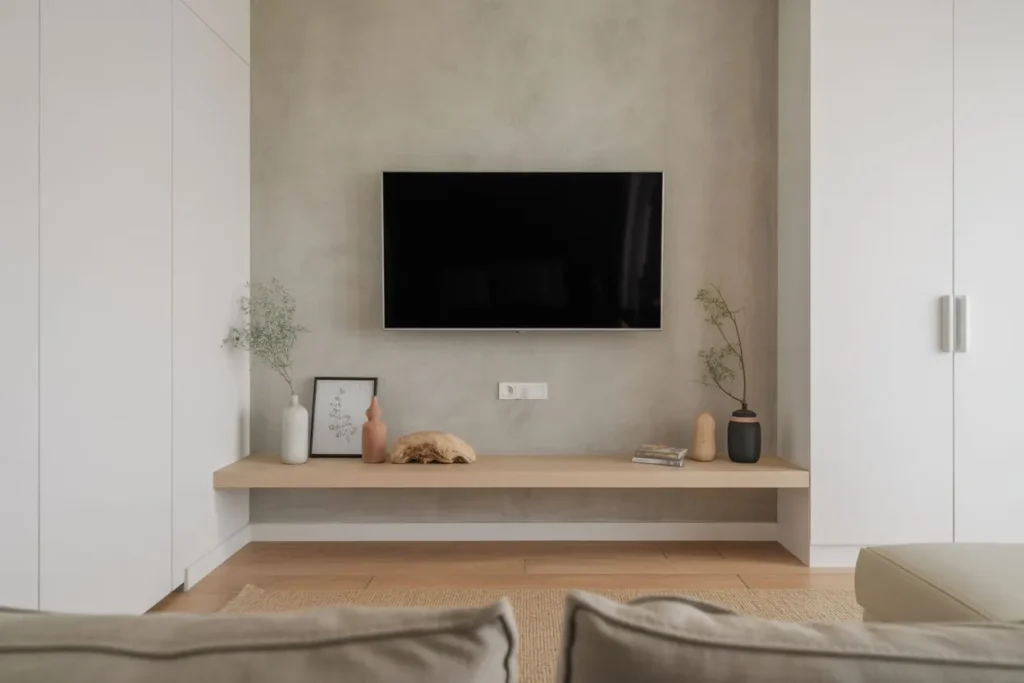
Run cables through the wall or hide them with a slim cable cover for a polished finish. Pair it with a floating media shelf below instead of a full cabinet. You get storage without sacrificing square footage.
🛏️ The same small-space thinking that transforms your living room works just as well in the bedroom — see 12 storage ideas that are as stylish as they are practical:
➤ 12 Smart Storage Ideas for Small Bedrooms That Look Beautiful4. Invest in a Sofa Bed for Double Duty Living
A sofa bed is the smartest piece of furniture in a small apartment. It gives you a full-size guest bed without a dedicated guest room. During the day, it looks like a regular sofa – nobody has to know.
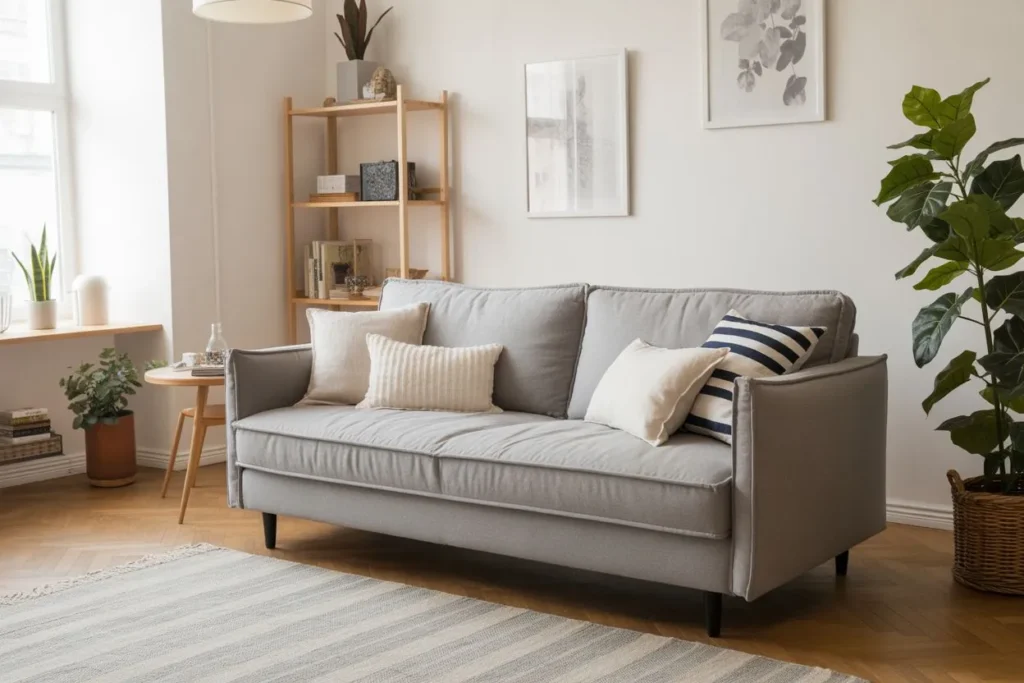
Modern sofa beds are nothing like the uncomfortable pull-outs of the past. Brands like IKEA, Article, and Burrow now make sofa beds that are genuinely comfortable to sleep on. It’s a one-piece solution that does two full-time jobs.
5. Use Mirrors to Double the Light and Space
Mirrors are one of the oldest tricks in small-space design – and they still work. A large mirror on one wall reflects light and makes the room feel twice its size. It’s like adding a window without breaking a wall.
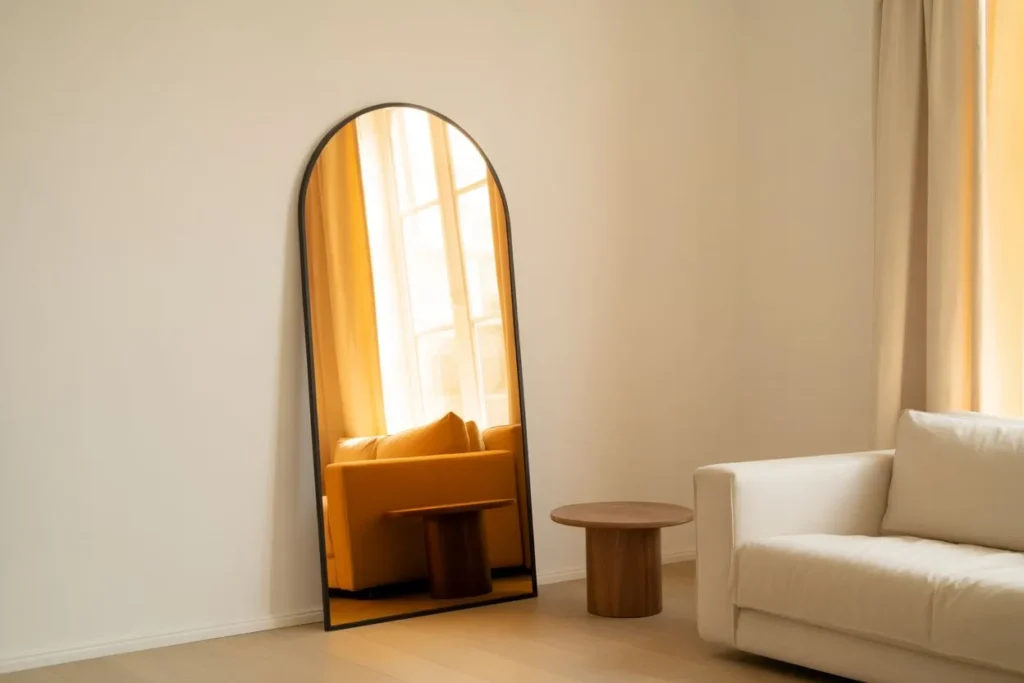
Place a mirror opposite a window to maximize the light reflection. A full-length leaning mirror in a corner takes up almost no floor space but adds serious depth. Choose a simple, slim frame so it blends with the room rather than competing with it.
6. Go Vertical with Shelving to Maximize Storage
When floor space is limited, the walls are your best storage option. Floor-to-ceiling shelving draws the eye upward and makes a room feel taller than it is. It also keeps clutter off surfaces, which is key in a small space.
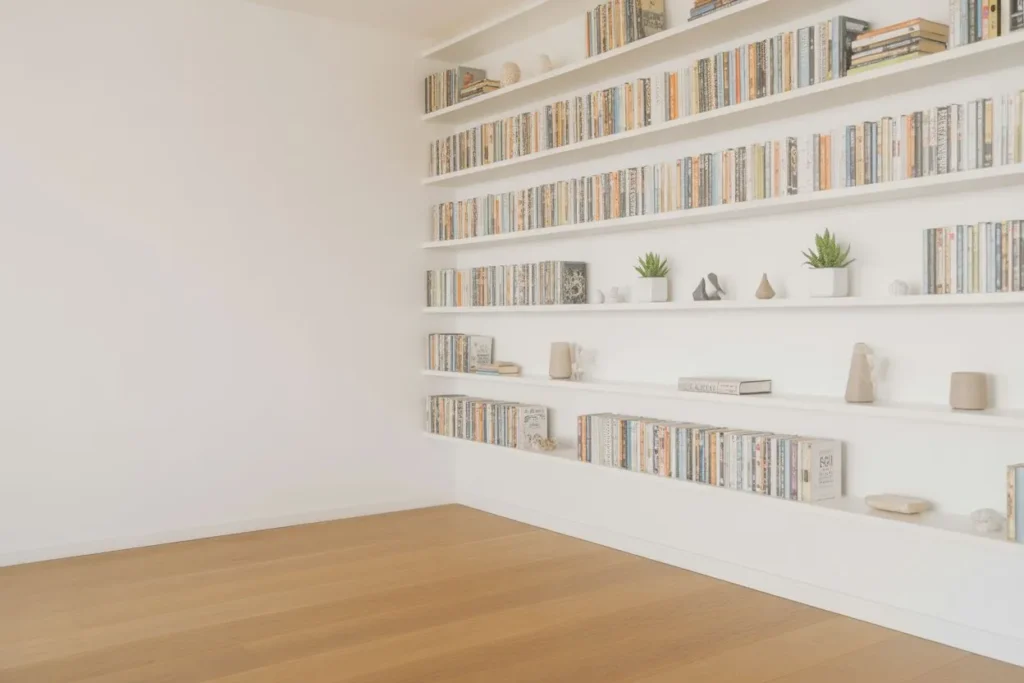
Use floating shelves for a light, open look rather than a full bookcase that blocks the wall. Alternate between books, plants, and small decorative objects to keep it from feeling like a storage unit. Every shelf should look intentional, not accidental.
7. Pick a Round Coffee Table to Improve Flow
In a small living room, sharp corners are your enemy. A round coffee table removes those hard edges and makes it easier to move around the room. It also softens the overall look, which is a bonus.
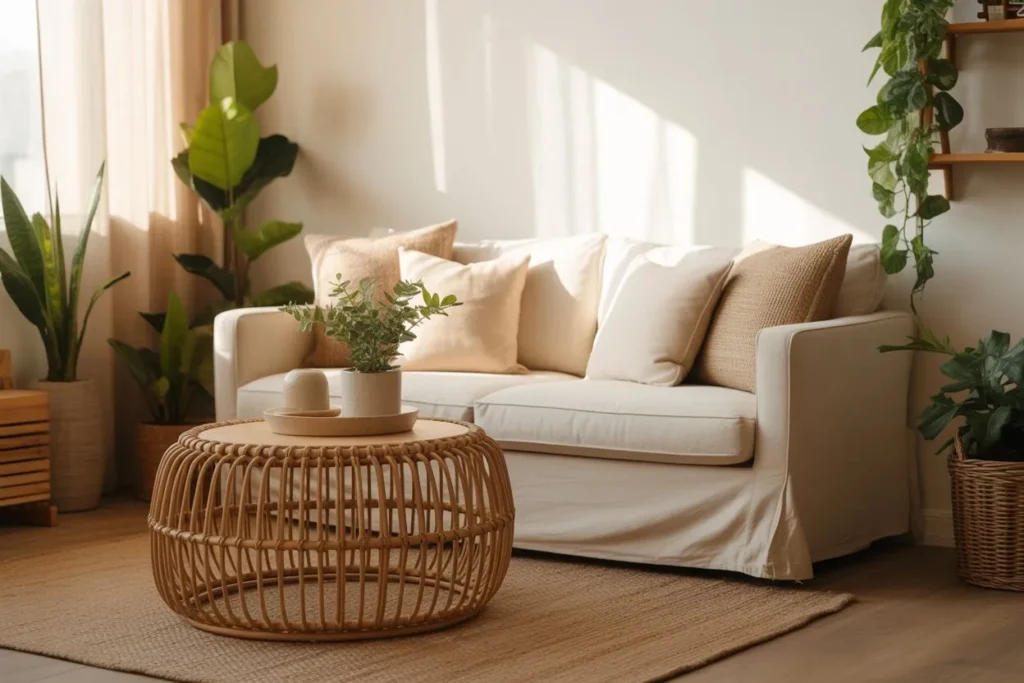
Round tables also tend to look less bulky than rectangular ones in tight spaces. Go for one with an open base – like a wire frame or simple pedestal – to keep the visual weight low. A glass top is another option if you want it to disappear into the room.
8. Use a Large Rug to Define the Seating Area
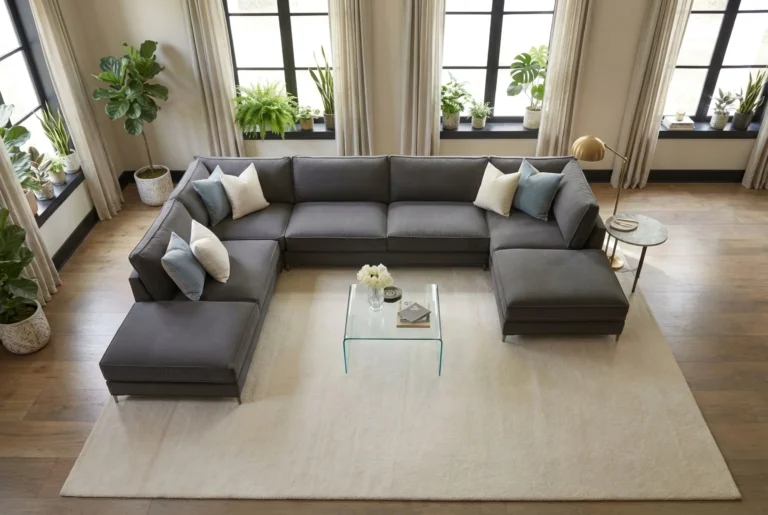
A common mistake in small living rooms is using a rug that’s too small. A large rug that fits under all the furniture anchors the seating area and makes the room feel more intentional. It also adds warmth and texture without adding visual clutter.
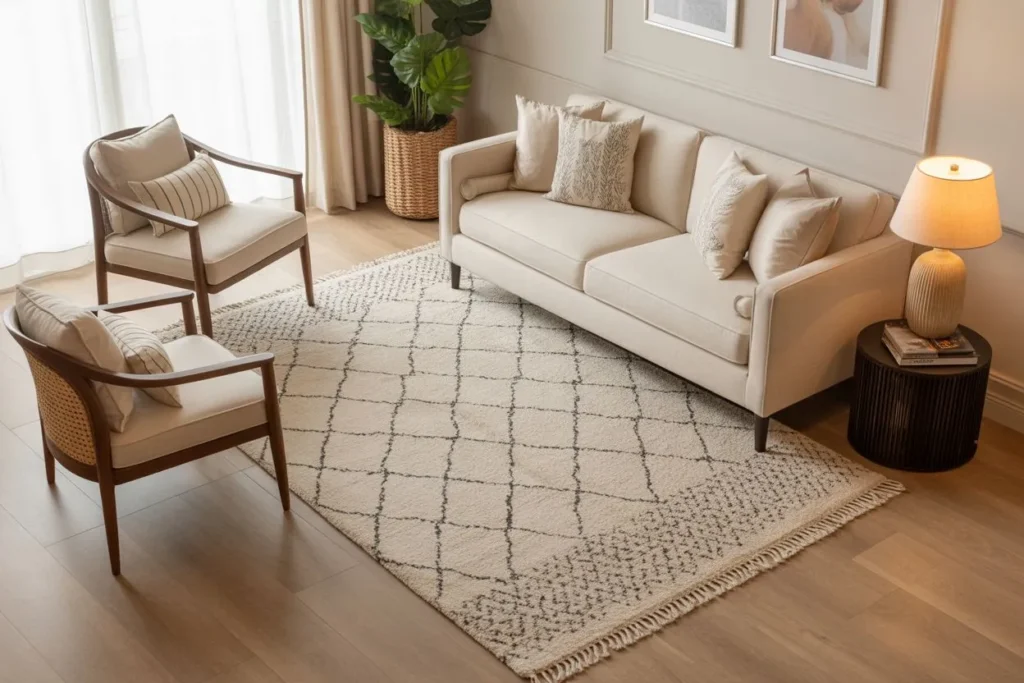
The rug should be big enough that at least the front legs of all seating pieces sit on it. This creates a defined zone within the open floor plan. Think of the rug as the foundation of the room – everything else builds on top of it.
9. Choose a Loveseat Instead of a Full Sofa
Not every small living room can fit a standard three-seater sofa – and that’s okay. A loveseat gives you comfortable seating for two without eating half the room. Pair it with one accent chair to get the same social setup as a sofa-and-chair combo.
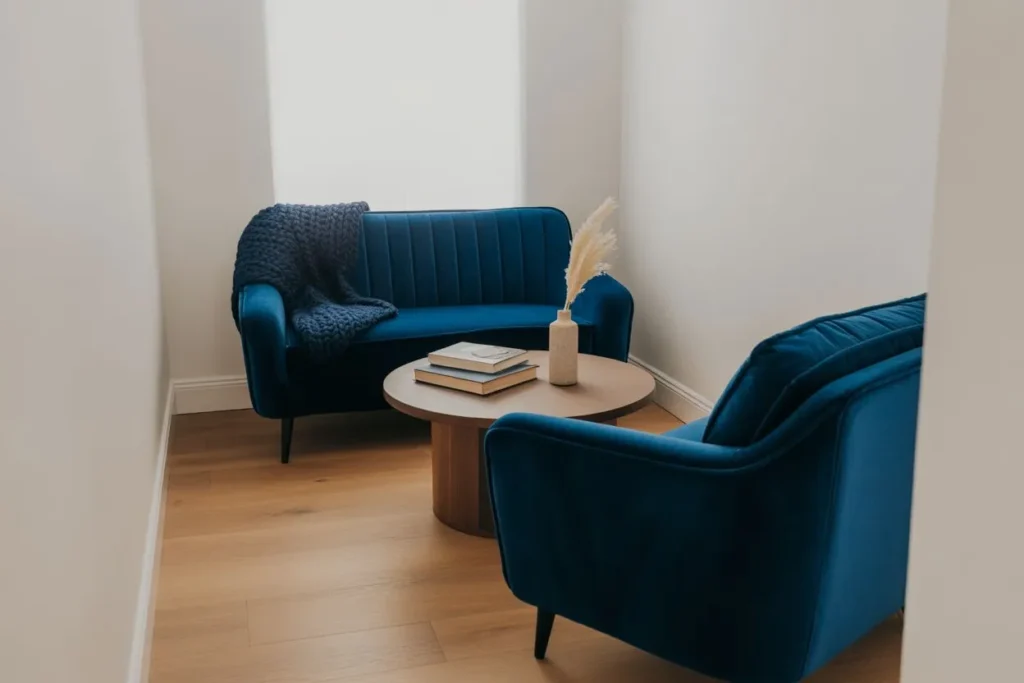
Loveseats typically measure between 52 and 72 inches wide, compared to 84-96 inches for a standard sofa. That saved foot of space matters a lot in a tight room. It also opens up layout options that a full sofa makes impossible.
10. Use Curtains That Hang from Ceiling to Floor
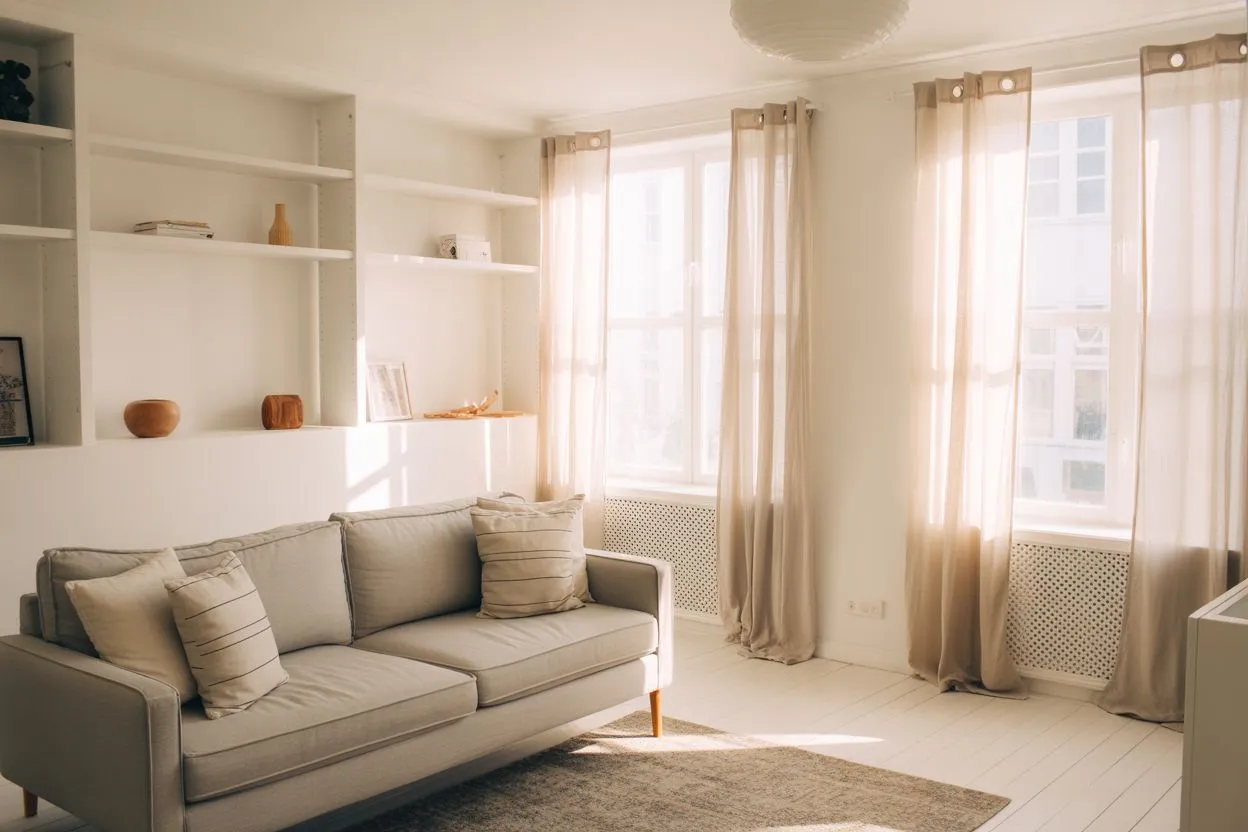
Hanging curtains as high as possible – right at ceiling height – makes a room feel taller. Long curtains that brush the floor add drama and make windows look larger than they are. It’s a simple styling choice with a big payoff.
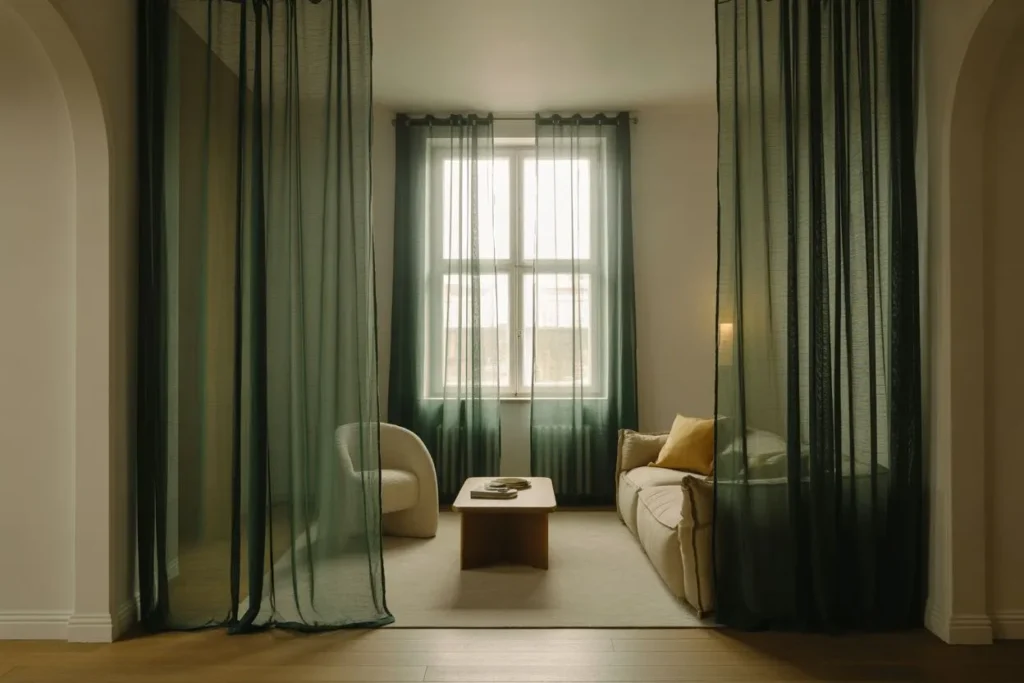
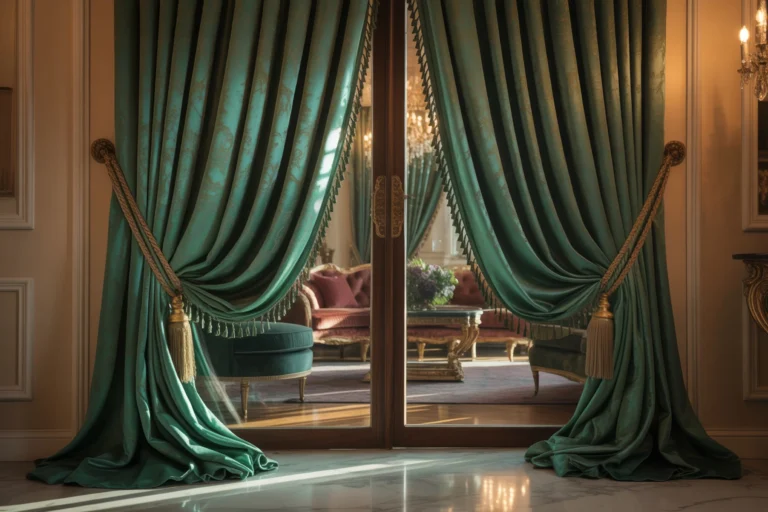
Use sheer or light-filtering fabric to keep the room bright while maintaining privacy. Avoid heavy drapes in small rooms – they absorb light and make walls feel like they’re closing in. The goal is to borrow as much natural light as possible.
11. Add a Daybed to the Living Room
A daybed sits somewhere between a sofa, a chaise, and a guest bed. In a small apartment, it pulls off all three jobs at once. It’s especially useful in studio apartments where the living room and sleeping area overlap.
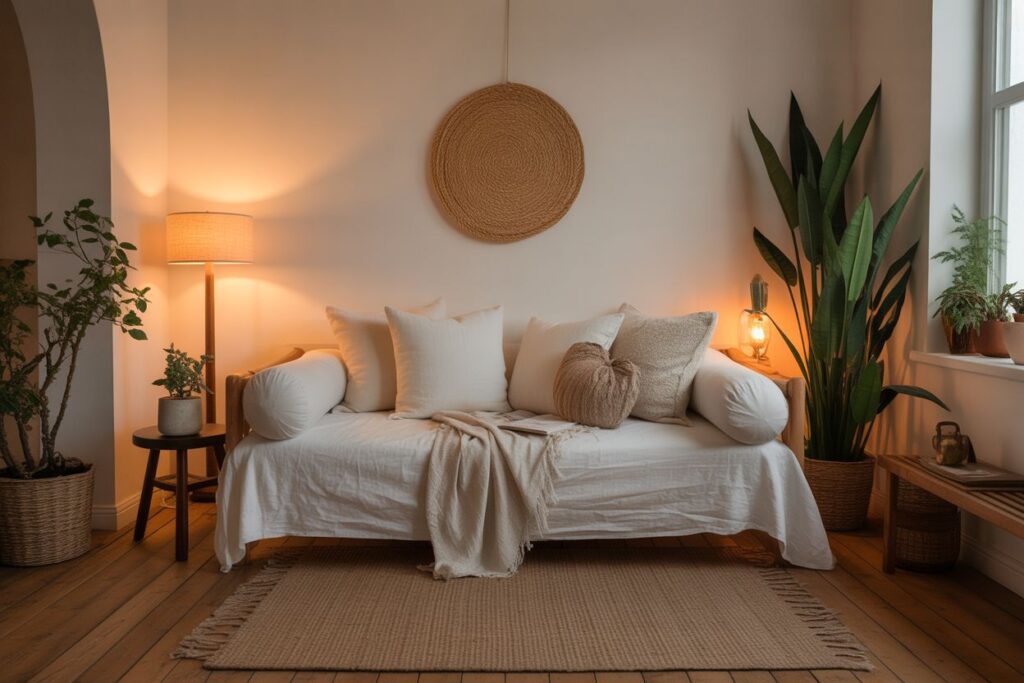
Style a daybed with bolster pillows along the back to make it read like a sofa during the day. At night, remove the pillows and it becomes a proper sleeping space. It takes up roughly the same footprint as a loveseat but offers far more function.
12. Keep the Coffee Table Low and Small
A tall or oversized coffee table can dominate a small room. Keeping it low and compact maintains open sightlines and makes the room feel less crowded. The coffee table should serve the room, not compete with it.
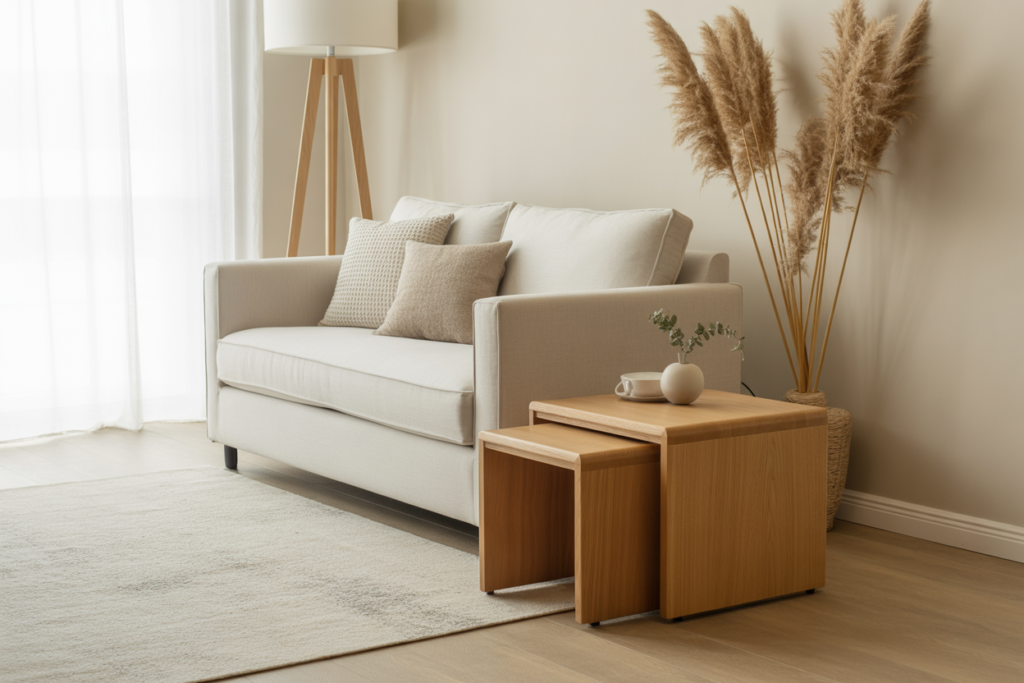
Aim for a table that’s roughly the same height as your sofa cushions or slightly lower. In a very small space, consider a set of small nesting tables instead of one large one. You can spread them out when needed and tuck them away when you don’t.
13. Declutter and Keep Only What You Use
Clutter is the single biggest enemy of a small living room. Every unnecessary item on a surface makes the room feel smaller and more stressful. A clean, edited space always feels larger than a full one.
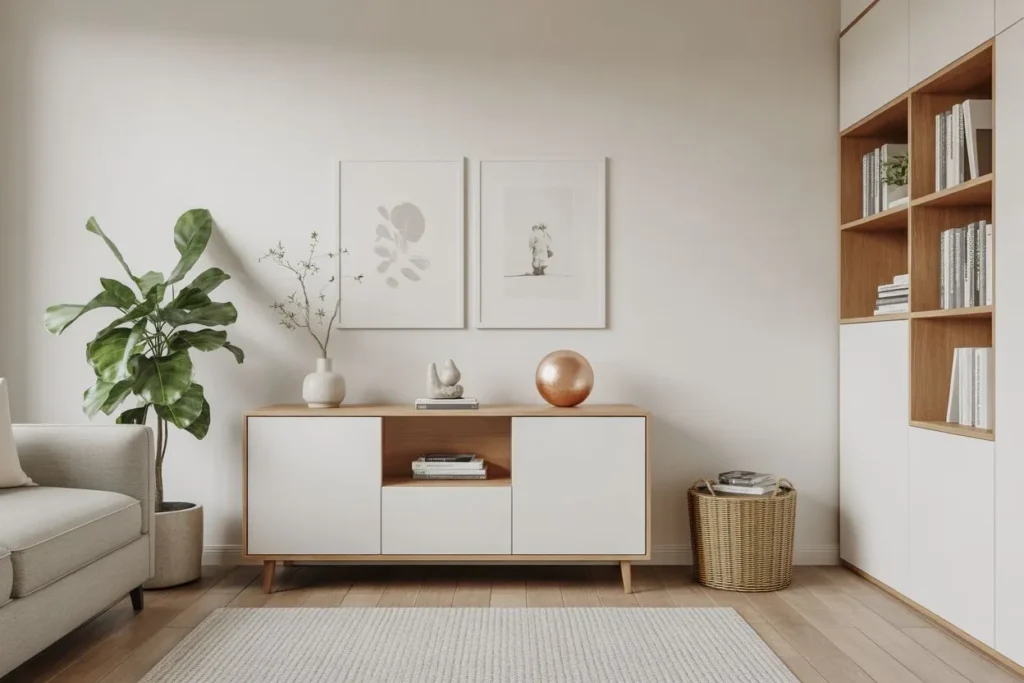
Go through your living room and ask yourself: does this belong here, or is it just sitting here? Storage baskets, ottomans with hidden storage, and smart shelving can hold the things you need without displaying them. Visible clutter costs you space – even when it doesn’t physically take up much room.
14. Use an Ottoman as a Coffee Table
A soft ottoman in the center of your seating area is one of the most flexible pieces you can own. It works as a coffee table, extra seating, and hidden storage all at once. In a small living room, every piece of furniture needs to do more than one thing.
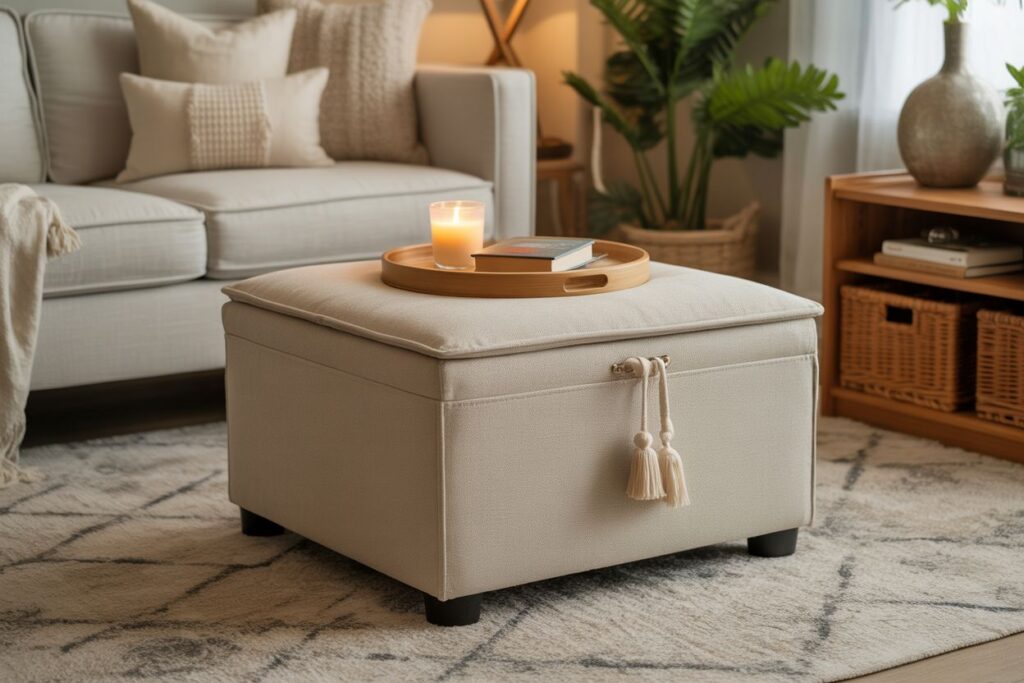
Add a sturdy tray on top to give it a flat surface for drinks or books. Choose a storage ottoman to keep blankets, remotes, or games inside. It’s softer and safer than a hard table – especially in homes with kids.
15. Add Architectural Interest with an Accent Wall
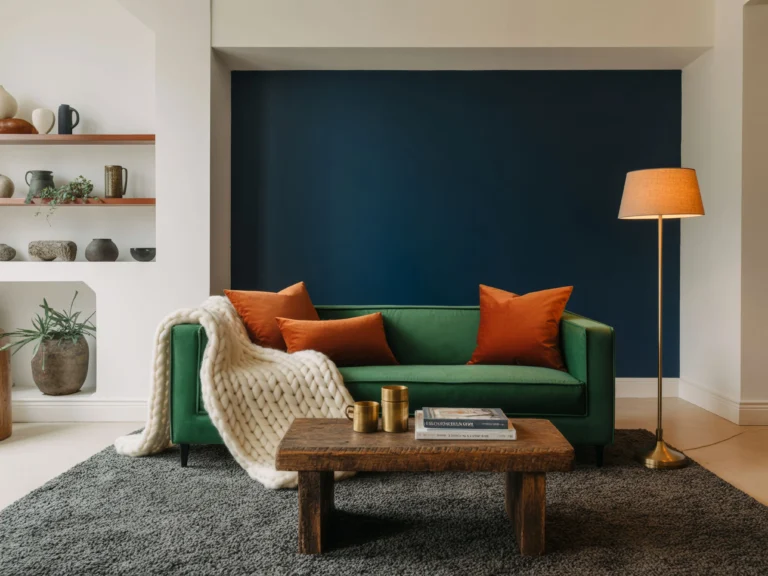
An accent wall gives a small room a focal point without crowding it with furniture or decor. It draws attention to one area, which keeps the room from feeling scattered. A single bold wall can make a space feel designed rather than default.
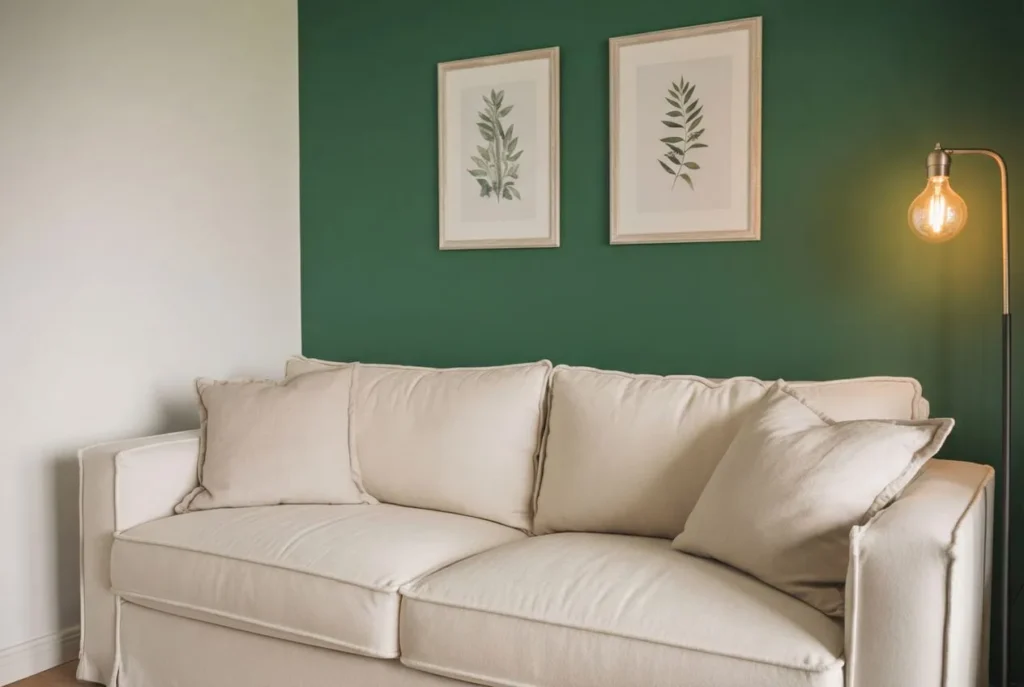
Use paint, wallpaper, or a textured material like shiplap or plaster. Keep the other three walls light and neutral so the accent wall gets the spotlight. This approach adds personality to the room without adding square footage.
16. Bring in Natural Light with Sheer Window Treatments
Natural light is the best design tool in a small space – and it’s free. Sheer curtains or light-filtering blinds let daylight pour in while still giving you privacy. Blocking natural light makes a small room feel like a box.
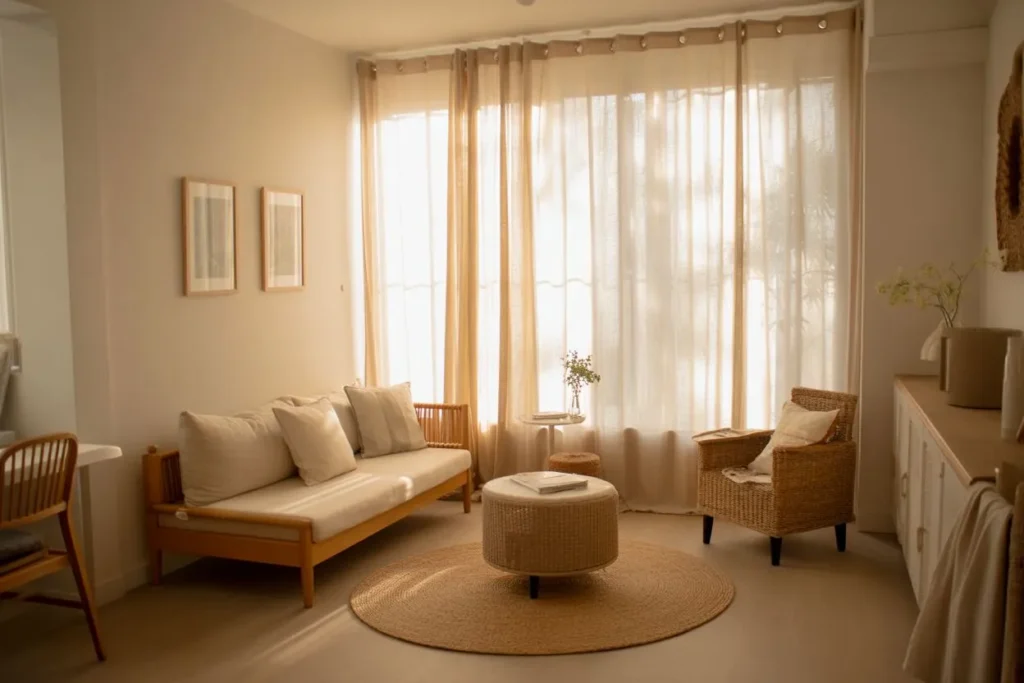
Avoid heavy curtains, dark roller blinds, or anything that cuts off the light during the day. If privacy is a concern, use bottom-up blinds that let light in from the top while keeping the lower half covered. Light is what makes a small room feel alive.
17. Use Built-In Storage Around the Fireplace or TV
Built-in shelving and cabinetry around a fireplace or TV wall uses space that usually just sits empty. It gives you serious storage without pushing furniture into the room. It also makes a small space look custom-designed and intentional.
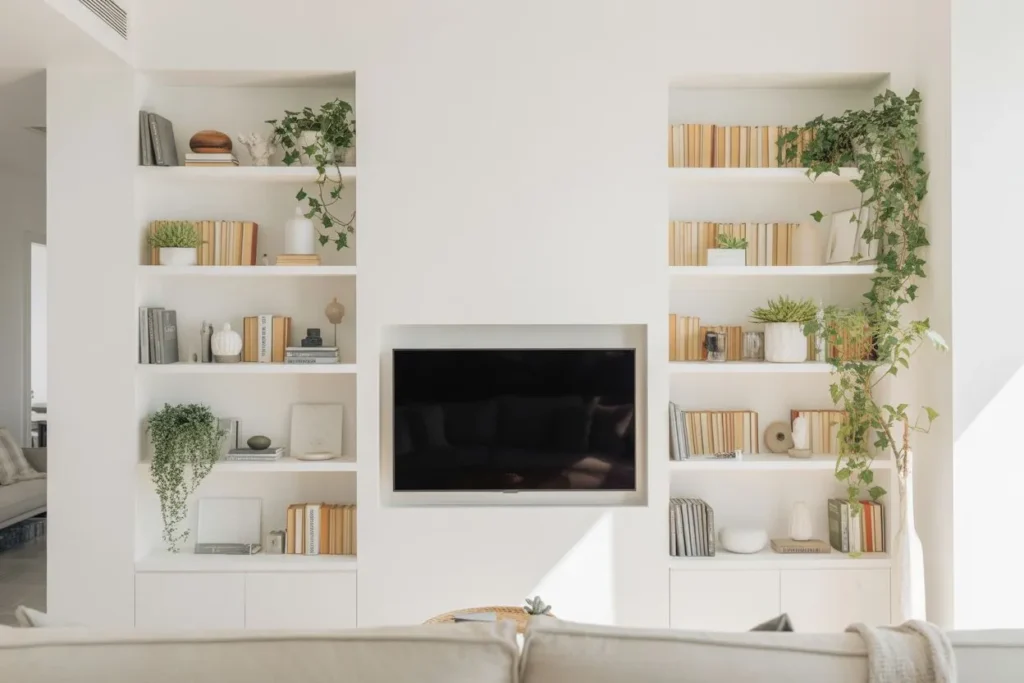
Even if you can’t install full built-ins, you can fake the look with modular shelving units from IKEA or similar. Flank your TV wall with two identical bookshelves and they’ll read as built-ins from across the room. Style the shelves simply to keep the look clean.
18. Choose a Sofa in a Neutral, Light Tone
Dark sofas can make a small room feel closed-in and heavy. A sofa in a light neutral – cream, light gray, oat, or soft white – keeps the room feeling open. It’s also easier to style with different cushion colors and throws as seasons change.
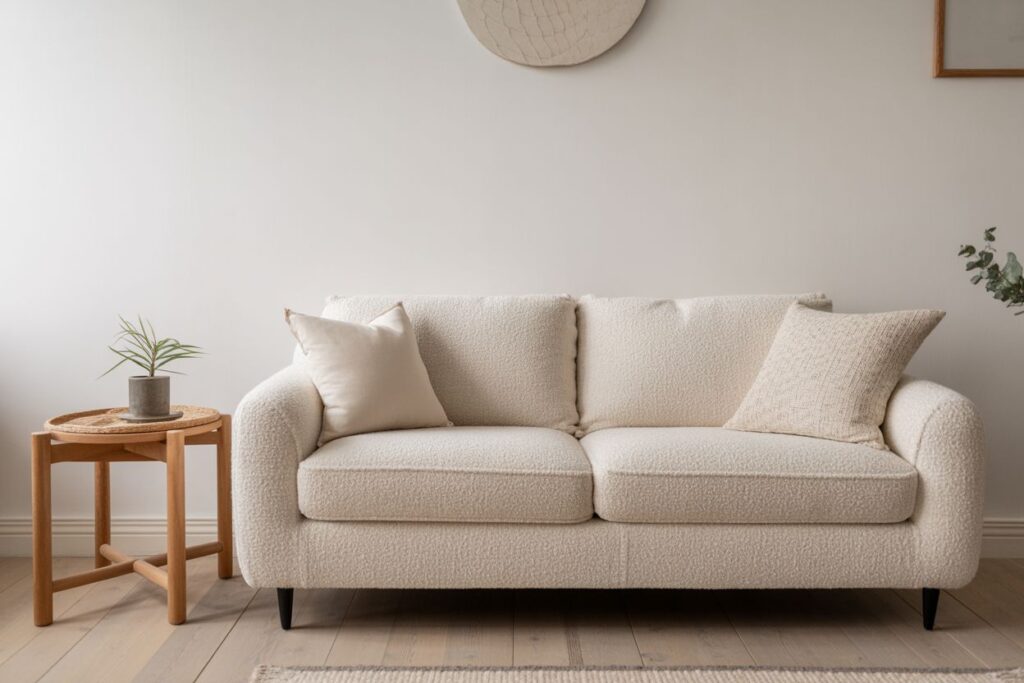
If you’re worried about stains, look for performance fabrics like Crypton, Sunbrella, or bouclé – they’re durable and easy to clean. A light-toned sofa doesn’t mean a high-maintenance sofa anymore. Modern fabric technology has made it very practical.
19. Layer Lighting for a More Spacious Feel
Overhead lighting alone makes a room feel flat and harsh. Layering different light sources – floor lamps, table lamps, and wall sconces – adds warmth and depth to a small room. It makes a space feel finished and livable rather than functional and basic.
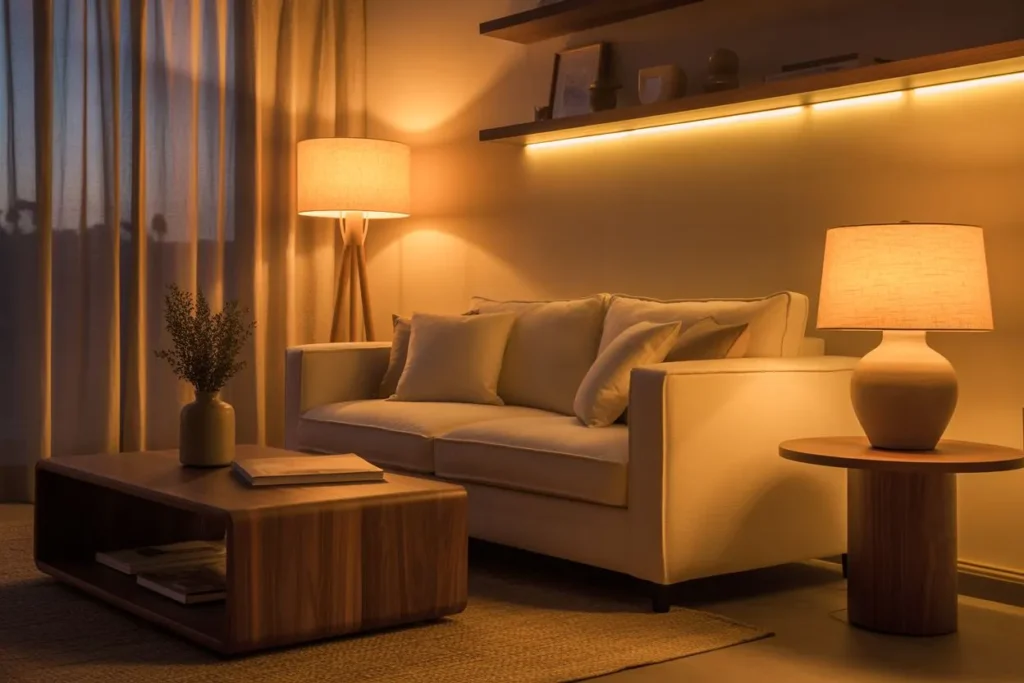
Use warm bulbs (2700K-3000K color temperature) to make the room feel cozy rather than clinical. A floor lamp in a corner fills dark spots that overhead lights miss. Good lighting is the difference between a room that feels cold and one that feels like home.
20. Use Plants to Add Life Without Adding Bulk
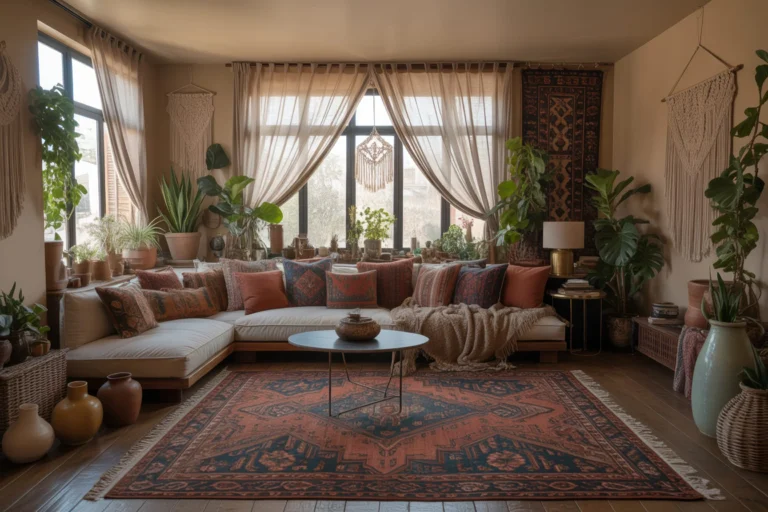
Plants bring a living room to life without taking up much space. A few well-placed green plants add color, texture, and a sense of calm to a small apartment. They make a minimal room feel warm rather than empty.
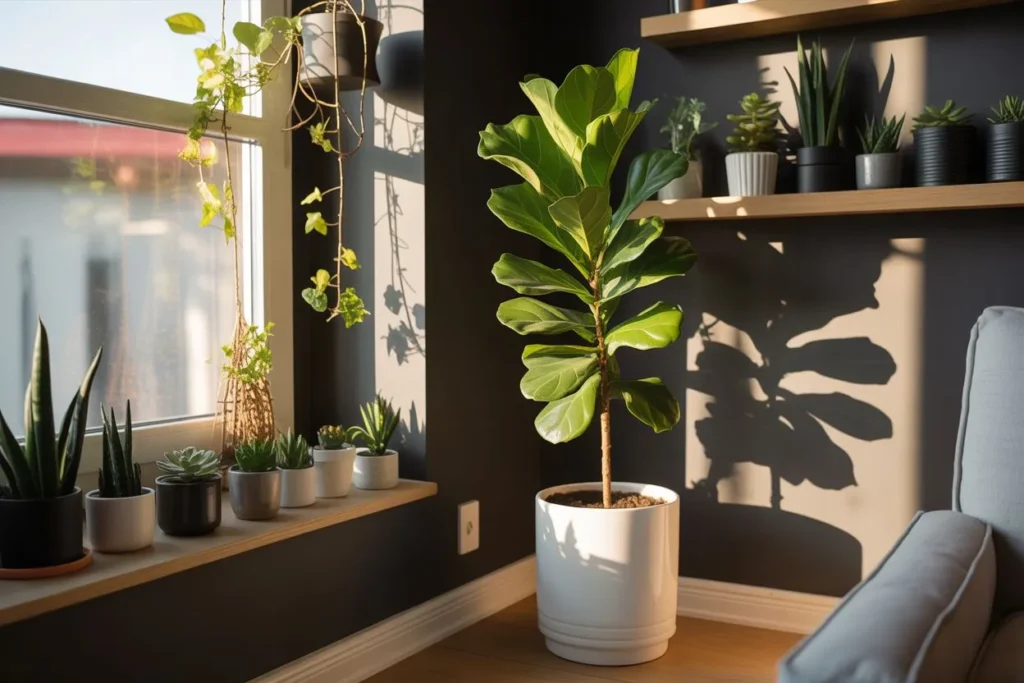
Go for tall, slim plants like a snake plant or fiddle leaf fig in a corner to draw the eye upward. Smaller plants work well on shelves and side tables. Plants are one of the cheapest ways to make a room feel more like a home.
Final Thoughts
These 20 ideas all work in real apartments and tiny homes – not just dream spaces with unlimited budgets. The best small living room is one that fits how you actually live. Pick two or three ideas from this list and start there. Small changes stack up fast.