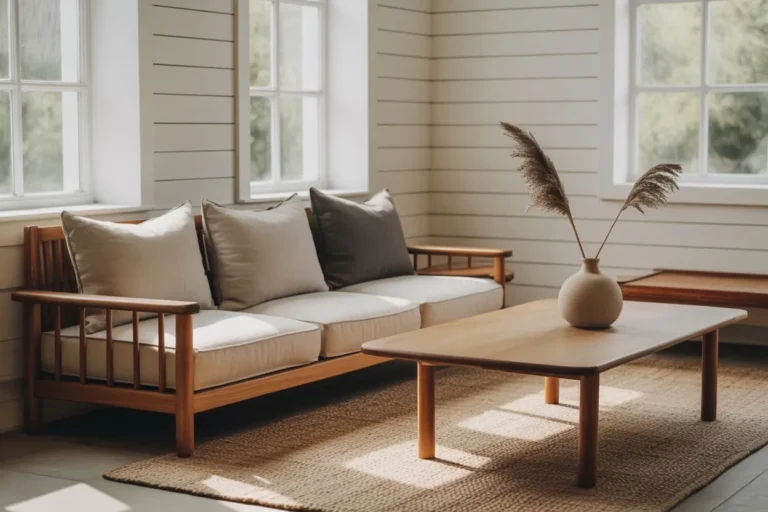
21 Minimalist Living Room Ideas with Smart Storage Solutions
Introduction:
A minimalist living room isn’t about deprivation—it’s about intentionality and freedom from mental clutter. Research shows that cluttered environments increase stress and overwhelm your decision-making capacity, while organized spaces promote calm and clarity. When you embrace minimalist design paired with smart storage solutions, you’re investing in your daily peace of mind and emotional wellbeing. This guide walks you through 21 actionable ideas that combine beautiful design with practical storage strategies.
1: Floating Shelves with Hidden Cable Management
Floating shelves are a minimalist’s best friend, creating the illusion of more floor space while offering real storage without visual bulk. Mounted on the wall, they draw the eye upward and make small living rooms feel more open and airy.
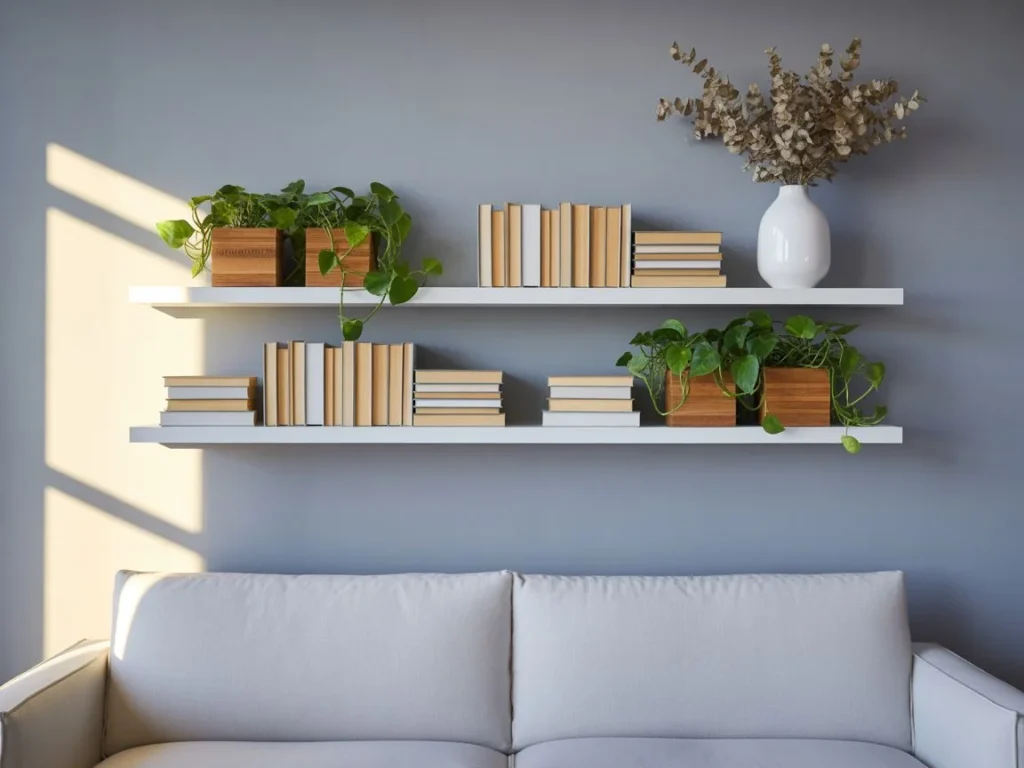
Display only intentional pieces—curated books, sculptural plants, and meaningful photos. Keep styling minimal, with three to five items per shelf to maintain visual calm, especially above sofas, beside TVs, or in awkward corner spaces.
🪵 Love the clean, intentional feel of minimalist design? Japandi style takes it further — blending calm minimalism with natural warmth for a living room that truly feels like home:
➤ 18 Japandi Living Room Design: Minimalist, Cozy & Functional Style2: Built-In Storage Cabinets with Seamless Design
Built-in cabinets are a smart minimalist solution because they can be painted the same color as your walls, allowing them to visually blend in when closed. When storage feels integrated into the architecture rather than separate furniture, the room appears more spacious and cohesive.
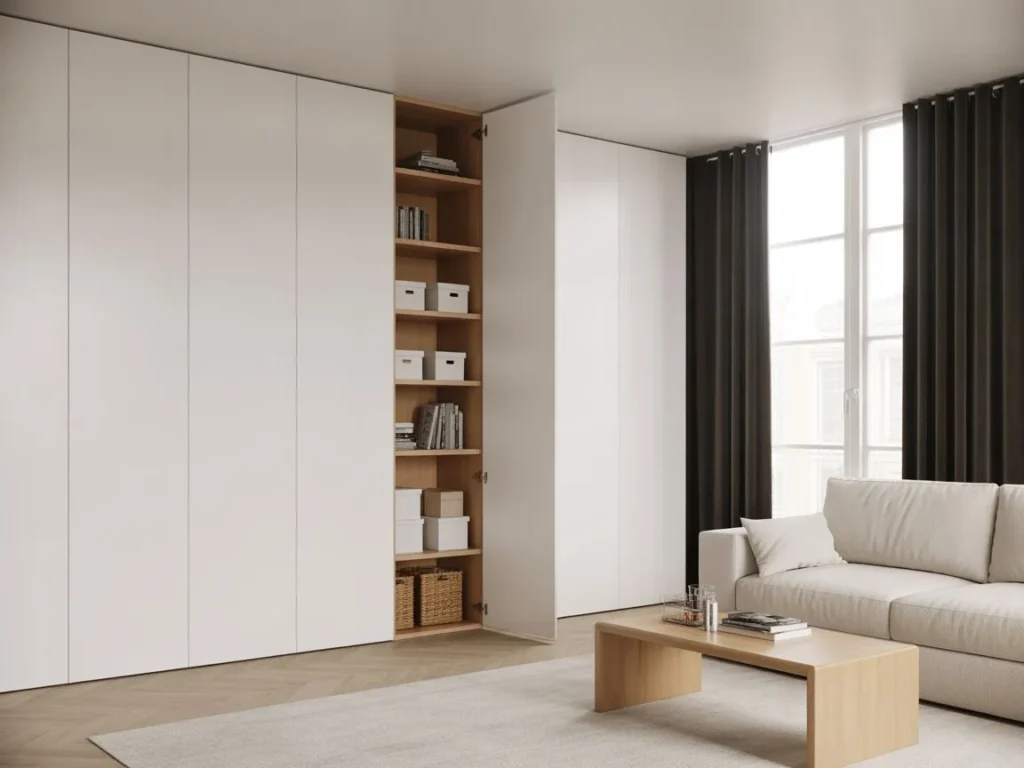
They discreetly hide cables, board games, toys, and seasonal items while preserving a calm, uncluttered look. The closed-door design keeps visual noise out of sight, and soft-close doors and hinges provide smooth, quiet operation even on busy days.
3: Multi-Functional Coffee Table with Hidden Storage
The coffee table is often the hardest-working piece in a living room, yet it easily becomes a clutter magnet. A minimalist coffee table with hidden storage—such as drawers, a flip-top design, or lower shelving—turns it into a functional yet refined focal point.
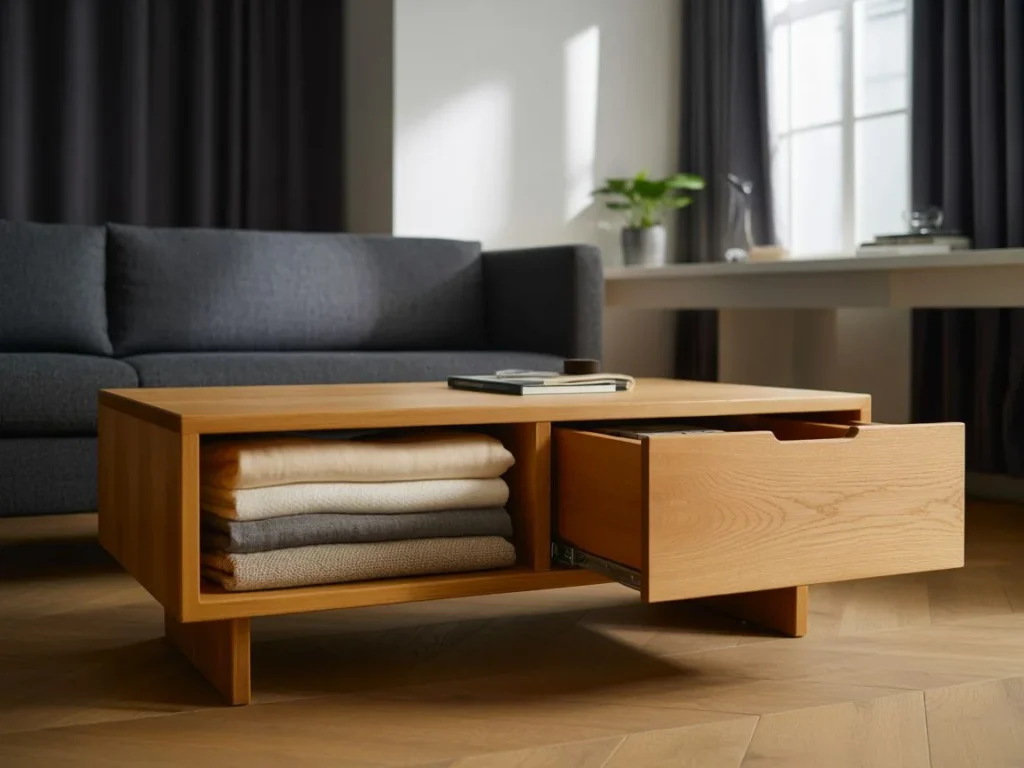
It allows you to quickly store blankets, games, magazines, and everyday items out of sight. Keeping the surface clear supports a sense of mental calm and makes the room feel more intentional, especially when finished in natural wood, light oak, or soft white tones.
🏠 Working with a compact space? These 20 small living room ideas are packed with smart layout and storage solutions designed to work in real apartments and tiny homes:
➤ 20 Small Living Room Ideas for Apartments & Tiny Homes4: Sectional Sofa with Under-Seat Storage Compartments
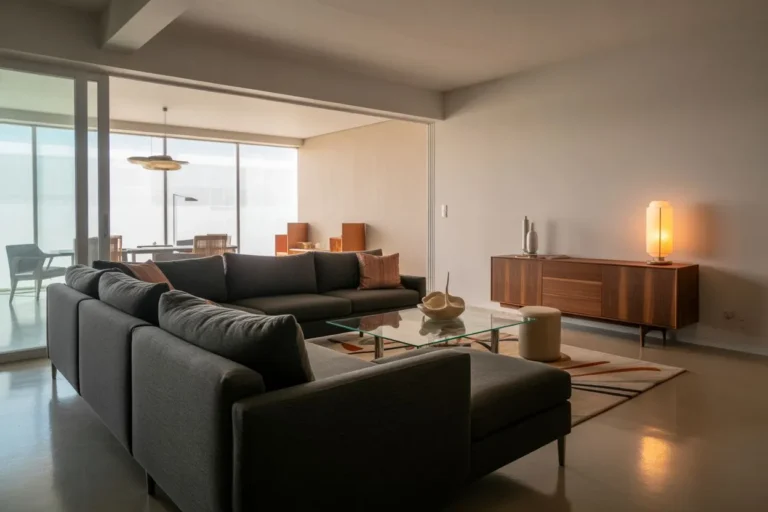
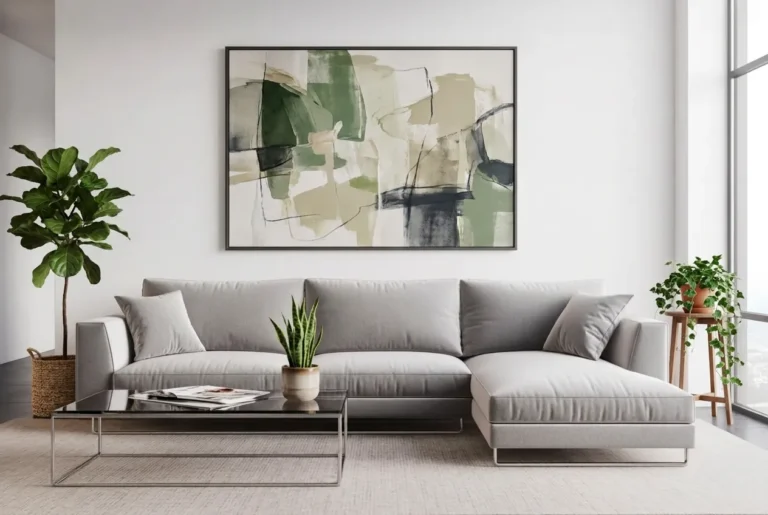
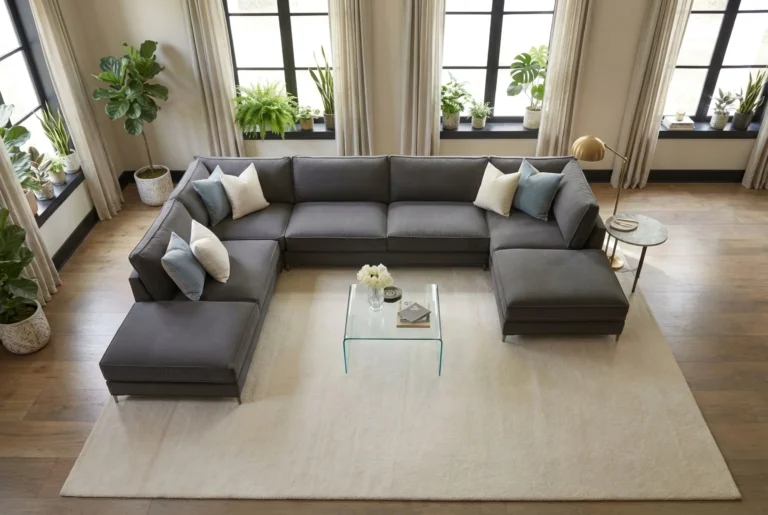
Modern sectional sofas often include hidden storage underneath, offering discreet space for blankets, pillows, and seasonal items. This approach reflects minimalist living, where furniture serves multiple purposes without adding extra bulk to the room.
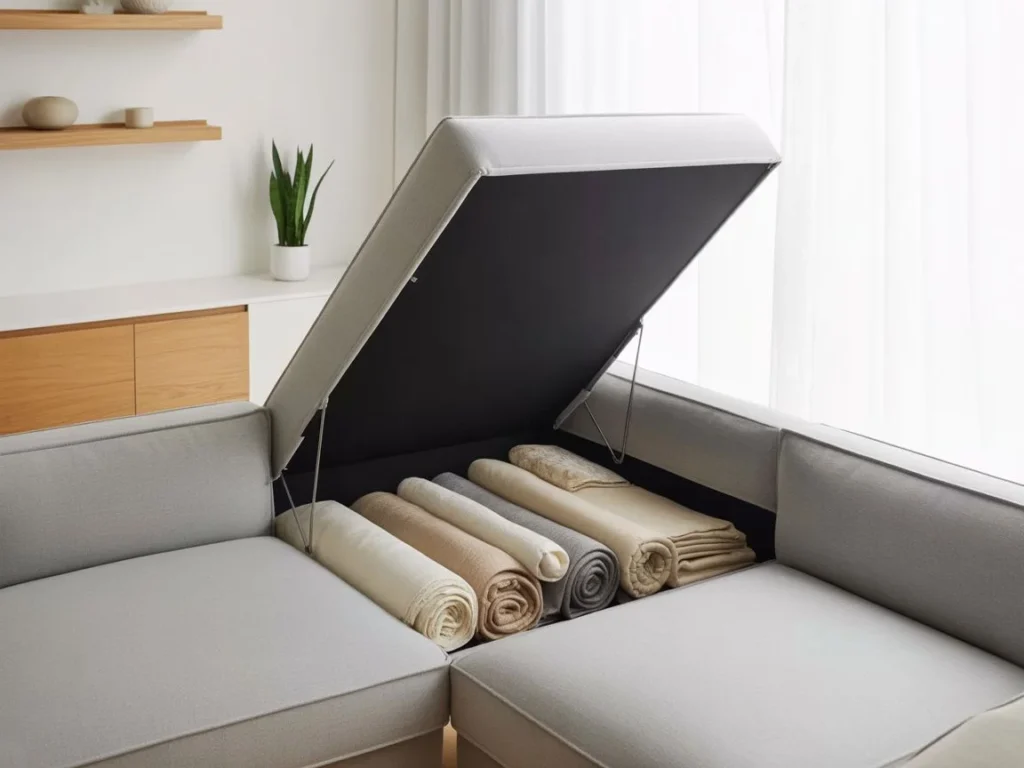
By turning the sofa into built-in storage, you reduce the need for additional chests that take up valuable floor space. Contemporary sectionals in gray, beige, or charcoal maintain clean lines, allowing the room’s negative space to remain the visual focus.
5: Wall-Mounted Media Console with Concealed Cable Tray
A wall-mounted media console keeps your TV and devices off the floor, instantly freeing up visual and physical space. Its greatest benefit is the concealed cable tray behind or beneath the unit, which hides tangled wires that often disrupt a clean, minimalist look.
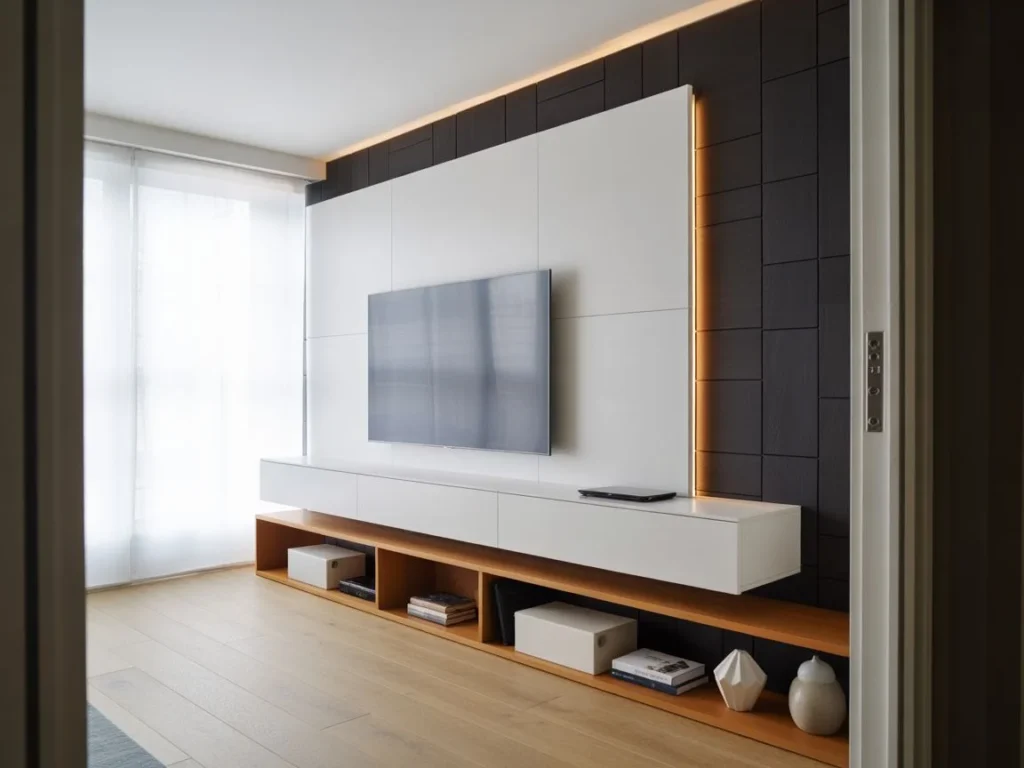
Cable clutter is a common challenge in minimalist interiors, and mounting the media setup with built-in cable management solves multiple issues at once. It reduces bulky floor furniture, eliminates visible wires, and creates a streamlined, purposeful display area.
6: Tall Floor-to-Ceiling Shelving Units
“Go vertical” is a core minimalist principle because floor-to-ceiling shelving maximizes storage without using extra floor space. A tall unit placed in a corner or along one wall can hold months of essentials while taking up less room than bulky standalone furniture.
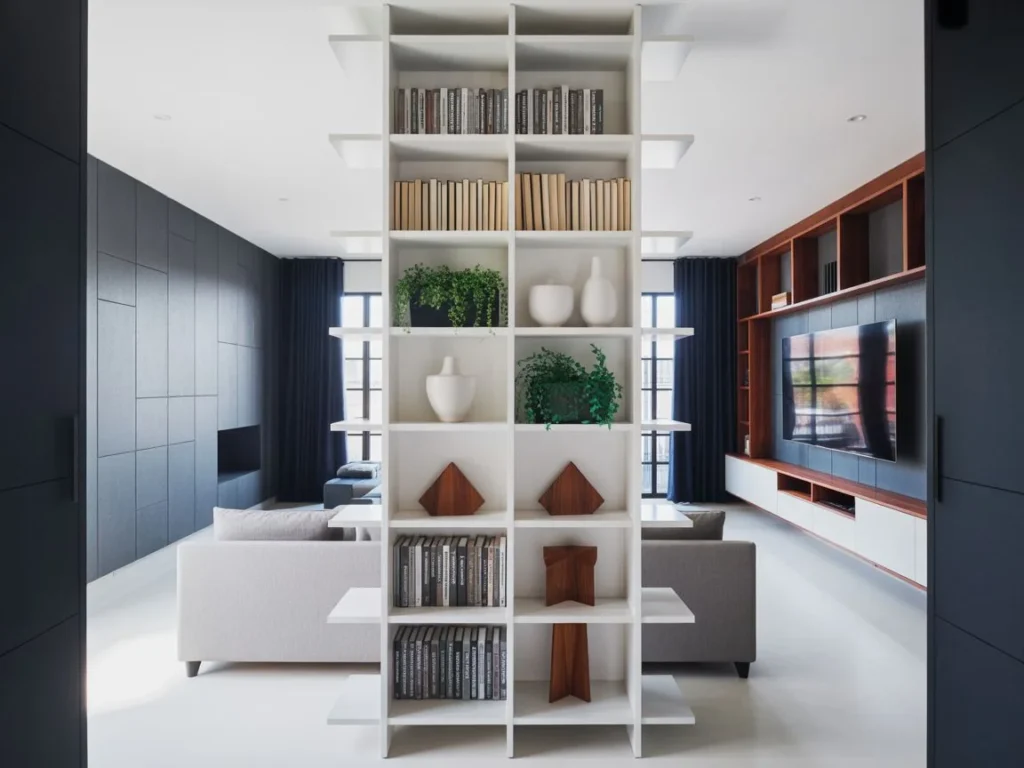
Light-colored or transparent shelving, such as glass or open wood, feels lighter and more architectural. Leave about 40% of the shelves empty and group items in small clusters to maintain breathing room and avoid a crowded, library-like look.
7: Rolling Storage Carts for Mobile Organization
A sleek rolling cart is a practical minimalist solution for storing items you are actively using. Its mobility allows you to move it where needed—beside a desk for supplies, near the entertainment area for controllers, or against a wall when not in use.
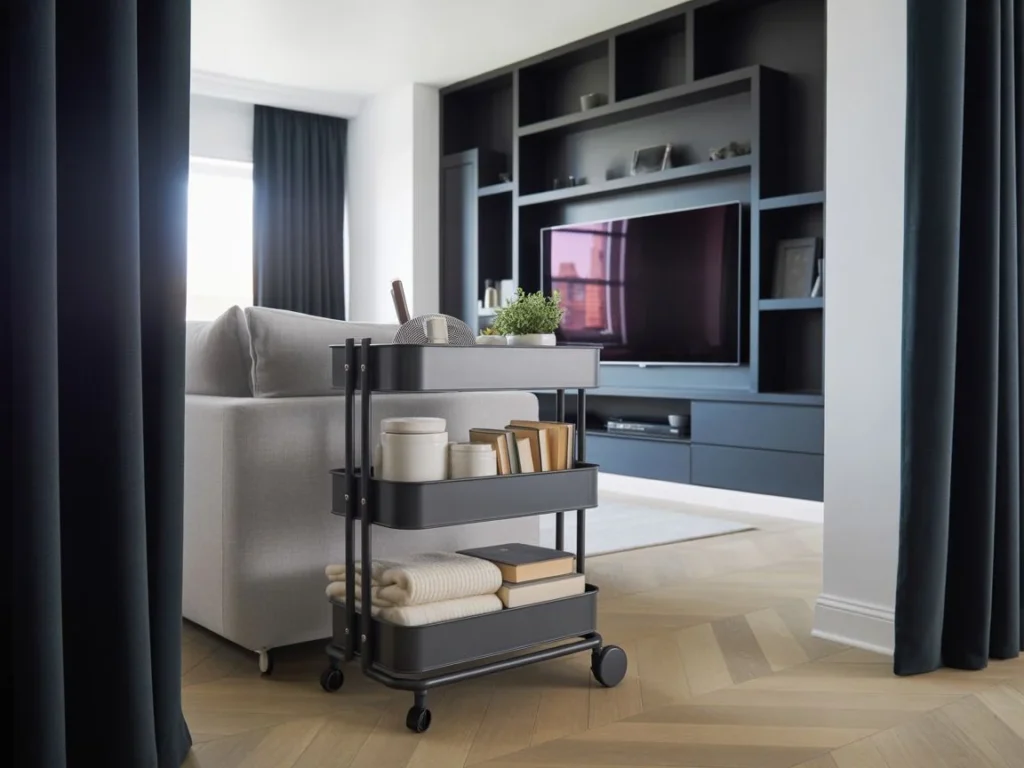
This flexibility works especially well in living rooms that serve multiple functions throughout the day. Open shelving or translucent drawers keep the cart visually light, while finishes like natural wood, matte black, or white with soft-close wheels maintain a clean, minimal look.
8: Concealed Ottoman with Internal Storage
An ottoman with hidden storage is one of the most versatile pieces in a minimalist living room. It works as a footrest, extra seating, a styling surface, and a discreet storage container all at once.
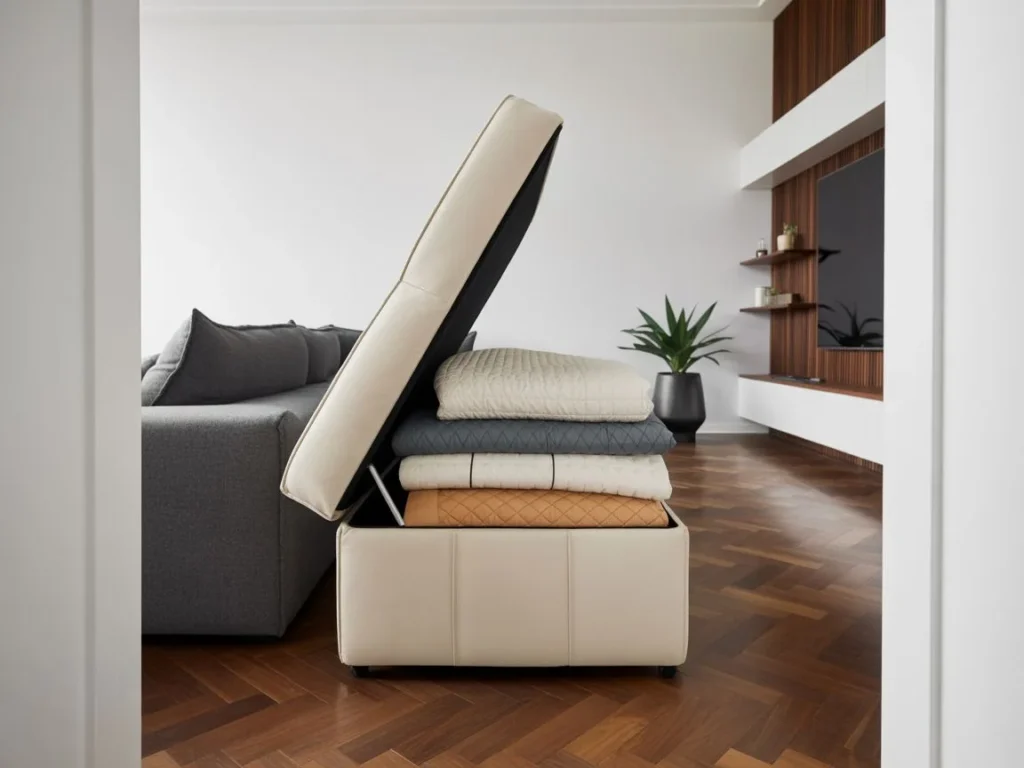
Ottomans with hinged tops and inner compartments can store blankets, board games, and extra pillows while keeping them easily accessible. Neutral tones like cream, gray, or natural linen help the piece blend seamlessly with your sofa and overall palette, while sturdy hinges ensure long-term durability.
9: Fireplace Surround Built-In Shelving
If your living room has a fireplace, the surround area offers ideal space for minimalist storage and display. Built-in shelving on either side adds symmetry while holding books, decorative objects, and concealed baskets in an organized way.
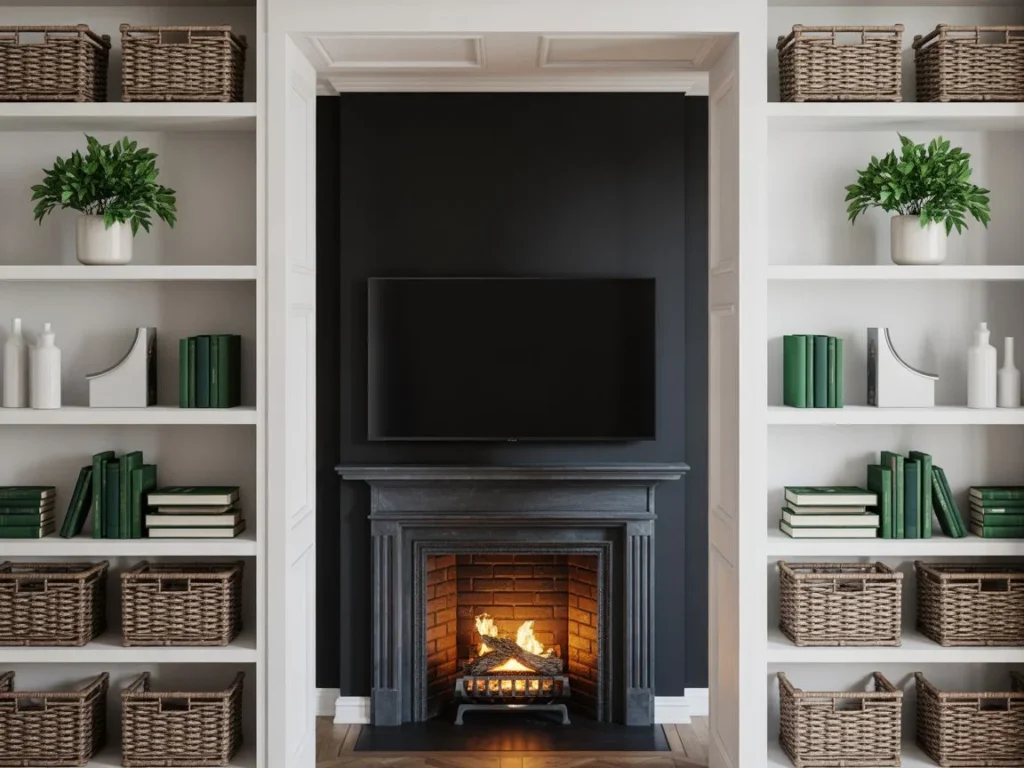
The fireplace acts as a visual anchor, while thoughtfully styled shelves guide the eye upward and across the room with balance and intention. Symmetry around the fireplace feels naturally orderly, and matching bookends, paired plants, or mirrored arrangements create a calm, gallery-like look.
10: Under-Sofa Drawer Systems
Modern sofas and sectionals now often include under-sofa drawers that slide out smoothly on rails, turning unused space into practical storage. These hidden compartments are ideal for items you use occasionally but prefer to keep out of sight, such as extra pillows, seasonal décor, board games, or craft supplies.
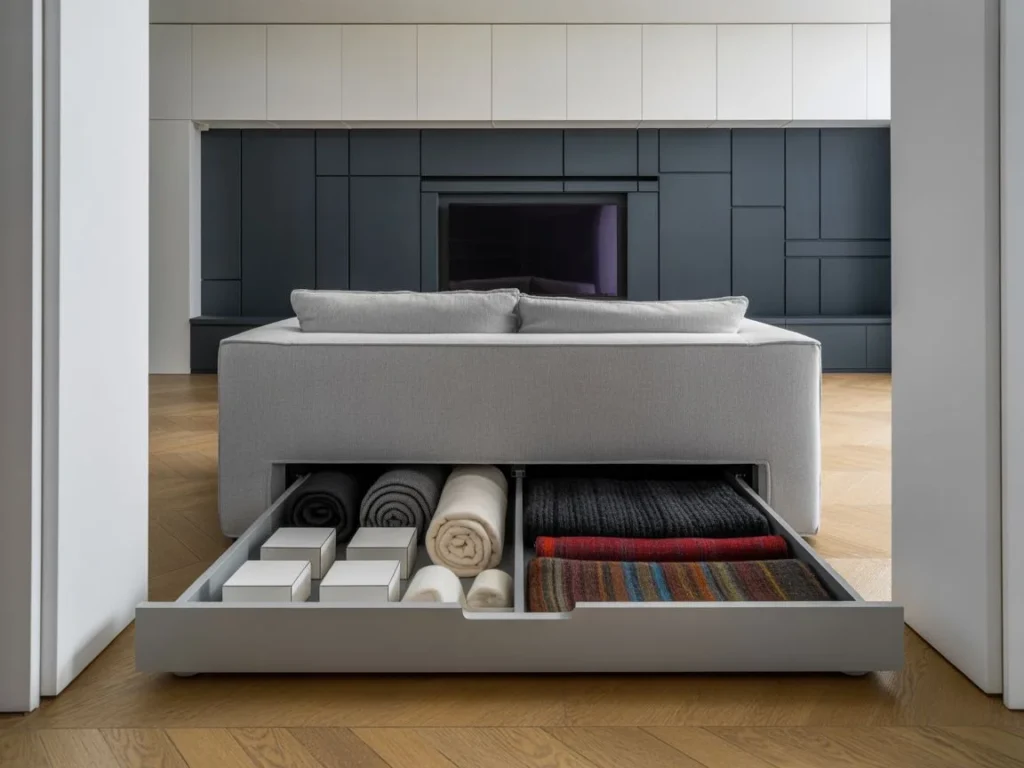
The drawers close fully to keep dust out and clutter contained, making efficient use of space that would otherwise remain empty. Soft-close rails ensure quiet, gentle operation, and simple labels help you quickly remember what each drawer holds.
11: Corner Shelving Units for Awkward Spaces
Corners often become wasted space in minimalist rooms, yet they are ideal for tall, narrow shelving that uses vertical height without crowding the layout. A floor-to-ceiling corner unit can turn awkward angles into functional storage while keeping the room open.

This approach works especially well in small living rooms where every inch matters and corner furniture does not block movement. Corner shelving also adds visual interest by softening long wall lines, and finishes in natural wood or white keep the look light and unobtrusive.
12: Sliding Barn Door Cabinet Storage
Sliding barn doors have shifted from a farmhouse trend to a practical minimalist feature, especially on cabinet fronts. They conceal built-in shelving while eliminating the need for swing-out clearance, making them ideal for compact living rooms.
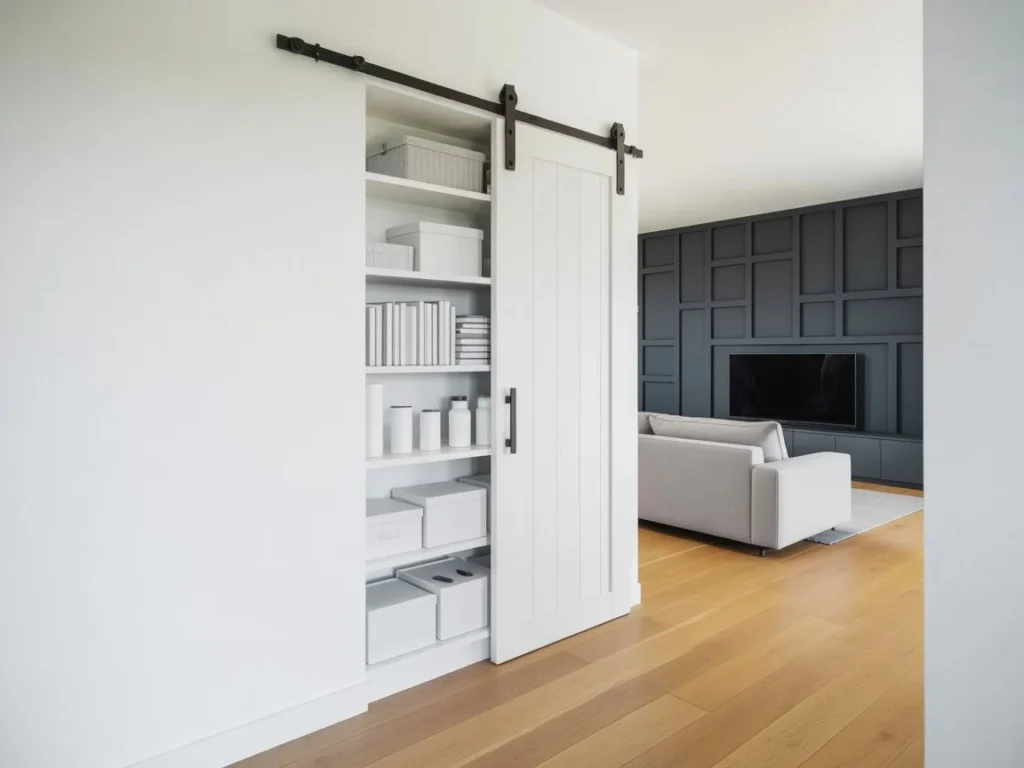
Because the doors glide along a track, they save floor space while keeping storage hidden and organized. Wood textures—whether painted white or left natural—add warmth to clean interiors, and the visible hardware can serve as a subtle, intentional design detail.
13: Transparent Storage Boxes and Drawer Dividers
Clear or translucent storage solutions may seem unexpected in minimalist spaces, but they are highly practical because you can see contents without opening each container. This makes it easier to locate items quickly while avoiding unnecessary visual disruption.

Clear drawer dividers and transparent storage boxes keep everything organized, visible, and neatly stackable. The visibility helps you find things faster and stay aware of how much space you are using, encouraging better maintenance of a clean, minimalist aesthetic.
14: Wall-Mounted Pegboard Styling Wall
A pegboard in neutral tones like white, natural wood, or black can act as both storage and wall art. With thoughtfully chosen hooks, baskets, and displayed items, it creates a setup that is functional while still visually pleasing.
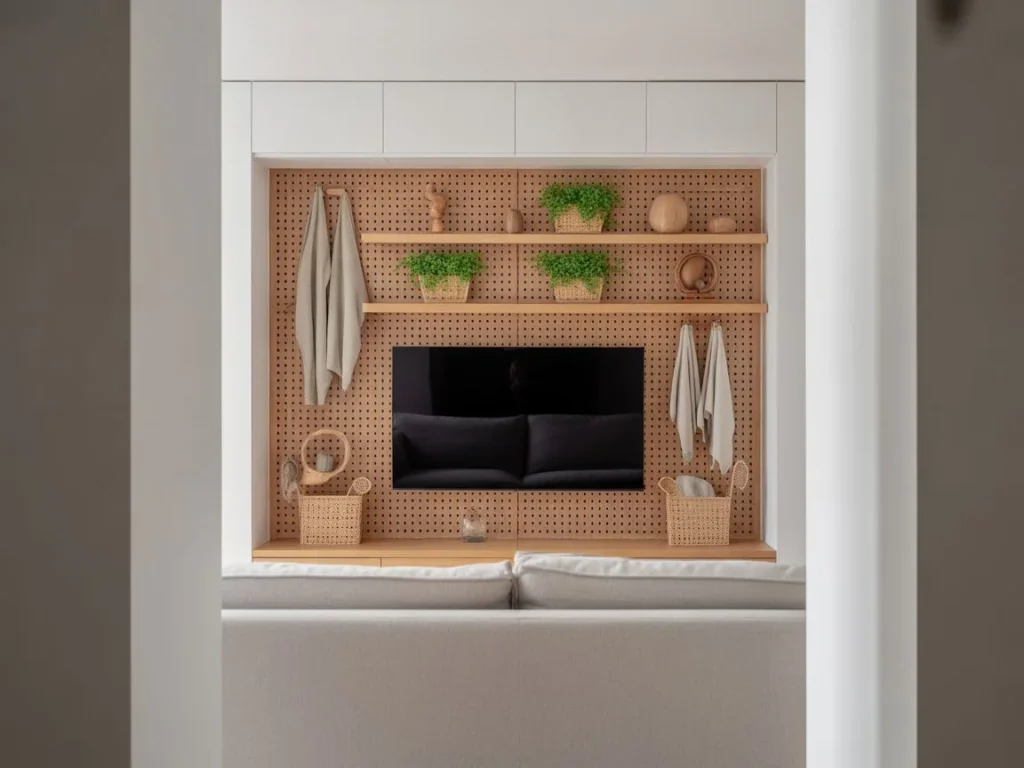
This approach suits living rooms with a strong design direction, such as mid-century modern, industrial minimalism, or contemporary Scandinavian styles. By displaying items intentionally rather than hiding them, the pegboard turns storage into a curated feature where every piece is either visually appealing or kept in an attractive container.
15: Hidden Wall-Mounted Desk in Living Room Office Setup
If your living room also functions as a workspace, a wall-mounted fold-down desk keeps office supplies hidden when not in use. It mounts flat against the wall and folds down to provide a work surface, then folds back up to disappear completely.

This allows you to maintain a calm, minimalist look during leisure time while keeping your workspace instantly accessible when needed. Once folded away, the room returns to a purely living area, with uncluttered walls and no visible work-in-progress or office items.
16: Stackable and Nesting Storage Tables
Nesting tables offer flexible functionality by allowing you to adjust the number of surfaces based on your needs. When hosting guests, you can separate all the tables for extra space, and when alone, nest them together to keep the room feeling open.
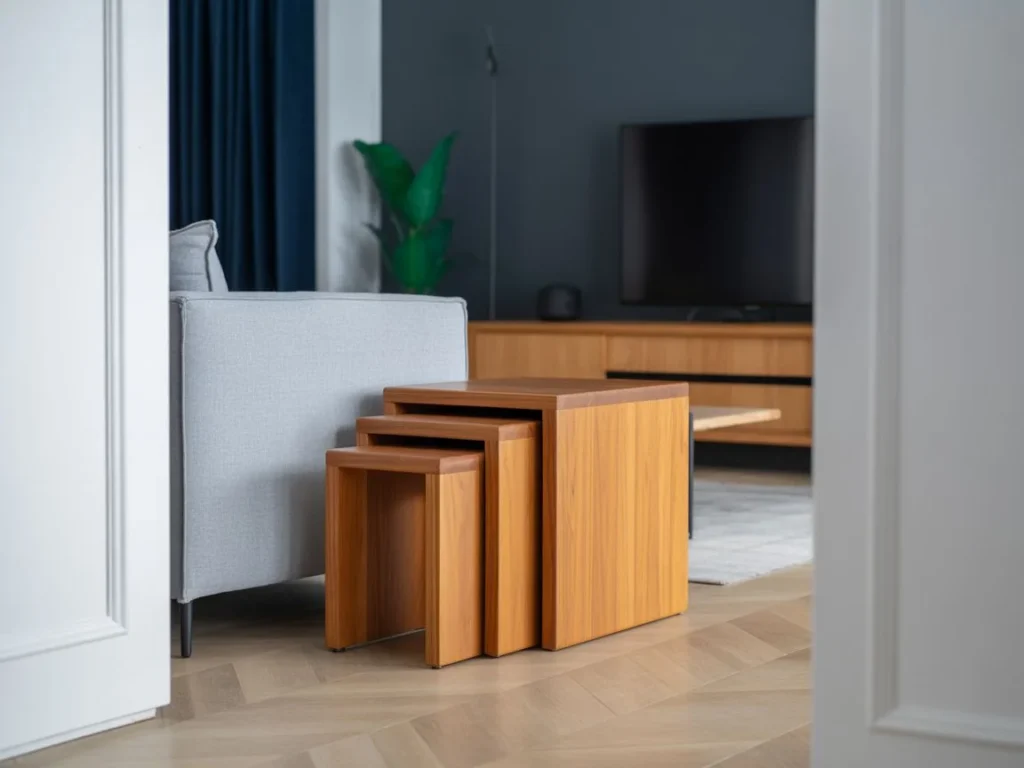
This adaptability lets your furniture respond to your daily routines rather than forcing you to work around fixed layouts. Designs in natural wood or white maintain a clean, elegant look while providing occasional surfaces, which is especially useful in small living rooms where space must stay uncluttered.
17: Wire Basket Wall Organization for Blanket Storage
Wire or woven baskets mounted on walls provide vertical storage for blankets, magazines, and other lightweight items while keeping the space feeling open and airy. Because the contents remain partially visible, neatly folded textiles can add texture and warmth rather than appearing cluttered.
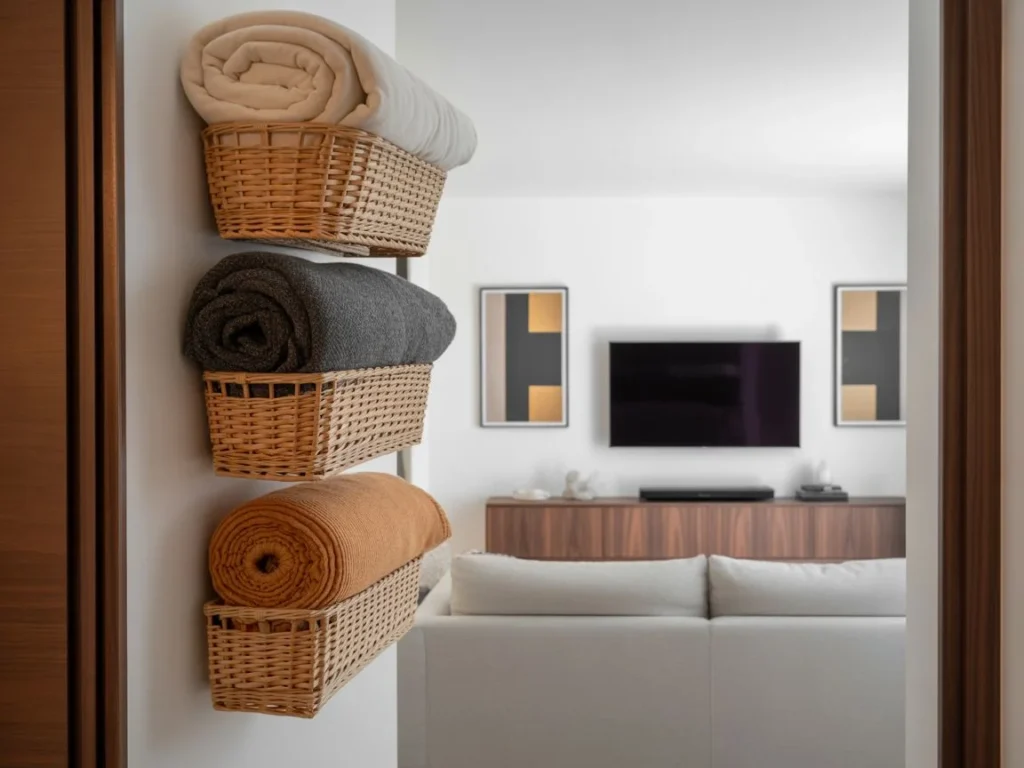
This solution works well in living rooms where you want blankets easily accessible without piling them on sofas or chairs. Baskets made from wire or natural woven materials feel more organic and minimal, adding a cozy, tactile quality that complements a calm, uncluttered aesthetic.
18: Modular Storage System with Adjustable Components
Modular storage systems are made of individual components—shelves, drawers, cabinets, and baskets—that can be combined to create a custom setup. Their main advantage is flexibility, allowing the configuration to change as your storage needs evolve over time.
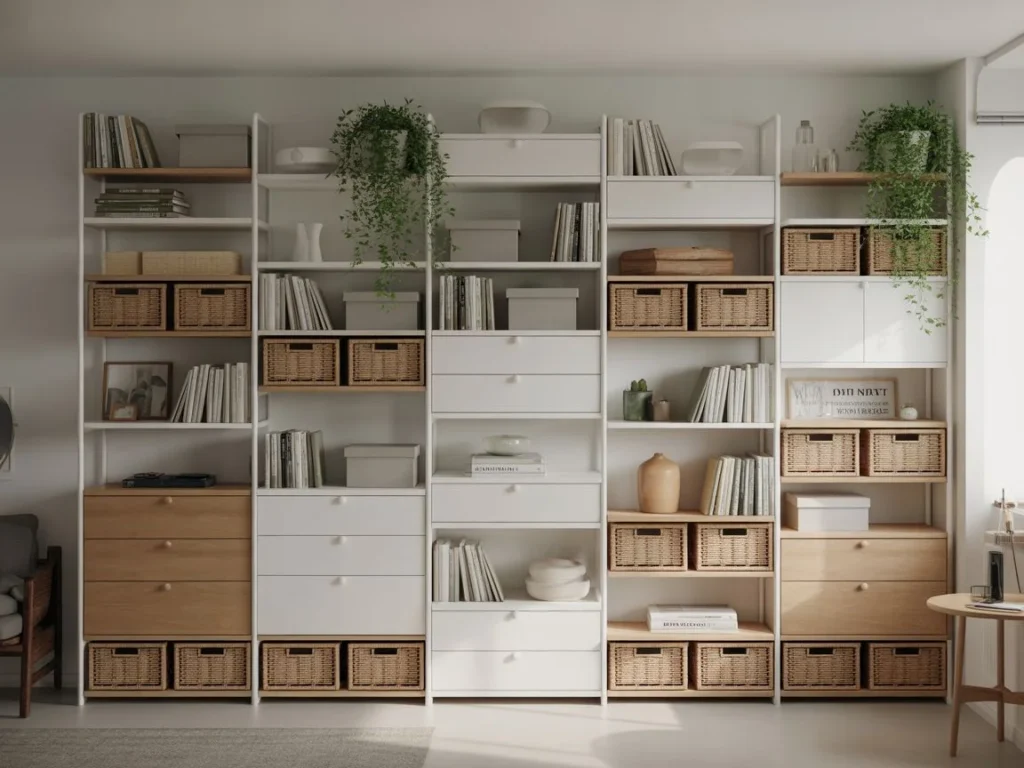
You can begin with a few essential pieces and expand gradually, adding shelves or drawers only when required. This approach prevents committing to a rigid solution, and modular units in neutral colors keep the room feeling lighter and less visually heavy than large, fixed storage furniture.
19: Accent Wall with Integrated Shelving
Instead of a purely decorative accent wall, consider one with integrated shelving that adds both style and function. A wood-paneled wall in natural tones or white with built-in shelves introduces architectural interest while providing practical storage.
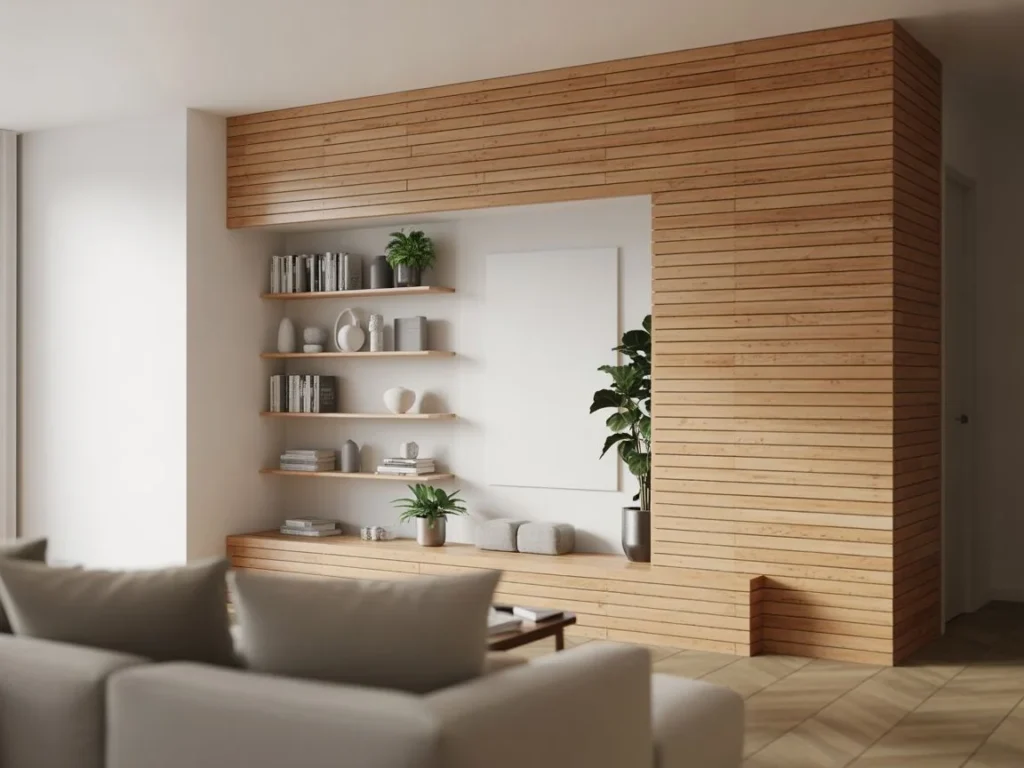
This approach works especially well in minimalist spaces, where the accent wall becomes a defining feature that is both visually striking and purposeful. By turning unused wall space into a focal point, you create clear visual hierarchy while maintaining a clean, uncluttered look.
20: Furniture with Built-In Shelving and Organization
Choose living room furniture with built-in organization instead of buying separate storage pieces. Media consoles with integrated shelving, coffee tables with drawers, and sideboards with adjustable shelves provide cohesive storage while keeping the room visually streamlined.
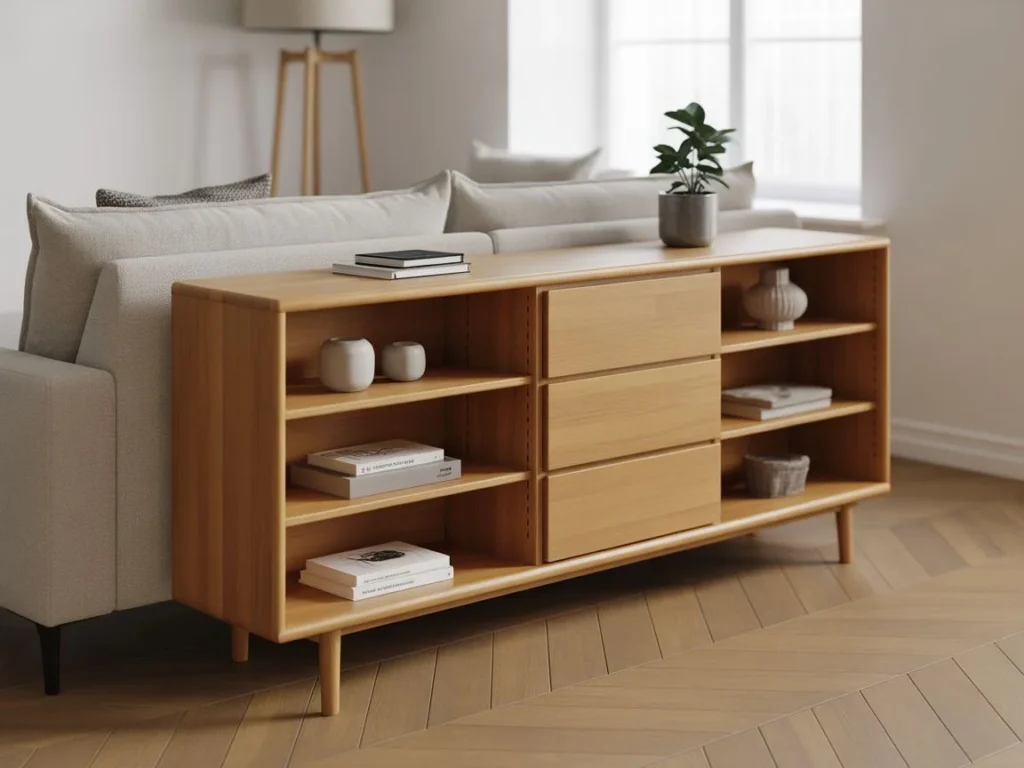
This intentional approach ensures each item has hidden capacity and a clear purpose, reducing the need for additional furniture. As a result, you end up purchasing fewer pieces overall because each one performs multiple functions, such as a console table with drawers and shelves replacing the need for extra filing or storage units.
21: Digital Organization and Smart Storage Labels
Although not a physical solution, digitizing and labeling are essential for maintaining organized living room storage. Photograph items inside storage boxes and add small, neat labels or tags so you can identify contents at a glance. Keeping a simple spreadsheet or app to track where items are stored makes retrieval quick and stress-free.
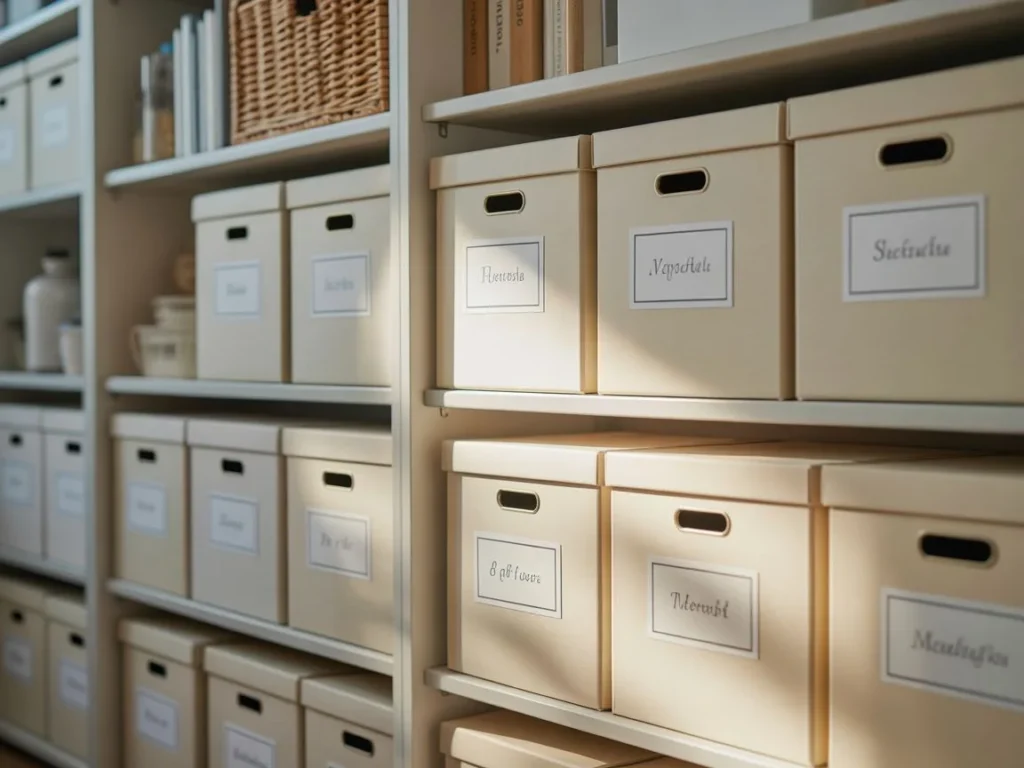
Digitizing documents, photos, and files also reduces the amount of physical clutter you need to manage. Establish a shared system so everyone in the household knows where things belong, creating a sense of order and ease. Knowing exactly where an item is stored—without opening multiple boxes—brings quiet peace of mind and helps prevent forgetting what you already own.
Conclusion:
Creating a minimalist living room with smart storage is an act of intentional living, balancing calm aesthetics with practical organization. These ideas allow you to enjoy both beauty and function without sacrificing one for the other.
Begin with one or two solutions that fit your space and lifestyle, and build from there. The aim is not perfection, but a room that supports your wellbeing, reduces daily clutter decisions, and offers a sense of calm every time you enter.