17 Modern Living Room Designs You’ll Want to Copy
Your living room is where life happens. It’s where you rest after a long day, laugh with people you love, and create memories that matter. But here’s the thing: having a space that looks good AND feels right is rare. Most living rooms look either sterile and cold or cluttered and overwhelming.
The good news? You don’t need a designer’s budget or a complete renovation. The designs we’re sharing here prove that beautiful, livable living rooms are absolutely within reach.
According to 2026 interior design surveys, 78% of homeowners now prioritize comfort over perfection, shifting away from the showroom-perfect look that dominated the last decade.
1. Curved Comfort Living
A curved sofa instantly makes a room feel warmer and more inviting than straight, boxy ones. Curved furniture softens hard lines and creates natural gathering spots. Your seating becomes part of the room’s architecture instead of just blocking it. The rounded edges feel like a hug, not a statement piece. Pair this with soft throw blankets and oversized pillows to deepen the coziness factor.
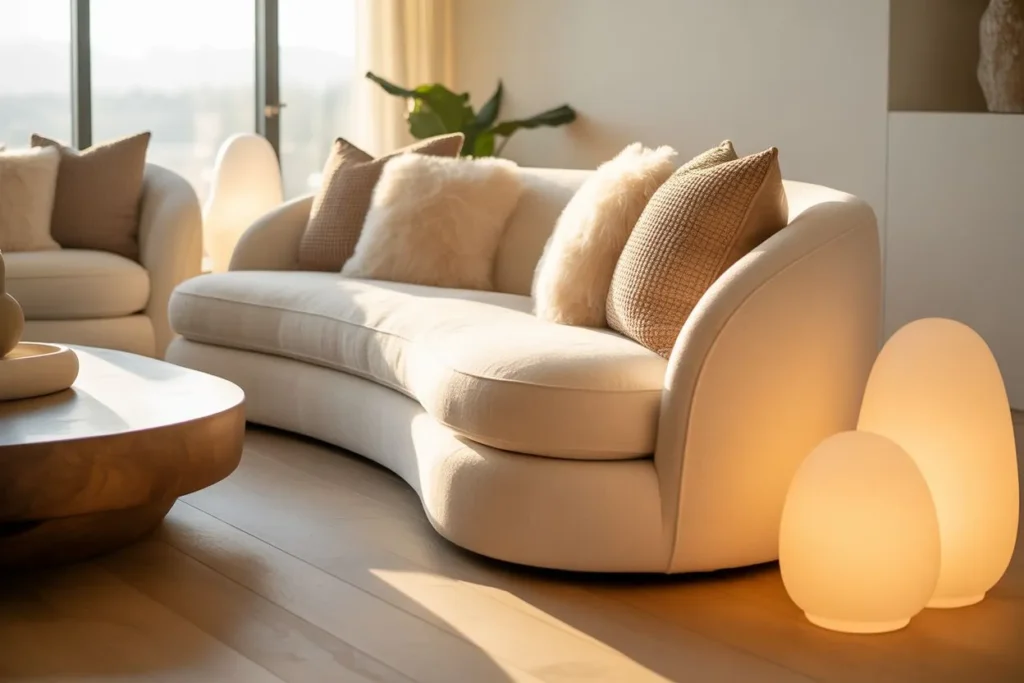
When you sit on a curved sofa, your body isn’t fighting against sharp angles. This matters more than you’d think. A curved armchair or rounded coffee table follows the same logic: they make your space feel human-centered. Add a textured area rug beneath to anchor the softness, and suddenly your room feels like it was designed with real life in mind, not magazine spreads.
🌿 Love the calm blend of Japanese and Scandinavian style? Discover how to create a stunning Japandi living room that feels serene and stylish:
➤ Japandi Living Room Ideas for a Calm and Minimalist Space2. Japandi Minimalism
Japandi blends Japanese calm with Scandinavian simplicity to create serene, functional spaces. This style strips away the noise without feeling cold. Natural materials like light wood, stone, and linen form the foundation. Everything has a purpose. Nothing sits around “just because.” The color palette stays neutral, with warm tones preventing the space from feeling sterile.
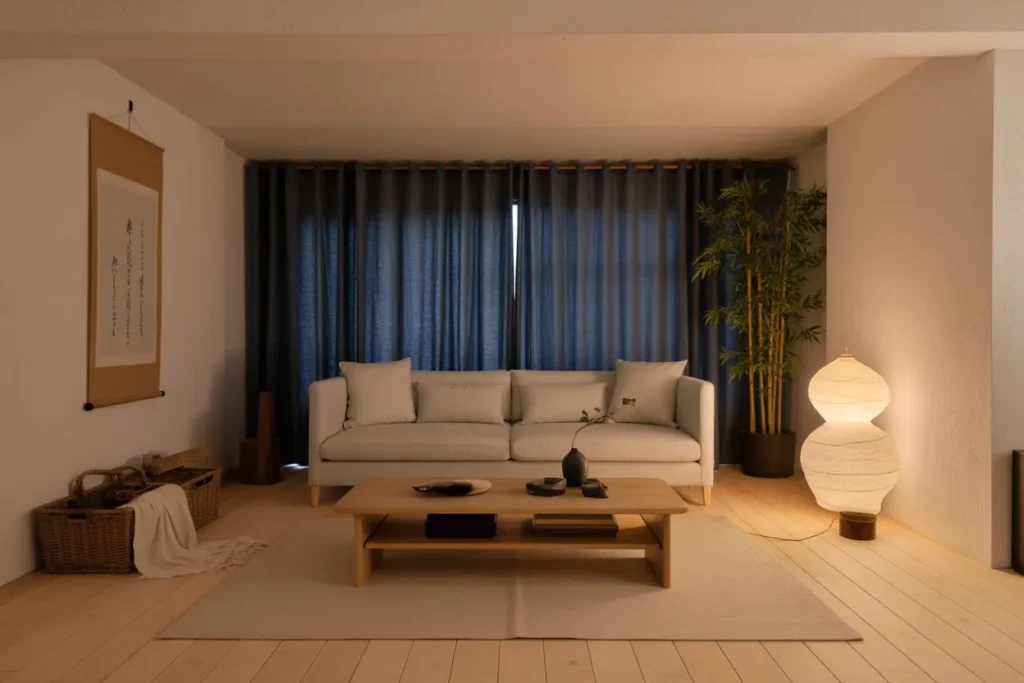
The beauty of Japandi is that it works whether your life is chaotic or calm. A busy family and a quiet couple both feel equally at home here. The clean lines let your eye rest. The natural materials ground you. Soft lighting in the evenings transforms the space into a meditation room. Pair this with one or two statement pieces like a sculptural lamp or a piece of Japanese pottery, and you’ve created something that feels intentional without being fussy.
3. Velvet Texture Layering
Layering different textures makes a room feel expensive and touchable at the same time. Start with a velvet sofa in a rich jewel tone like emerald, sapphire, or deep burgundy. This one piece commands attention without screaming. Add a plush area rug in a complementary color. Then layer in softer textures: linen pillows, a chunky knit throw, maybe a woven cotton pouf.
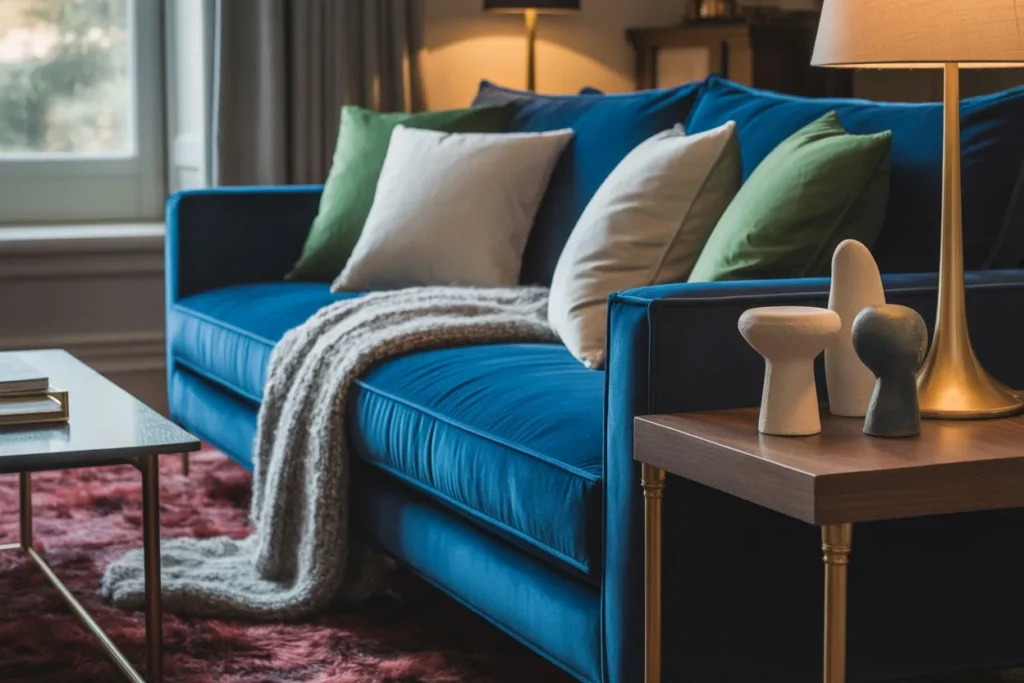
Your living room shouldn’t feel like you’re afraid to touch things. But it also shouldn’t feel like everything is the same texture. When you mix velvet with linen, wool with cotton, rough with smooth, your hand and eye both stay engaged. The room feels curated. It whispers luxury instead of shouting it. And here’s what matters most: these materials age beautifully. They develop character. That velvet sofa becomes more beautiful after five years of actual use.
4. Gallery Wall Statement
A thoughtfully arranged gallery wall becomes the room’s focal point instead of a television. Choose a mix: original artwork, family photos in matching frames, vintage prints, or a blend of all three. The key isn’t having expensive art. It’s having pieces that matter to you. A frame holding your kid’s artwork from age five matters more than a $2,000 print you don’t connect with.
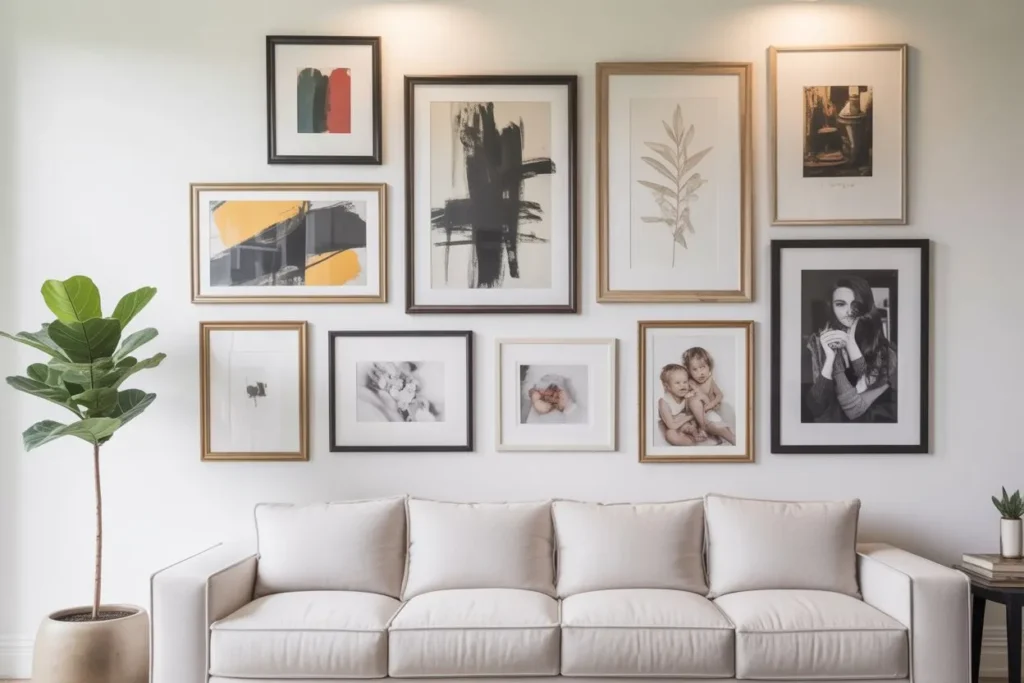
Gallery walls work because they tell your story without words. Visitors look at them and learn who you are. You look at them on hard days and remember what’s important. Leave plenty of white space between frames so it doesn’t feel cramped. Paint the wall white or a soft neutral to let the art breathe. This approach turns your living room from a generic space into a genuine reflection of your life.
🌙 Want to transform your bedroom into a dark, cozy and dramatic retreat without breaking the bank? Learn how to create the perfect moody bedroom here:
➤ How to Create the Perfect Moody Bedroom on Any Budget5. Earthy Organic Color Palette
Warm, muted earth tones create a space that feels grounding and connected to nature. Think warm terracotta, sage green, soft clay, sandy beige, and weathered charcoal. These aren’t the muted colors of old minimalism. They’re saturated enough to feel intentional, warm enough to feel like a hug. A room painted in these tones doesn’t need a lot of explaining. It just feels right.
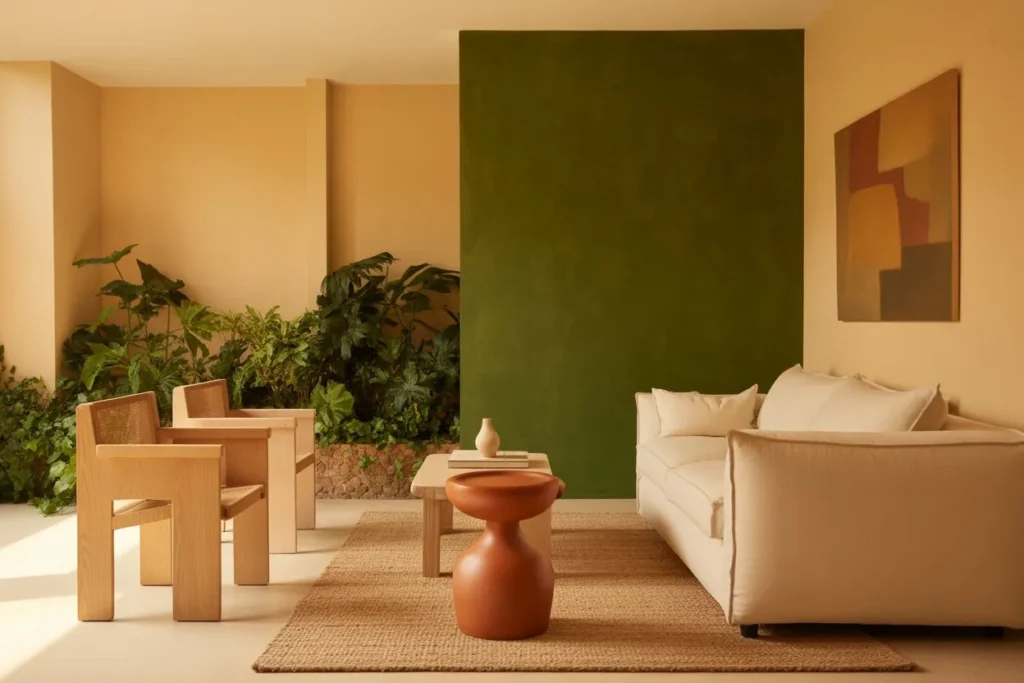
The psychological benefit here is real. Earth tones lower your cortisol levels. Your nervous system actually calms down. This is why everyone wants a “cozy” living room. It’s not just about the furniture. It’s about the colors on your walls literally making your body less stressed. Paint one accent wall in a deeper earth tone, keep the others lighter, and suddenly you’ve created a space where people naturally want to sit longer and talk more.
6. Textured Wall Treatments
Textured walls replace boring flat paint with depth, shadow, and architectural interest. Venetian plaster, slatted wood paneling, textured wallpaper, or even simple plaster finishes create visual movement. Your walls become part of the design instead of just a backdrop. When light hits textured surfaces, it plays across them in different ways throughout the day. Your room doesn’t feel static.
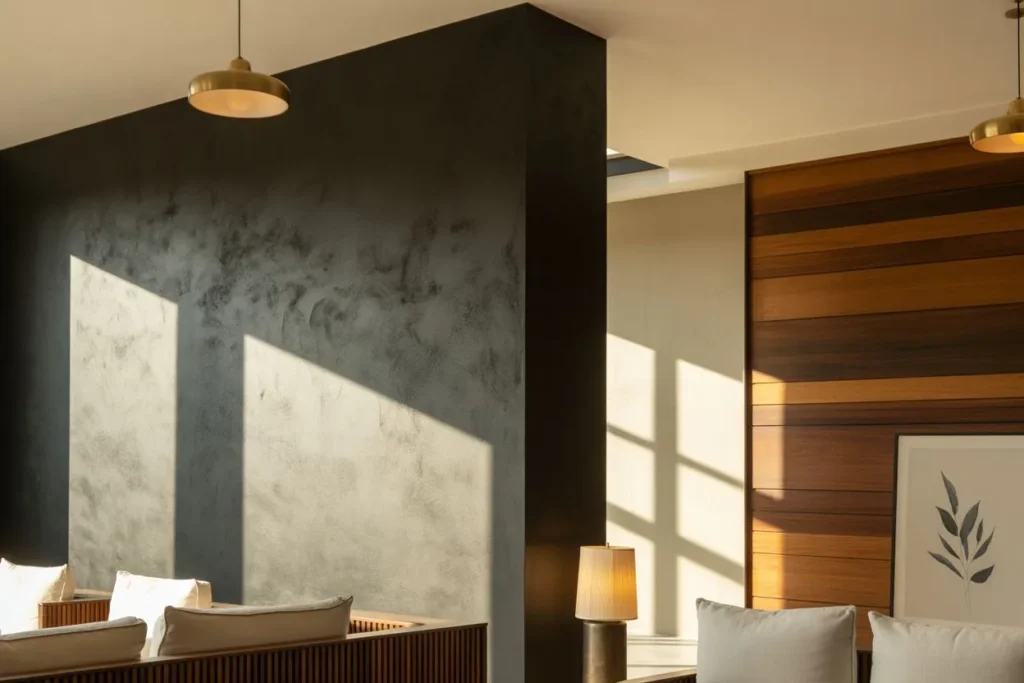
The practical side: textured walls hide imperfections better than flat paint. They age more gracefully. A smooth white wall starts looking tired after two years. A textured wall looks intentional forever. Choose a subtle texture for a calm feeling, or go bolder with wood slats if you want more architectural drama. Either way, you’re turning a basic element (walls) into a design feature that makes your living room unforgettable.
7. Maximalism with Intention
Thoughtful maximalism packs personality into a room without creating visual chaos. The difference between beautiful maximalism and cluttered chaos? A cohesive color story. Choose a palette of 4-5 colors that speak to you. Now layer boldly within that palette. Mix patterns: stripes with florals, geometrics with abstracts. They all work together because they’re in the same color family.
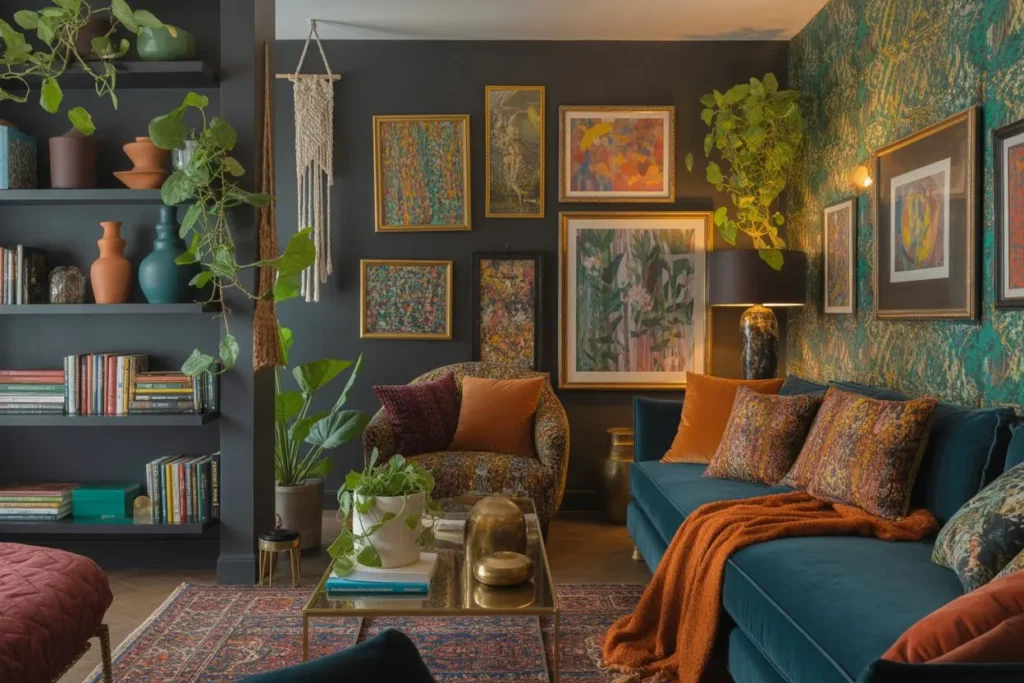
This style frees you from the pressure of minimalism while still honoring intention. Your living room becomes a celebration of what you love. Collections actually get to be collections instead of hiding behind closed doors. Art covers walls. Books fill shelves. Plants cluster in corners. But it all works because there’s a thread connecting everything. You don’t need expensive pieces. You need pieces that align with your chosen palette and make you smile when you look at them.
8. Sustainable Material Living
Reclaimed wood, bamboo, recycled metals, and natural fibers create a room that’s beautiful and kind to the planet. A coffee table made from reclaimed barn wood tells a story. It’s already lived one life. Now it lives in your home. This isn’t about sacrifice. These materials age beautifully. They develop character. That reclaimed wood gets more beautiful every year as its patina deepens.
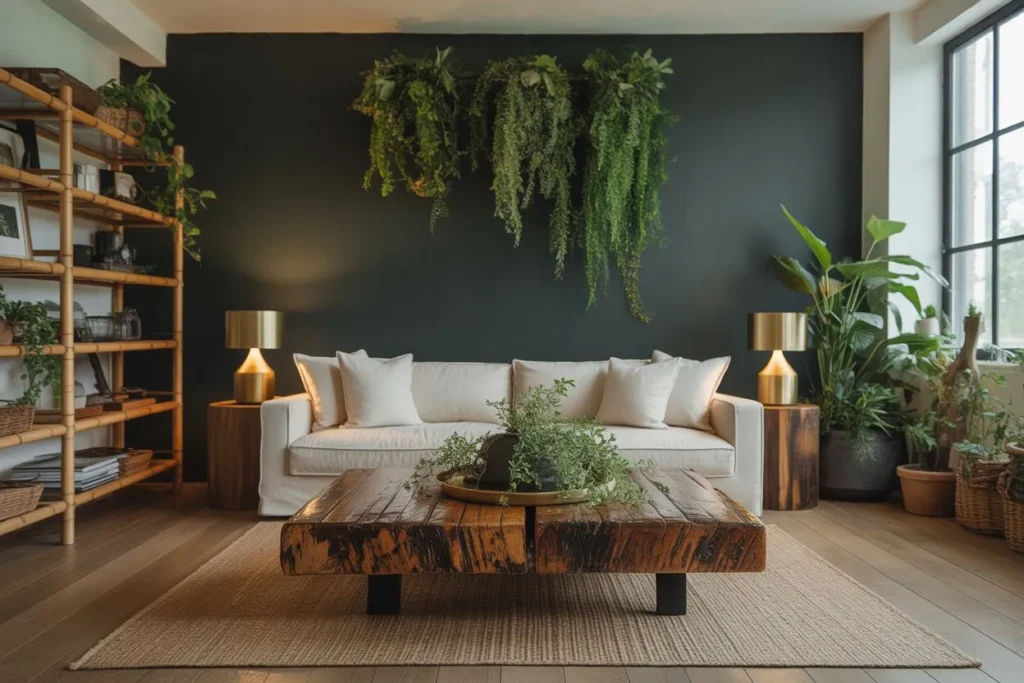
Sustainability doesn’t mean your living room looks rustic or rough. Modern sustainable design is sleek, clean, and intentional. A sofa in organic linen. Shelving in bamboo. A rug in recycled fibers. Metal accents in salvaged brass. You’re creating a space that’s better for the planet and better for your conscience. Plus, sustainable pieces often cost less upfront and last longer. You’re not replacing furniture every five years. You’re keeping pieces that improve with age.
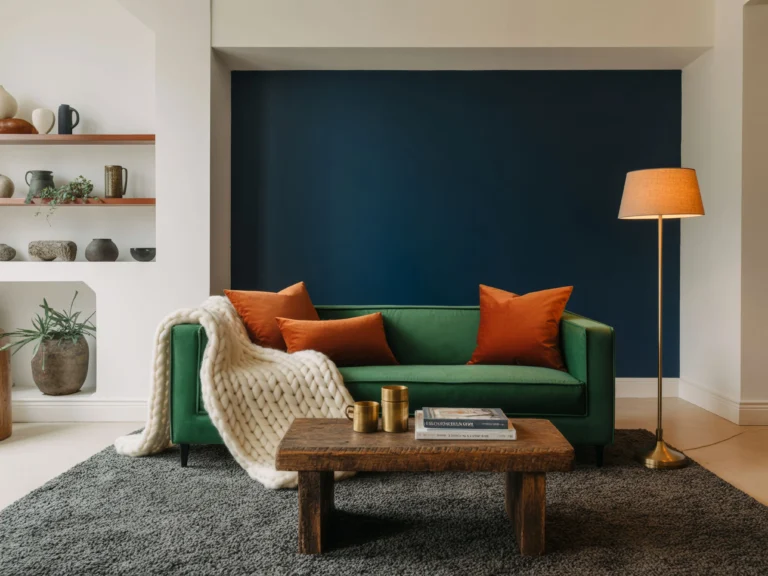
9. Moody Jewel-Tone Accent Wall
A single wall painted in a rich, saturated color becomes the room’s anchor without overwhelming the space. Deep emerald, sapphire blue, plum, or forest green work beautifully. This wall holds attention. It sets the mood. The furniture and other décor elements respond to it rather than competing with it. Suddenly your neutral sofa doesn’t feel bland. It feels intentional. It’s in conversation with that jewel tone.
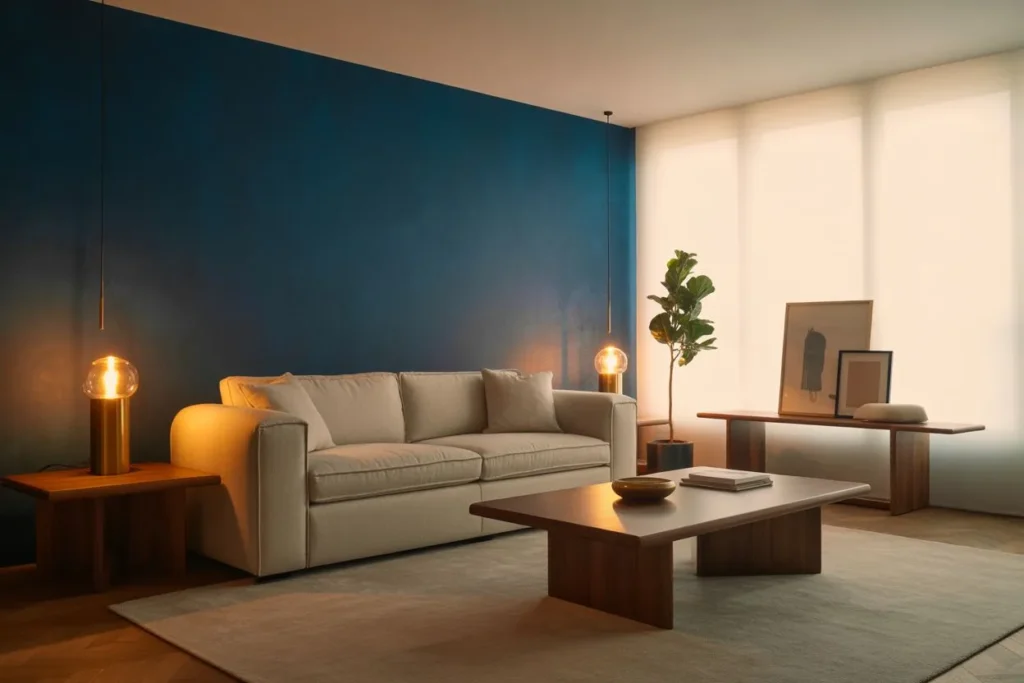
The key to making this work is keeping the other walls light. White, cream, or soft gray let that accent wall breathe. Light bounces off the neutral walls, so your jewel tone doesn’t feel cave-like. Add warm lighting to highlight the color at night. In the morning, natural light makes it glow. This single change transforms a forgettable room into something memorable, and you didn’t even have to move furniture.
10. Low-Profile Sculptural Furniture
Low-slung furniture with clean lines and architectural purity feels contemporary without being cold. Instead of bulky oversized sofas from a few years ago, 2026 favors proportions that feel more refined. A sofa with slim arms and a streamlined silhouette. A coffee table that’s all leg and minimal top. Chairs with sculptural curves but no excessive padding. This furniture is still comfortable. It’s just honest about how it works.
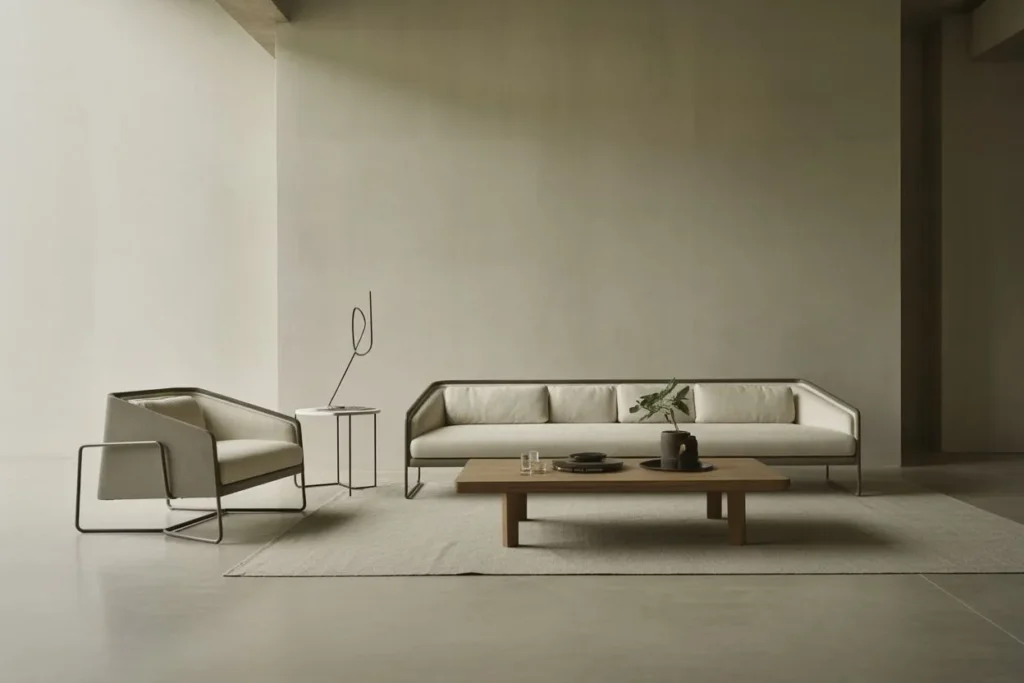
This approach suits smaller apartments and larger living rooms equally. The low profile keeps your eyes moving horizontally across the room instead of getting stopped by massive furniture blocks. You can still add cushions and throws for comfort. But the furniture itself is beautiful to look at. It becomes art in addition to function. You’re not hiding your living room under piles of upholstery. You’re letting the design breathe.
11. Artisanal Statement Lighting
Hand-shaped ceramic lamps and sculptural light fixtures become focal points instead of afterthoughts. A ceramic lamp in a warm clay tone. A sculptural brass chandelier with organic curves. A floor lamp that’s beautiful to look at even when it’s off. Good lighting is the most underestimated design element. It doesn’t just illuminate. It sets the entire mood.
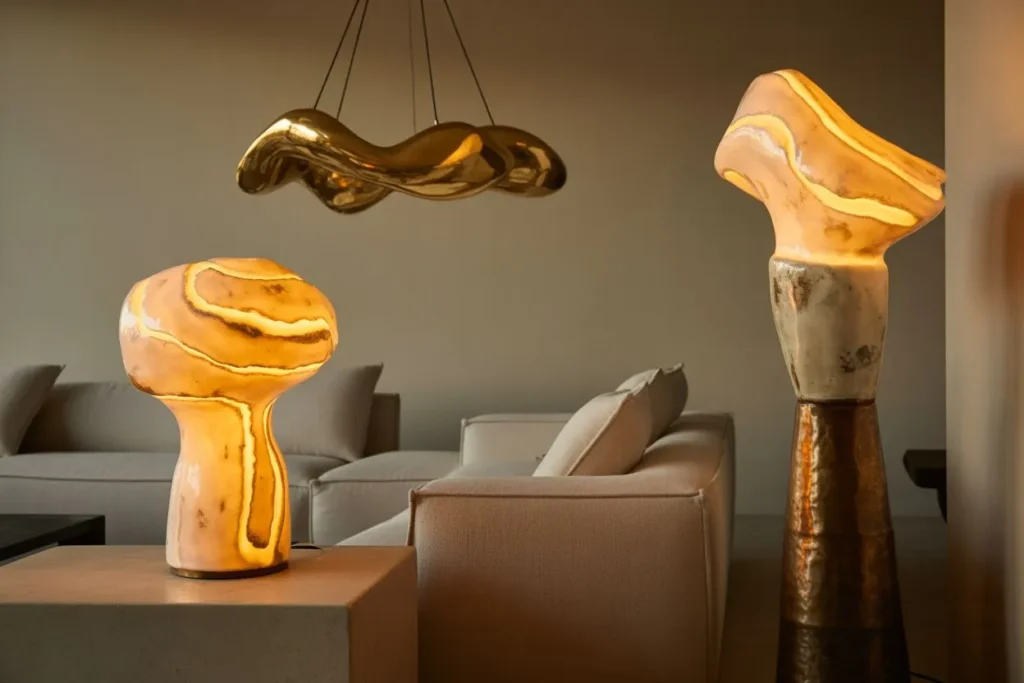
Skip the mass-produced lighting from big box stores. Seek out pieces from local makers, vintage finds, or boutique designers. A handmade ceramic lamp has imperfections. The glaze is slightly uneven. The form isn’t perfect. This is exactly why it’s beautiful. It proves that a person made it, not a machine. When people enter your living room and light hits these fixtures, they naturally gravitate toward them. They ask about them. They become conversation pieces.
12. Living Wall with Layered Greenery
Multiple potted plants at different heights and depths create an indoor garden feel within your living room. Not hanging plants everywhere. That gets overwhelming. Instead, cluster plants at varying heights: tall floor plants, mid-height shelf plants, trailing plants on floating shelves. They create visual layers and soften hard architecture.
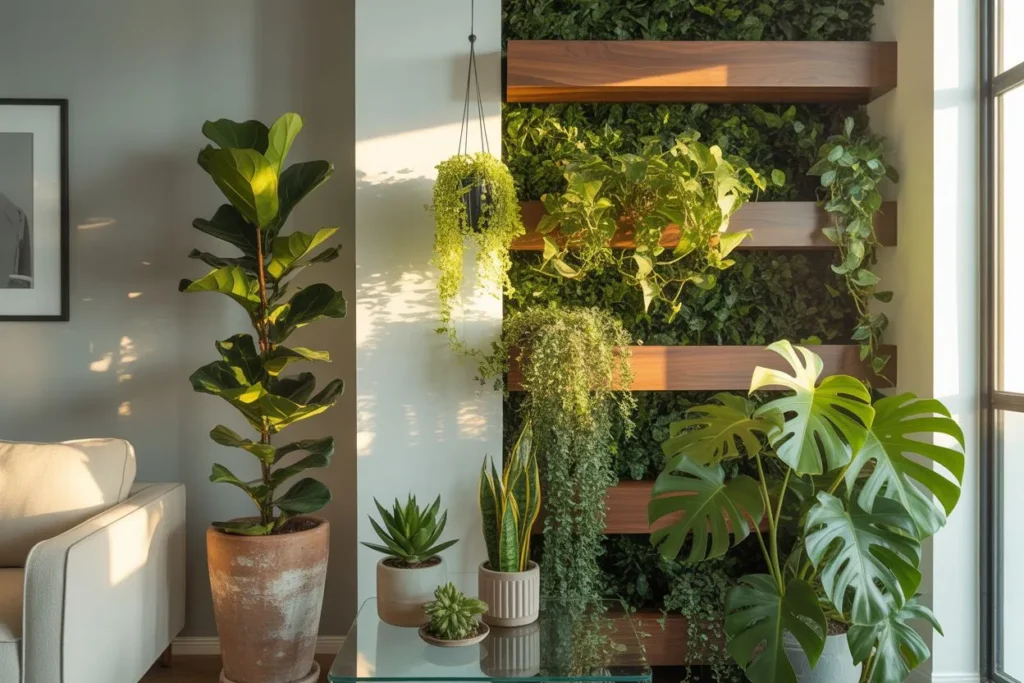
Live plants aren’t a trend. They’re an investment in your mental health. They clean the air. They give you something living to care for. They soften the boundary between inside and outside. A room with plants feels less finished, more alive. Plus, they’re extremely forgiving if you forget to water them occasionally. Some of the prettiest plants are nearly impossible to kill. Start with pothos, snake plants, or monsters. Once you see how much a few plants transform your space, you’ll want more.
13. Neutral Base with Bold Accessories
Keeping furniture and walls neutral creates a calm foundation, then personality comes through flexible accessories. A neutral sofa, neutral walls, neutral rug. This sounds boring. But now imagine the cushions. A bold patterned pillow in jewel tones. A sculptural throw in a contrasting color. An artwork that pops. A dramatic plant. You’ve created a base that’s timeless, while your personality flashes through in ways you can easily change.
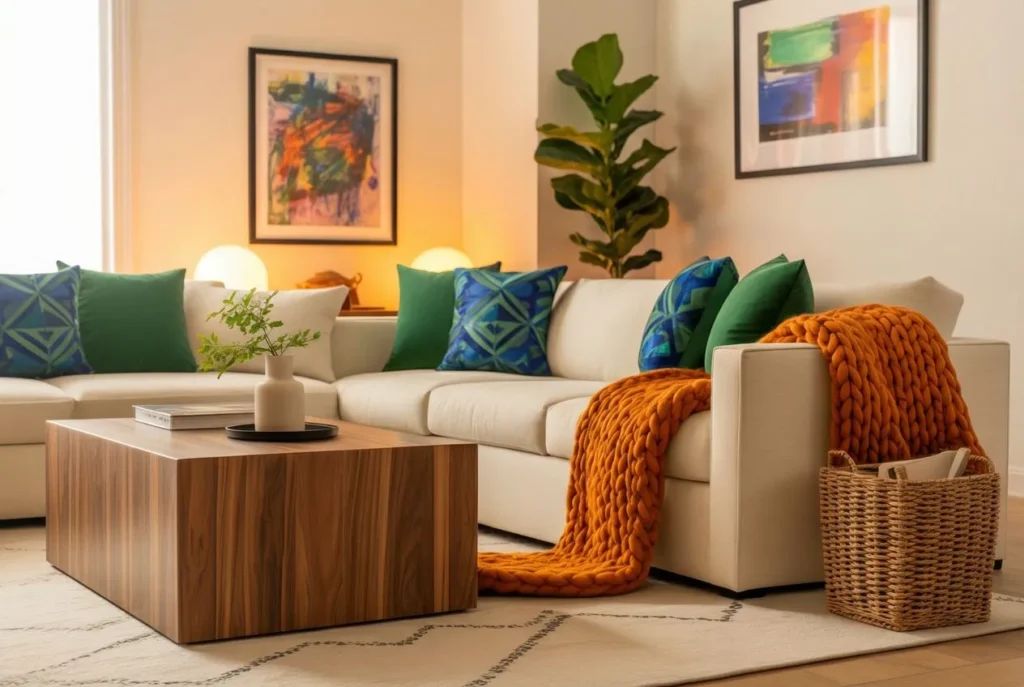
This approach solves the real problem with bold furniture: you live with it for seven years, and then you’re tired of that color. With a neutral base, you swap out pillows, throws, and art annually. Your living room evolves without the financial commitment of new furniture. You’re not locked into trends. The foundation is permanent. The expression is fluid.
14. Curved Lines Throughout
Repeating curved shapes across furniture, mirrors, and accessories creates visual harmony and softness. A curved sofa. A round mirror. An arched floor lamp. Oval side tables. When curves appear throughout the room instead of just one curved sofa, it feels intentional. Your eye moves smoothly through the space. There’s no visual jarring from all hard angles.
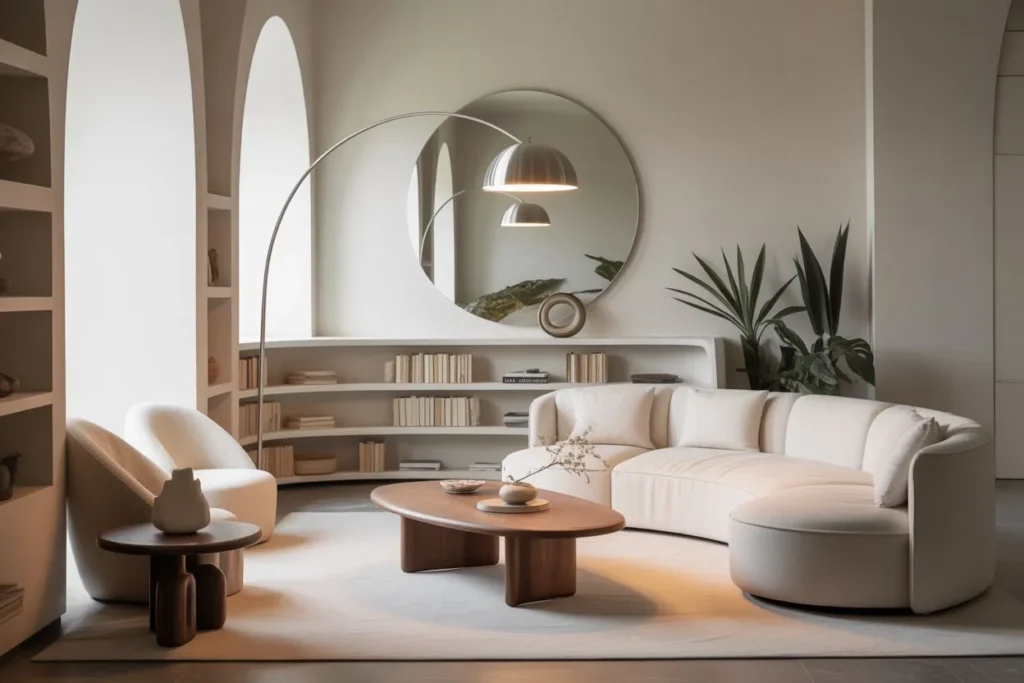
Curves are scientifically proven to make us feel calmer. They mimic natural forms. Nothing in nature is perfectly straight and angular. So when your living room has curves, it feels more aligned with how our nervous systems naturally relax. This doesn’t mean everything needs to be round. It means deliberately choosing curved pieces to balance linear architecture. The result is a room that feels sophisticated and soothing.
15. Vintage Pieces Mixed with Modern
One or two carefully chosen vintage pieces add character and soul that new furniture simply can’t match. A mid-century armchair. A vintage brass side table. A retro wall clock. These pieces have lived. They carry history. Paired with clean-lined modern furniture, they create depth. They tell a story of thoughtfulness instead of just buying what’s available.
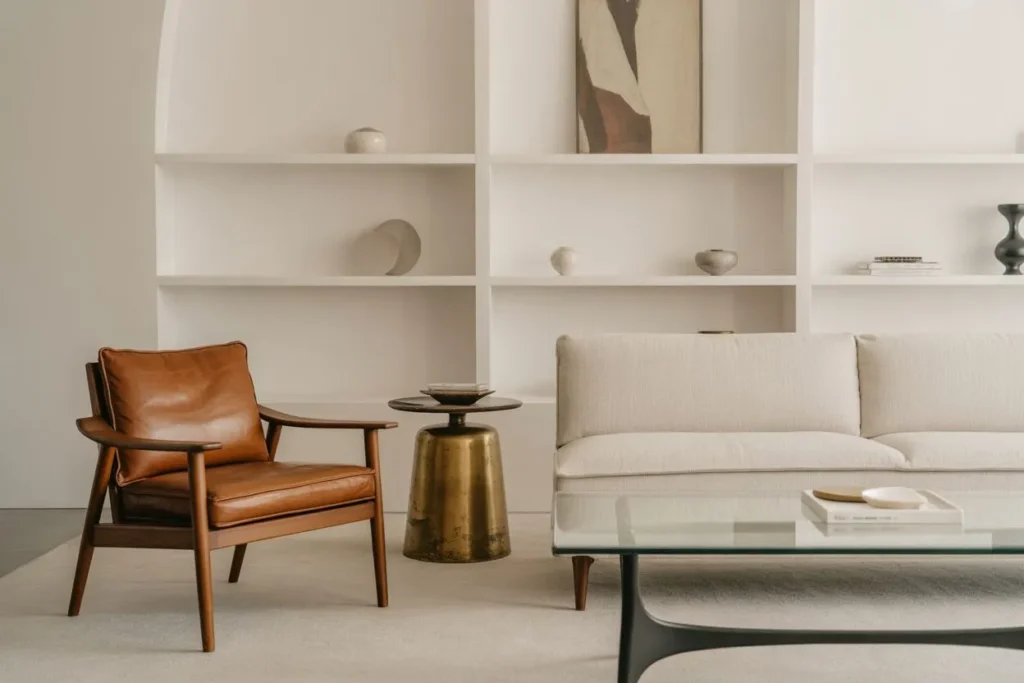
Hunting for vintage pieces is an adventure. Flea markets, estate sales, and online marketplaces let you find something genuinely unique. That chair from 1967 has better bones than many new pieces. That brass table has developed a patina that took decades. You’re not being nostalgic. You’re being smart. You’re mixing styles intentionally, not accidentally. The result feels curated, not random.
16. Textured Flooring as Focal Point
Wide-plank natural wood or terrazzo floors with visible imperfections create a grounded, lived-in feeling. Glossy perfect floors feel sterile. Wide-plank oak with visible knots and grain imperfections feels real. A terrazzo floor with natural stone variation feels precious. These materials improve with time as they collect small scratches and marks. You’re not fighting to keep them perfect. You’re letting them age beautifully.
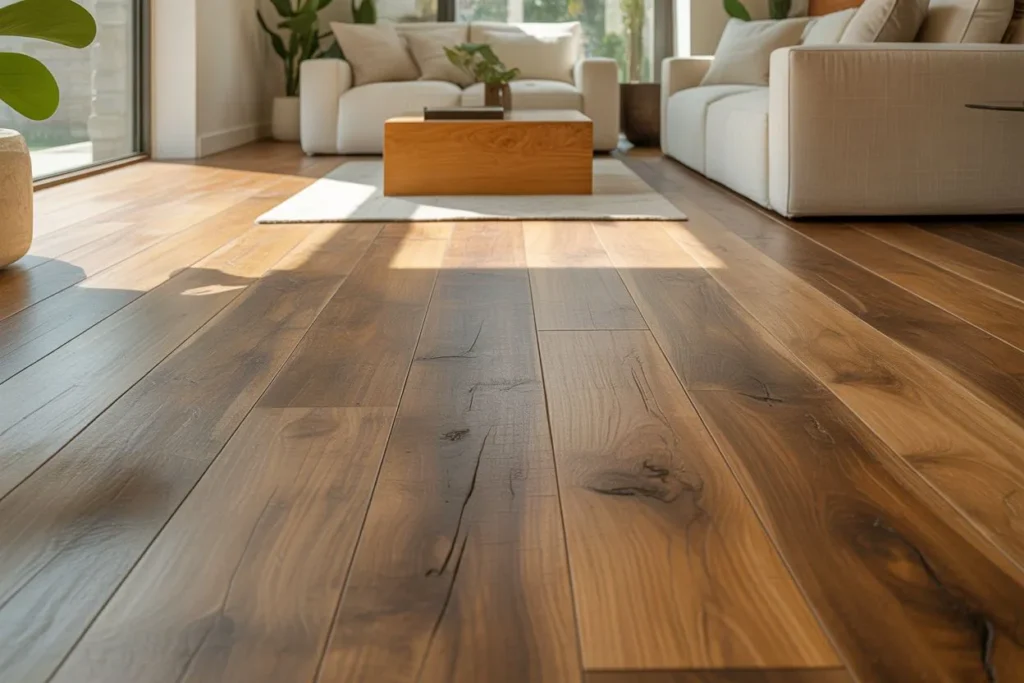
The floor is the fifth wall. It carries more visual weight than most people realize. When your flooring is beautiful and textured, it anchors the entire room. Everything else responds to it. Neutral walls feel intentional against rich wood. Furniture placement feels more deliberate. Suddenly you’re not just putting things anywhere. You’re composing a space where the floor is part of the design conversation, not an afterthought.
17. Sensory-Rich Layering (The Complete Picture)
The most sophisticated modern living room combines comfort, beauty, and intention into a single cohesive space that engages all five senses. This is the culmination of everything else on this list: comfortable curved furniture inviting you to sit, textured materials you want to touch, warm lighting that flatters your face and makes evenings feel luxurious, plants that release oxygen and freshen the air, and artwork or objects that make you smile.
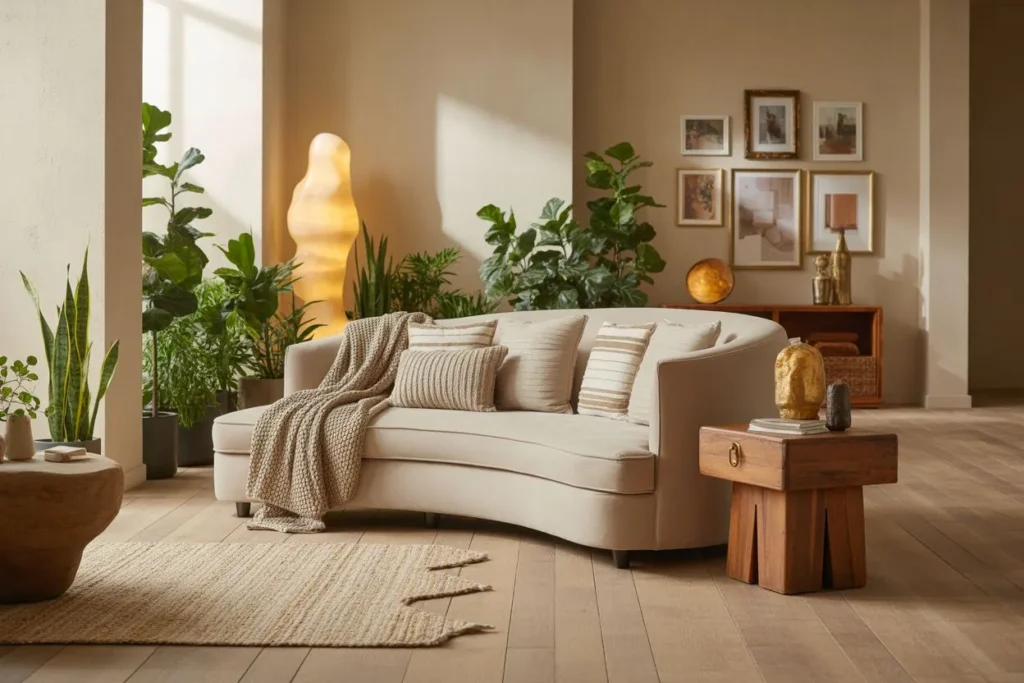
Your living room isn’t a museum. It’s not a showroom. It’s the place where your real life happens. The goal isn’t perfection. It’s honest beauty. A sofa you actually sit on, worn pillows that feel amazing, plants you genuinely care for, books you’re actually reading, art that means something. When a space is designed for real living instead of real-estate photos, it feels fundamentally different. People want to spend time there. You don’t perform in this room. You breathe.
Final Thoughts
These 17 designs share common threads: they prioritize comfort, celebrate natural materials, and honor the reality that homes are for living, not displaying. They acknowledge that the most beautiful spaces are the ones you actually want to spend time in.
Start with one element. Maybe it’s swapping your sofa for a curved piece. Maybe it’s adding plants or changing your wall color. Maybe it’s hunting down a vintage armchair. Each small change moves your living room closer to a space that feels genuinely like yours.
The spaces that matter aren’t perfect. They’re honest. They show signs of living. They reflect the people who inhabit them. Your living room can be one of these spaces. Not because you have a big budget. But because you’re making intentional choices about what belongs there and why.