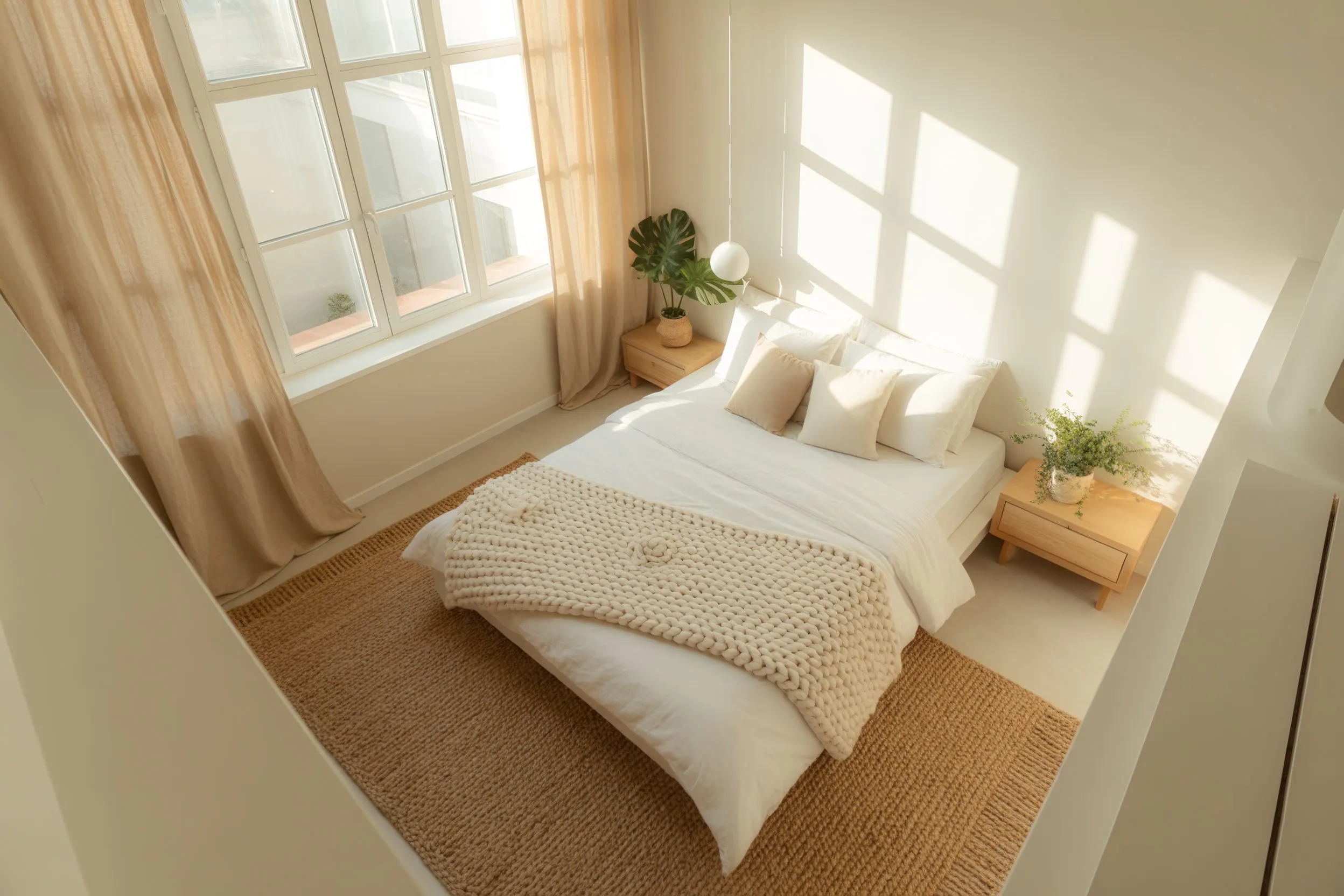
How to Style a Small Bedroom for Maximum Comfort and Space
A 10×10 room can feel like a boutique hotel suite, or it can feel like a storage closet with a mattress in it. The difference isn’t square footage. It’s every decision you make between the walls. This guide covers all of it: colors, furniture, lighting, layout, and the small moves most people overlook entirely.
1. Start With Paint – The Cheapest Visual Upgrade You’ll Ever Make
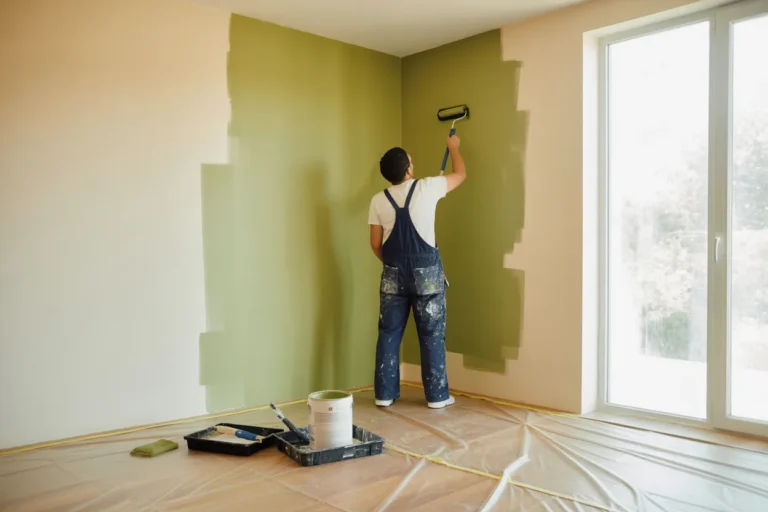
Before you buy a single piece of furniture, paint your room. It’s the one change with the highest visual return for the lowest cost a gallon of paint runs $30–$60 and transforms every surface at once.
🗄️ Style is only half the equation — smart storage is what keeps a small bedroom looking beautiful every day. These 12 ideas use under-bed bins, floating shelves, and built-in solutions to eliminate clutter without sacrificing style:
➤ 12 Smart Storage Ideas for Small Bedrooms That Look BeautifulThe best paint colors for small bedrooms are soft whites (think Benjamin Moore “White Dove” OC-17 or Sherwin-Williams “Alabaster” SW 7008), warm creams, and pale sage greens. These shades bounce available light across the room and make walls feel farther apart than they are.
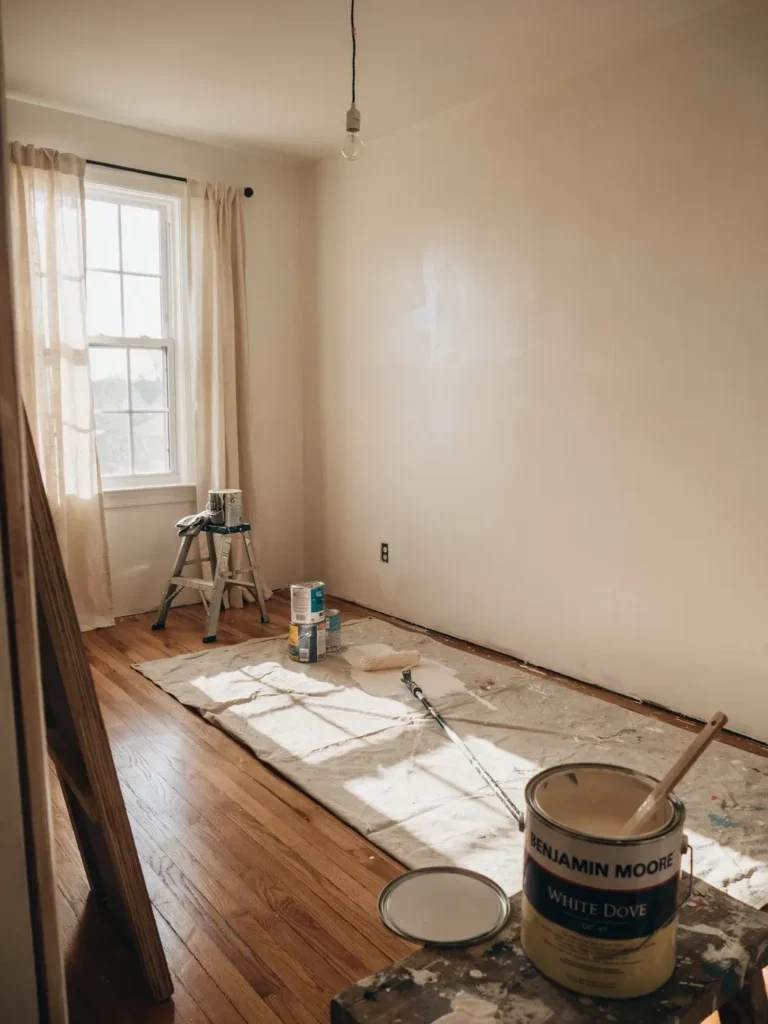
The real trick, though, is painting all four walls and the ceiling the same shade. Most people stop at the walls. Extend that color upward, and your eye can’t find where the wall ends, and the ceiling begins- which makes the ceiling feel higher, and the room feel bigger. It’s a single-room technique used in upscale boutique hotels, and it works just as well in a 100-square-foot apartment bedroom.
Finish matters too. Choose an eggshell or satin finish rather than matte. These finishes have a very subtle sheen that reflects light without looking glossy, so walls glow a little instead of absorbing light.
What to avoid: Cool grays and pure whites can feel clinical or cold in a bedroom. Lean warm, a cream-white reads as bigger and more restful than a stark white ever will.
2. Choose a Bed Frame That Does Two Jobs at Once
The bed takes up 50–70% of floor space in a small bedroom. That means your bed frame is either working for you or wasting the most valuable real estate in the room.
Platform beds with built-in drawer storage are the right choice here. A queen-size platform bed with four drawers gives you roughly 20–30 cubic feet of hidden storage enough for extra bedding, off-season clothes, shoes, and anything else that would otherwise end up in a second piece of furniture. You eliminate the dresser, keep the floor clear, and the room immediately feels more open.
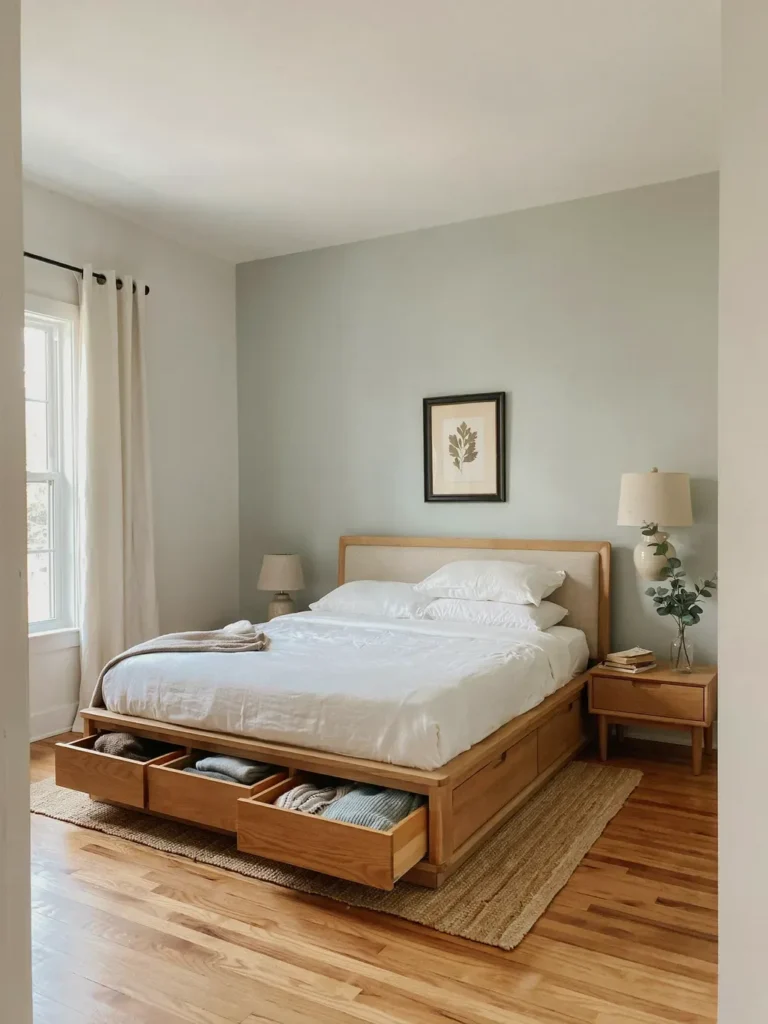
When shopping, look for beds with full-extension drawers (they pull all the way out so you can actually reach the back) and a low-profile frame under 14 inches tall. The lower the frame, the more wall you see above the mattress, which makes the ceiling feel higher.
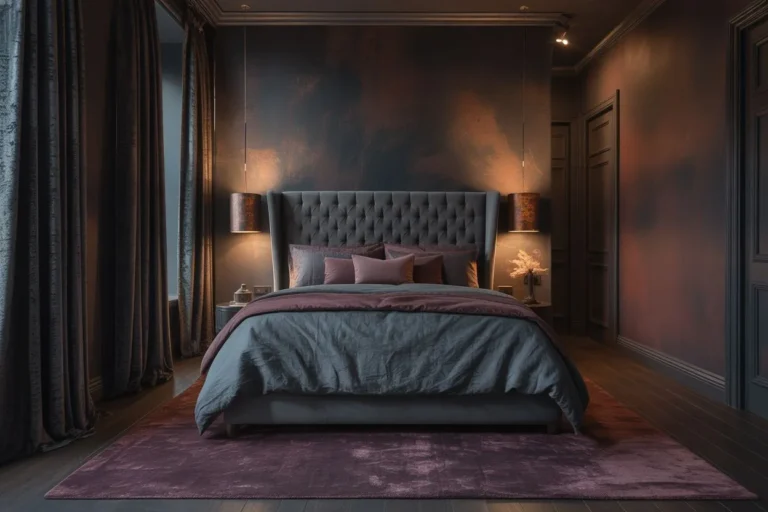
🖤 Mastered the layout — now give your small bedroom a bold personality. These 13 dark feminine bedroom ideas use dramatic color, layered lighting, and rich textures to create a space that feels deeply personal and impossibly beautiful:
➤ 13 Dark Feminine Bedroom Inspo — Dramatic, Dreamy & So BeautifulWhat to avoid: Beds on legs with open space underneath collect dust and create visual clutter. Solid-base storage platforms keep that space contained and useful.
3. Replace Your Nightstands With Wall-Mounted Shelves
A traditional bedside table is typically 18–24 inches wide and eats floor space on both sides of your bed. In a small bedroom, that’s real estate you can’t afford to spend.
Wall-mounted shelves fix this completely. A pair of floating shelves mounted at bed height on either side do everything a nightstand does (lamp, phone, glass of water, book) while touching zero floor space. Your floor runs uninterrupted from the wall to the bed, which makes the room look and feel wider.
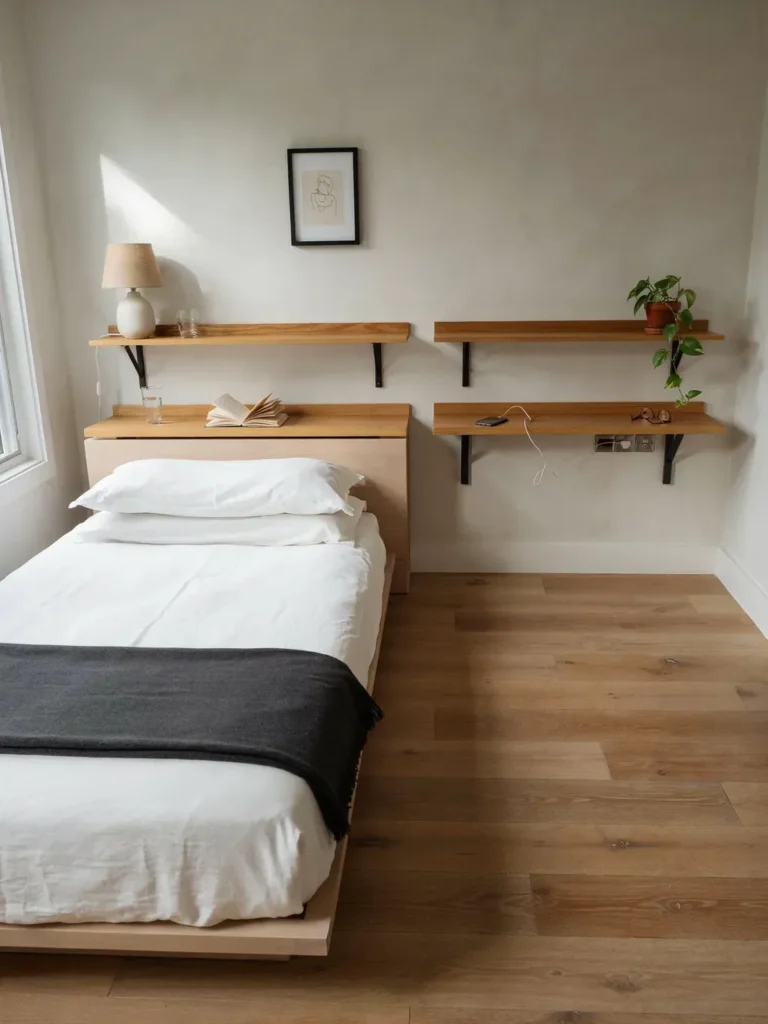
You can find solid wood floating shelves for under $30 each at most home improvement stores. Mount them 24–28 inches from the floor (or level with the top of your mattress) and use simple black or brushed brass brackets for a finished look.
Upgrade option: Small wall-mounted shelves with a built-in USB port and outlet save even more clutter by eliminating the charging cable scramble from your nightstand surface.
4. Build Upward, Not Outward
Most small bedrooms have 8 or 9 feet of vertical space that nobody uses. The 18 inches above your closet rod, the wall space above your doorframe, the area above your wardrobe all of it is functional storage that doesn’t touch your floor plan.
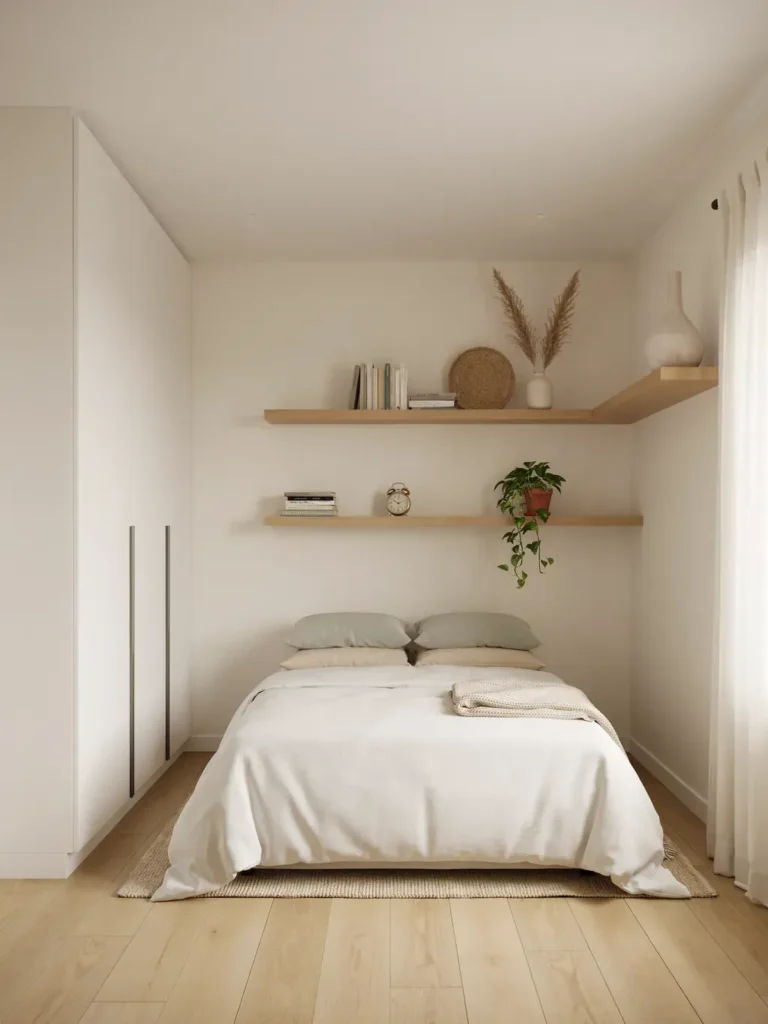
Practical ways to use vertical space:
- Floor-to-ceiling wardrobes hold 40–60% more than standard 72-inch wardrobes, and the height draws the eye upward, which makes ceilings feel taller
- Floating shelves near the ceiling (72 inches and above) work perfectly for books, baskets, and decor you don’t need daily access to
- Over-bed storage shelving a wall-mounted shelf running the width of your headboard functions as a combination headboard and bookshelf without adding depth to the room
A narrow shelf at ceiling height also serves a visual purpose independent of storage. Your eye travels upward toward it, and that upward movement reads as more vertical space in the room.
5. Hang Curtains at Ceiling Height, Not Window Height
Most curtain rods are installed 2–4 inches above the window frame. This is the wrong approach in a small bedroom. It locks your eye into the actual size of the window and creates a visual “cap” on the wall that makes the ceiling feel lower.
The correct method: mount the rod as close to the ceiling as possible (1–2 inches from the ceiling or crown molding), and extend it 8–12 inches past each side of the window frame. Then use full floor-length curtains, even if your window only reaches halfway down the wall.
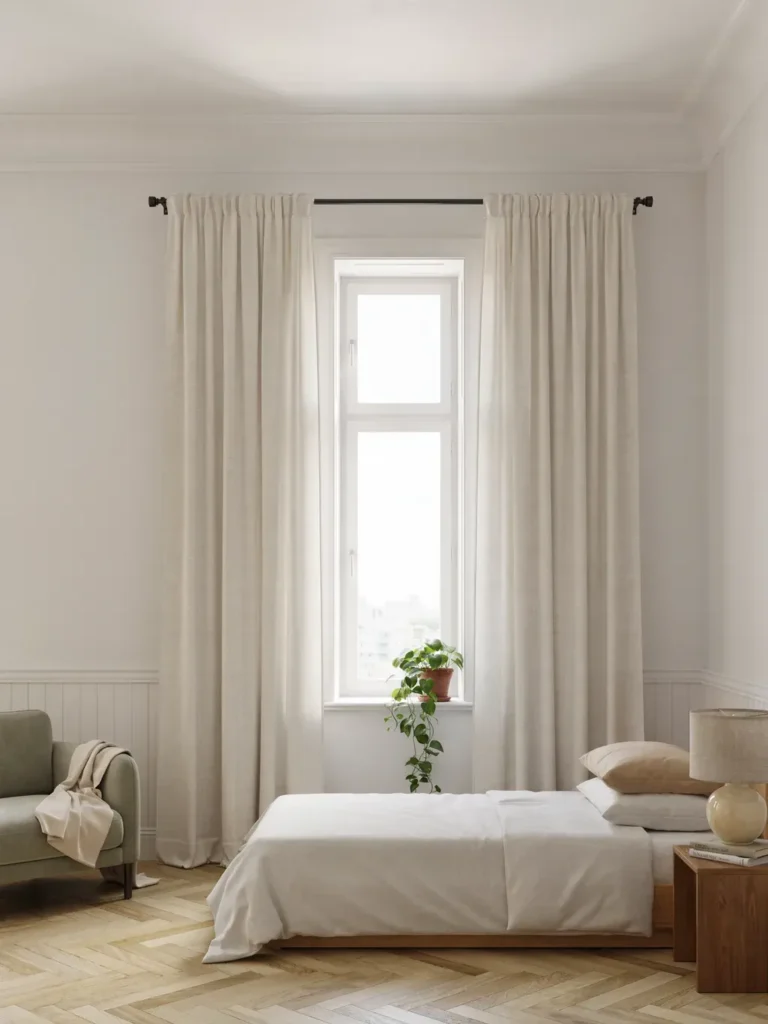
The result looks like this: your curtains hang from near-ceiling to floor, covering a much wider section of wall than the window actually occupies. This creates the illusion of a much larger window and a much taller room.
Fabric choice: Light linen, sheer cotton, or voile in white, off-white, or soft gray keeps the space feeling airy. Heavy velvet or thick blackout fabric can work too just stay in light, neutral tones rather than dark shades that absorb light.
6. Use a Mirror Strategically, Not Decoratively
Mirrors in small bedrooms serve a functional purpose: they reflect light and create the visual illusion of depth, making walls appear farther back than they actually are.
The most effective placement is directly opposite a window. A large mirror on that wall bounces natural light across the full room and creates the impression that the room continues beyond the glass. In rooms with limited natural light, this is especially impactful.
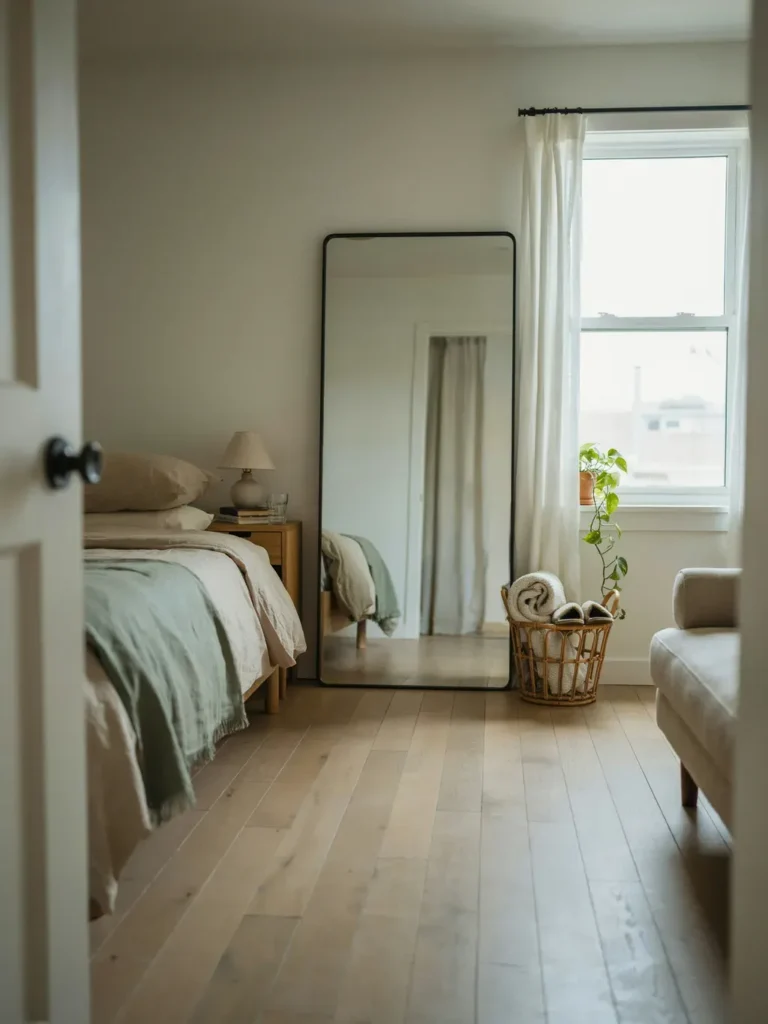
Three mirror options for small bedrooms:
- Full-length leaning mirror (60–72 inches tall): Leans against the wall, takes no wall anchors, adds a practical use (getting dressed), and opens the room significantly
- Mirrored wardrobe sliding doors: Do double duty storage on one side, visual depth on the other; makes the room look 40–50% longer
- Decorative round or arch mirror (24–36 inches): Works in darker corners to open a section of wall without committing to a large installation
What to avoid: Multiple small mirrors scattered around the room create visual noise without the depth benefit of one large piece. Go big rather than many.
7. Keep All Furniture Low-Profile
Here’s a principle from Japanese and Scandinavian design that works in any small bedroom: when your furniture sits close to the floor, the eye sees more open wall above it and that open space reads as height.
A low-profile bed (12–14 inches off the floor), a low 3-drawer dresser (under 36 inches tall), and low floating shelves create a consistent visual horizon line that makes the room feel calm and spacious. Contrast that with a tall headboard + tall dresser + tall bookcase, and the room feels boxed in at eye level.
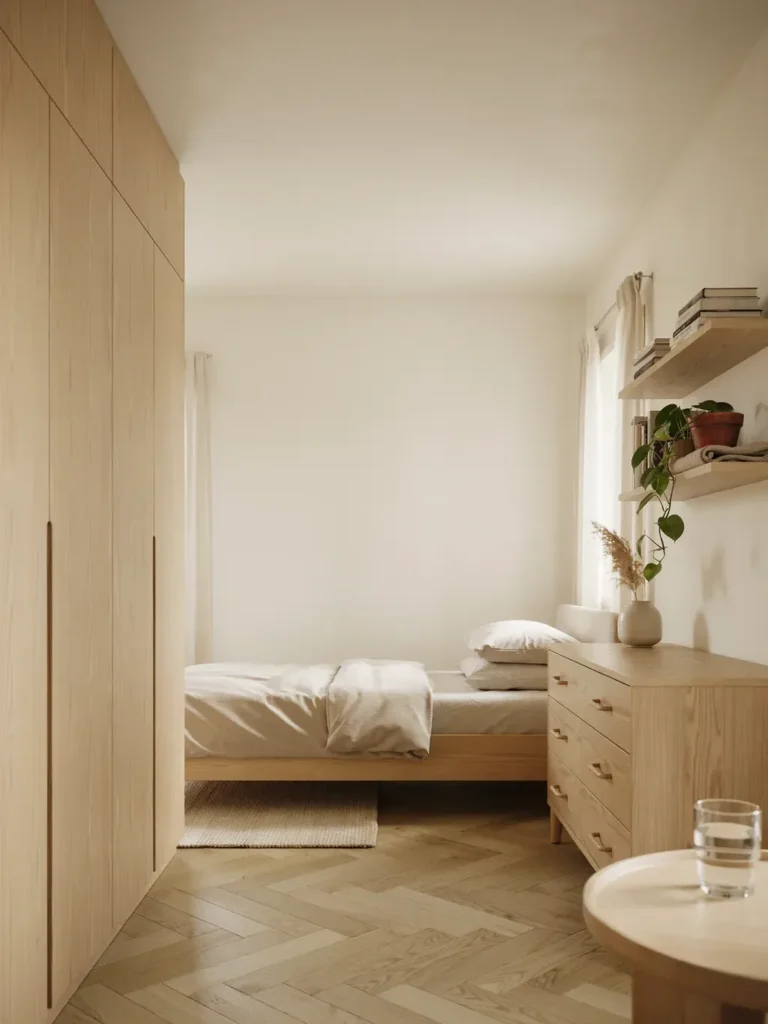
Specific numbers matter: keep the tallest piece of furniture in your bedroom under 48 inches if possible. If you need taller storage (floor-to-ceiling wardrobes), push them against a single wall and keep the other walls low and clear.
The one exception: floor-to-ceiling wardrobes on a single wall are fine they read as architecture rather than furniture, especially when they’re built-in or frame-to-frame with no gaps.
8. Pick One Statement Piece – Then Step Back
A small bedroom with five focal points feels chaotic. A small bedroom with one feels curated. The difference between a room that looks “cramped” and one that looks “cozy and intentional” is almost always this: restraint.
Choose one item to anchor the room’s personality:
- A bold, upholstered headboard in a textured fabric (boucle, velvet, or linen)
- A patterned area rug with strong color or geometric design
- A single piece of wall art, properly sized (at least 24×30 inches anything smaller gets lost)
- A statement pendant light over the bed
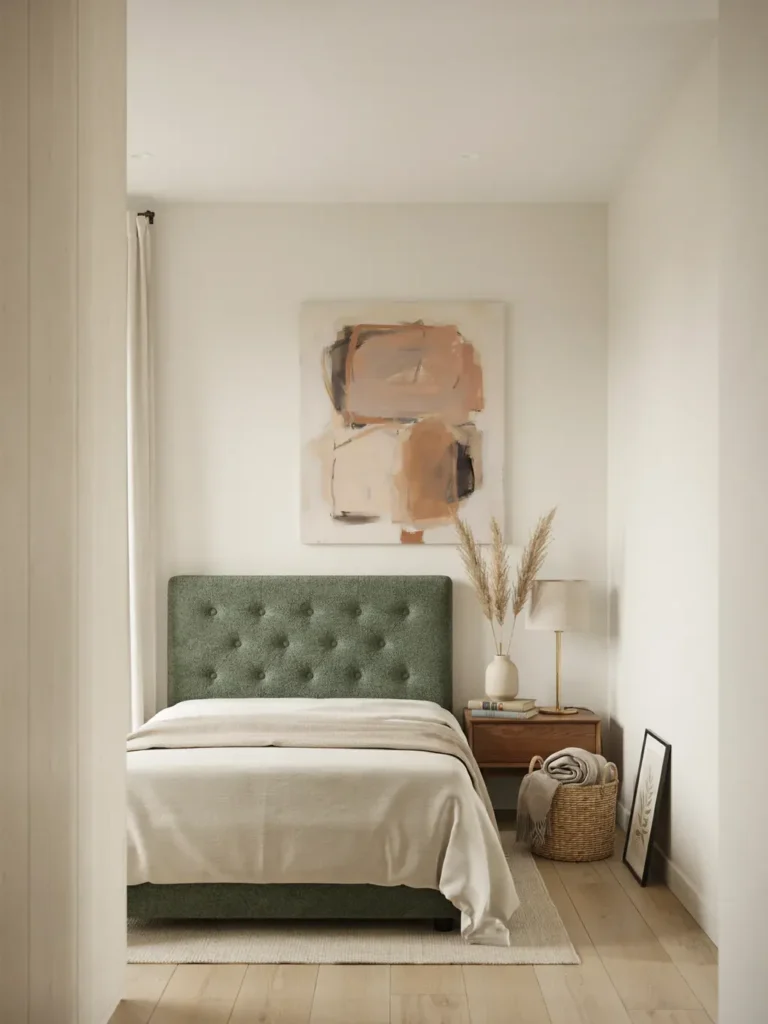
Everything else in the room should be quieter neutral, simple, understated. Let the one thing you chose do its job without competition.
This isn’t boring. It’s the same principle behind why well-designed hotel rooms feel restful rather than sparse. One thing catches your eye. Everything else supports it.
9. Layer Your Lighting – Three Sources Minimum
A single overhead light in a bedroom is a mistake. It flattens the room, creates harsh shadows, and makes the space feel like a budget motel rather than somewhere you want to actually rest.
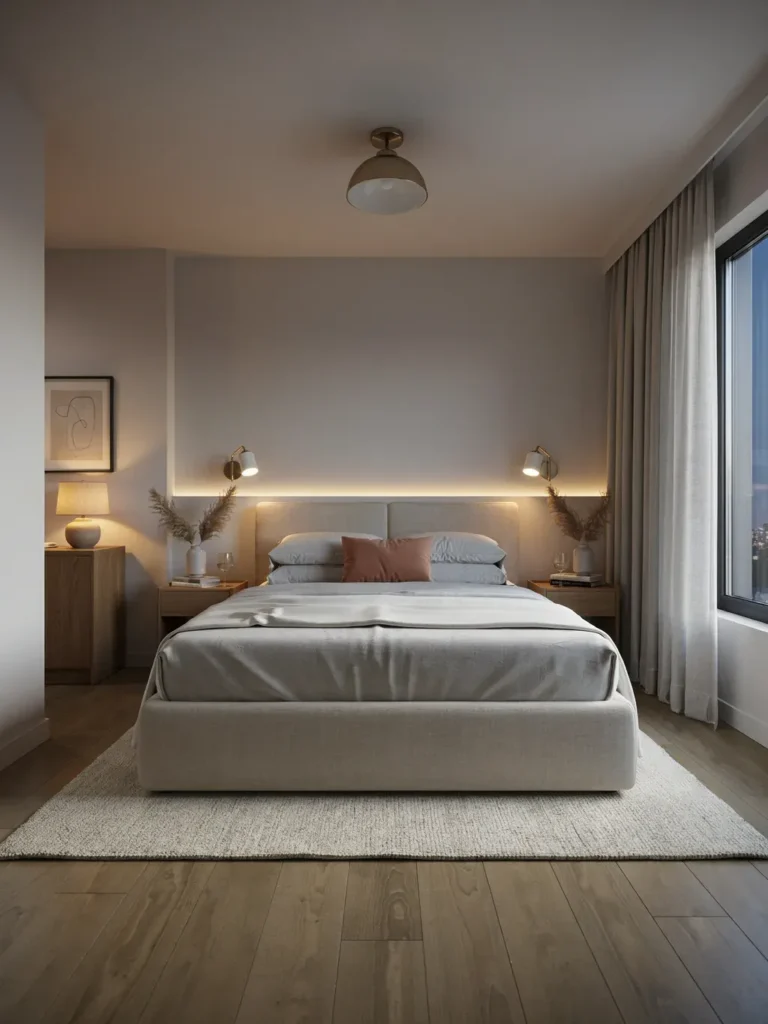
Small bedrooms need at minimum three types of light:
1. Overhead / ambient light A flush-mount or semi-flush ceiling fixture for general brightness. In very small rooms, a statement pendant light over the bed handles this while also serving as the room’s statement piece (see above).
2. Task lighting A bedside lamp or wall-mounted reading sconce for each side of the bed. Wall sconces are preferable because they free up your nightstand surface and keep cords off the floor.
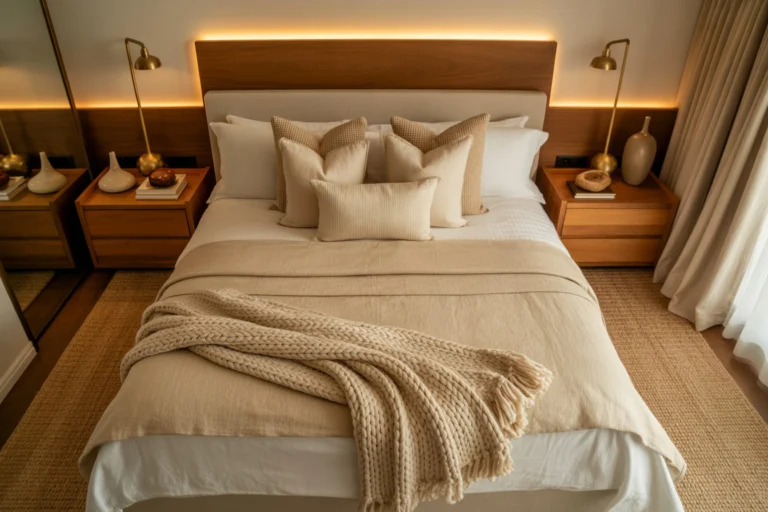
3. Accent / mood lighting LED strip lighting behind the headboard, a small table lamp in the corner, or a plug-in sconce creates the warm, dimensional glow that makes a room feel inviting rather than institutional.
Bulb temperature is critical: Use warm white bulbs in the 2700K–3000K range for all bedroom fixtures. Anything above 3500K starts to read as cool or clinical and will make your carefully designed space feel like an office.
10. Size Your Rug Correctly — Bigger Than You Think
The most common rug mistake in small bedrooms is buying a rug that’s too small. A 5×7 rug in a bedroom doesn’t define the space it floats in the middle of it and makes the room look even more disjointed.
The right approach: place the rug so it extends at least 18–24 inches beyond each side of the bed. For a queen bed, that typically means a 8×10 rug minimum. The rug should sit under the lower two-thirds of the bed (not centered under it), with visible rug extending past the foot and both sides.
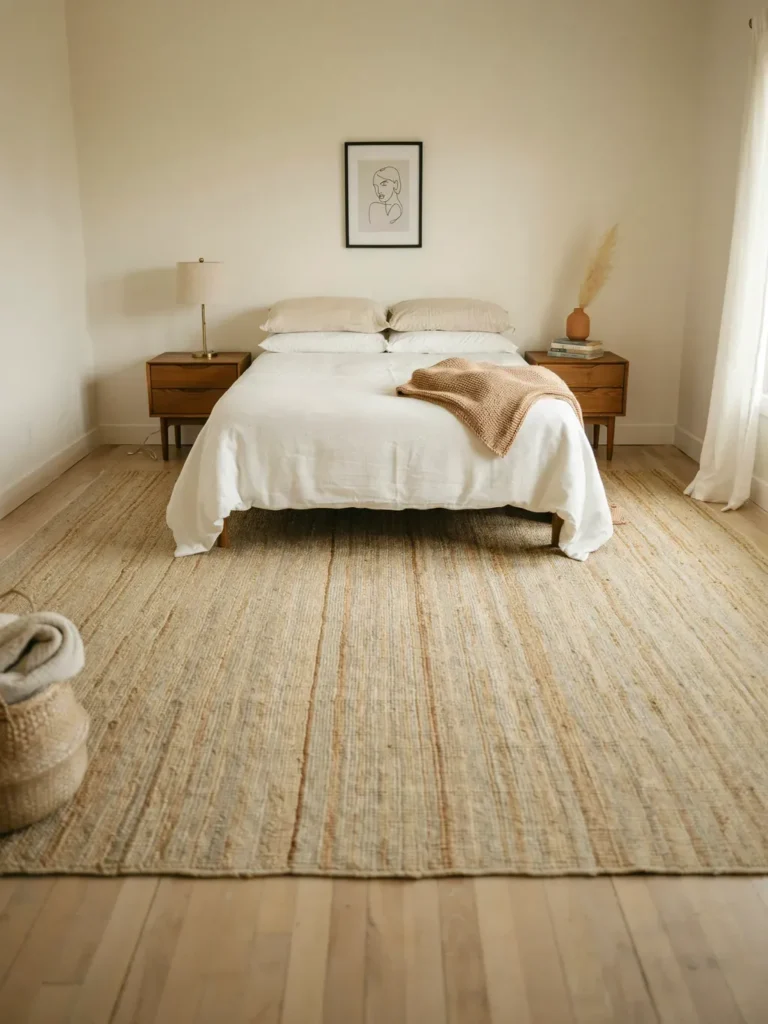
This matters because the rug’s job is to anchor all the furniture into a single visual zone. When the rug is the right size, the room reads as intentional and complete. When it’s too small, everything looks unmoored.
Texture and color: In small rooms, go with lower-pile rugs (flatweave, jute, or short-pile wool) rather than thick shag. Lower pile keeps the floor visual clean and makes the room feel more spacious. Keep the rug in a warm neutral, or use it as your one pattern statement if you’ve kept everything else simple.
11. Add One Plant – Exactly One (or Two, Maximum)
Plants do something for a small bedroom that no decor item replicates: they add biological color, movement, and texture that reads as genuinely alive rather than styled. A well-placed plant makes a room feel cared for.
The key word is “one.” In a bedroom under 150 square feet, two or three medium plants tips from “fresh and alive” into “greenhouse.” One medium plant in the right spot is always better than a collection.
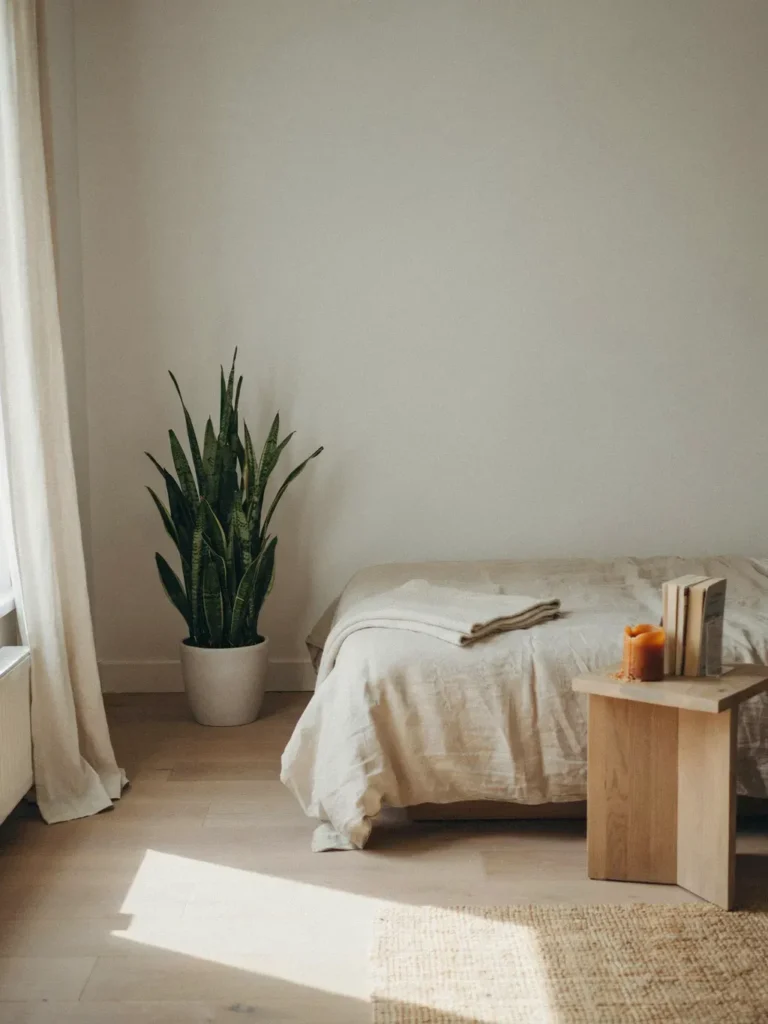
Best plants for small bedrooms:
- Pothos (Epipremnum aureum): Trails from a shelf, grows fast, tolerates low light and occasional neglect
- Snake plant (Sansevieria): Upright and architectural, works in corners, filters air overnight
- Peace lily (Spathiphyllum): Slightly wider spread, flowers occasionally, handles low light better than most
Place your plant at floor level in a corner to anchor it, or on a shelf where a trailing variety can fall naturally. A simple terracotta or matte white ceramic pot is all the container it needs anything more elaborate competes with the plant.
12. Declutter Like You Mean It – The 20-Item Rule
Everything above this point only works if the room is tidy. A perfectly designed small bedroom with 40 visible objects still feels cramped and stressful. Clutter is the single biggest enemy of small-space comfort, and it overrides every other decision you make.
The 20-item rule is a simple audit: stand in the center of your room and count every object you can see from that spot. If the number is over 20, something needs to go away into a drawer, into a box under the bed, or out of the room entirely.
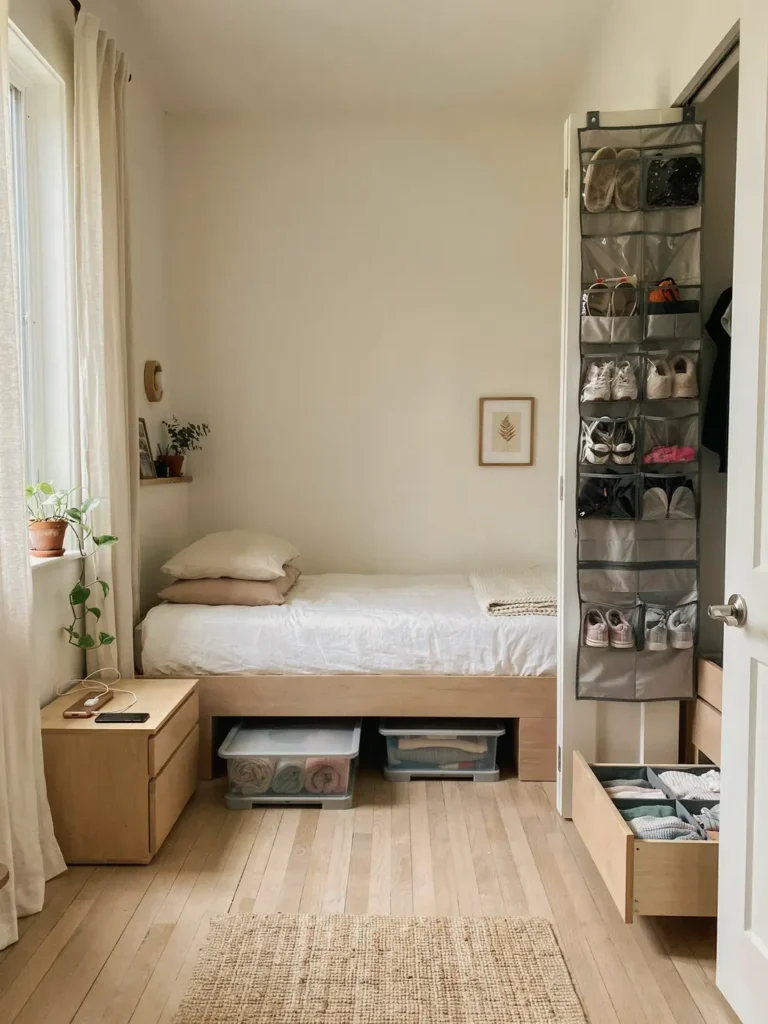
Storage tools that keep clutter invisible:
- Drawer dividers organize clothing drawers so they hold more and stay organized longer
- Under-bed bins with lids 16-gallon flat bins fit under most platform beds and hold seasonal items, extra bedding, or anything that doesn’t need daily access
- Over-door organizers the back of a closet door holds shoes, accessories, or small items without using any shelf or drawer space
- Bedside charging stations one organized charging spot eliminates the cable tangle that makes nightstands look chaotic
The goal isn’t minimalism for its own sake. It’s this: in a small room, every visible object competes for attention. Edit ruthlessly, and what remains will feel intentional rather than crowded.
Quick-Reference Summary
| Strategy | What It Does | Cost Range |
|---|---|---|
| Light paint + ceiling match | Makes room feel bigger | $30–$70 |
| Storage bed frame | Eliminates dresser, clears floor | $300–$800 |
| Wall-mounted nightstands | Frees floor space on both sides | $20–$80 |
| Vertical shelving | Uses ignored ceiling-height space | $40–$200 |
| High-hung curtains | Makes ceiling feel taller | $50–$150 |
| Large mirror opposite window | Doubles visual depth | $50–$300 |
| Low-profile furniture | Emphasizes ceiling height | Varies |
| One statement piece | Creates calm, curated feel | $50–$500 |
| Layered lighting (3 sources) | Makes room feel warm and dimensional | $80–$300 |
| Correctly sized rug | Anchors room into one visual zone | $100–$400 |
| One plant | Adds life without clutter | $15–$60 |
| Declutter + organizers | Makes design actually visible | $20–$100 |
Frequently Asked Questions
What is the best layout for a small bedroom?
Place the bed against the longest wall and away from the door. This keeps walking paths clear and gives you the most usable floor space around the bed. Avoid placing the bed under a window – you lose wall anchoring, and heat from the window disrupts sleep in summer.
What color makes a small bedroom look bigger?
Warm whites and light creams make small bedrooms look the most spacious, especially when applied to all four walls and the ceiling in the same shade. Cool grays work too but feel less inviting. Avoid dark colors unless you’re intentionally going for a moody, cozy aesthetic and have enough natural light to compensate.
Can a small bedroom have a king-size bed?
A king bed requires a minimum room size of approximately 12×12 feet to leave enough walking clearance. In a 10×10 room, a queen is the maximum practical size. A full or double leaves noticeably more floor space and can actually make a small room look more proportional.
How do I make a small bedroom feel luxurious?
Luxury in a small bedroom comes from quality over quantity: high thread-count bedding, a single well-chosen piece of art, layered warm lighting, and obsessive tidiness. A clean, well-lit, uncluttered small bedroom reads as more luxurious than a large bedroom with cheap, mismatched furniture.
What should you not put in a small bedroom?
Avoid oversized furniture (armchairs, large dressers, bulky wardrobes), multiple rugs, too many throw pillows, and visible technology like large TV screens – all of these make small rooms feel smaller and more chaotic.