Easy Bedroom Decor Ideas to Make Your Room Look Expensive
Your bedroom is the one space that’s entirely yours. It should feel like a retreat, not an afterthought.
The good news? You don’t need a designer’s budget to make it look like one. A few smart swaps, the right textures, and some strategic styling can take a plain bedroom from ‘just okay’ to genuinely stunning.
We’ve pulled together 15 of the best easy bedroom decor ideas to make your room look expensive, without draining your bank account. Every idea below is specific, actionable, and built for real people.
1. Swap Out Your Bedding for Linen or Textured Fabric
The fastest way to make a bedroom look expensive is to upgrade your bedding. Linen, velvet, and boucle fabrics instantly add texture, warmth, and visual depth. These materials catch light differently at every angle, which creates a layered, high-end look without major effort.
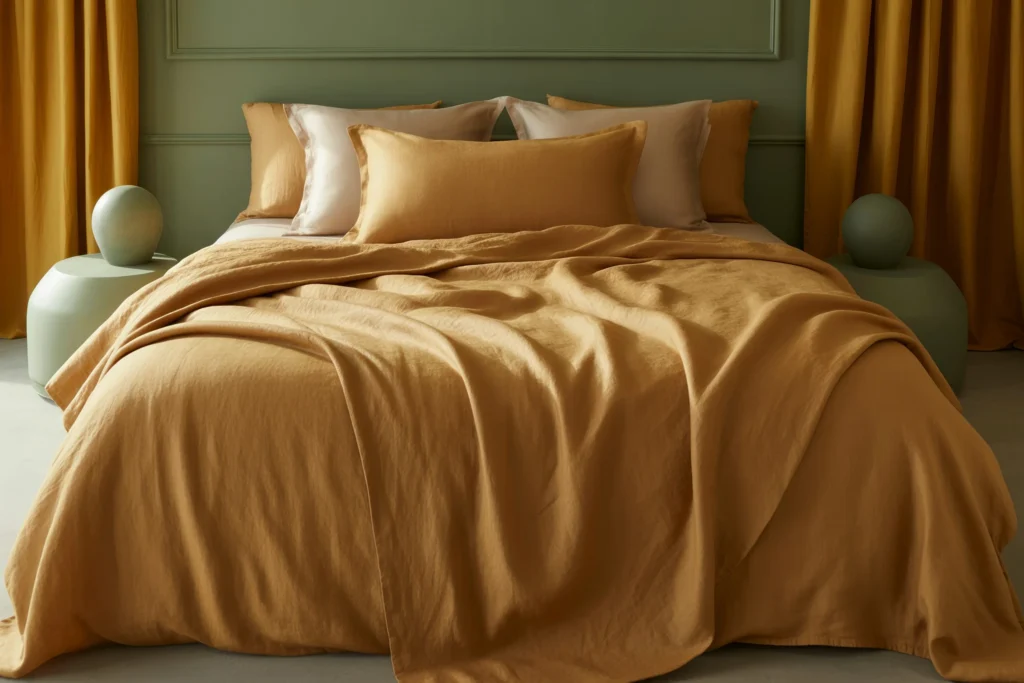
Cheap, flat polyester bedding is the thing that makes most bedrooms look budget. It reflects light in a flat, clinical way, and wrinkles badly. Switching to natural linen or a textured cotton-blend bedspread immediately changes the feel of the entire room.
💸 Want to give your bedroom a stylish makeover without breaking the bank? Check out our budget-friendly decor ideas:
➤ Budget-Friendly Bedroom Decor Ideas for a Stylish LookYou don’t need a full matching set either. A linen duvet cover in warm white, oat, or sage green, paired with two standard pillowcases, is enough. The slight natural creases in linen actually look intentional, like a French country home or a boutique hotel.
2. Use a Large Statement Mirror to Add Depth
A large, well-placed mirror makes any bedroom feel bigger, brighter, and more expensive. It bounces light around the room and creates the illusion of additional square footage. Interior designers use mirrors as a core styling tool, not just a functional afterthought.

The trick is going bigger than feels comfortable. A small mirror on a dresser reads as an accessory. A floor-length mirror leaning against the wall, or a wide arched mirror above a console, reads as a design decision. That shift in scale is what makes a space feel intentional.
A gold, black, or aged brass frame adds even more impact. These finishes photograph beautifully and add contrast against light walls. If your walls are already neutral, a mirror with an ornate or geometric frame becomes the focal point without adding clutter.
3. Layer Your Lighting with Warm Bulbs and Multiple Sources
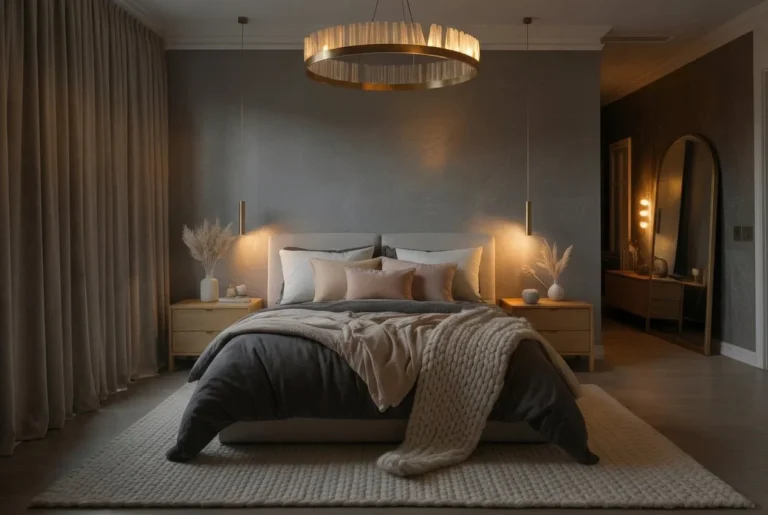
Overhead lighting alone is the enemy of a good-looking bedroom. It flattens everything and creates harsh shadows. Add a bedside table lamp, a floor lamp in the corner, and a small LED strip behind a headboard or underneath a shelf, and the entire room transforms.

🛏️ Struggling with a small bedroom? Learn how to maximize every inch of your space with our expert styling tips:
➤ How to Style a Small Bedroom for Maximum Comfort and Space4. Add a Tray to Your Nightstand for Instant Organization
A decorative tray on a nightstand is one of the cheapest bedroom styling tricks that makes a space look curated and expensive. It corrals small items like candles, books, and a glass of water into a single visual group. Designers call this ‘containment styling’, and it works every time.
Without a tray, a nightstand full of random items looks cluttered even when it’s technically organized. A tray creates a defined boundary that signals intention. It tells anyone who looks that someone actually thought about how this space should feel.
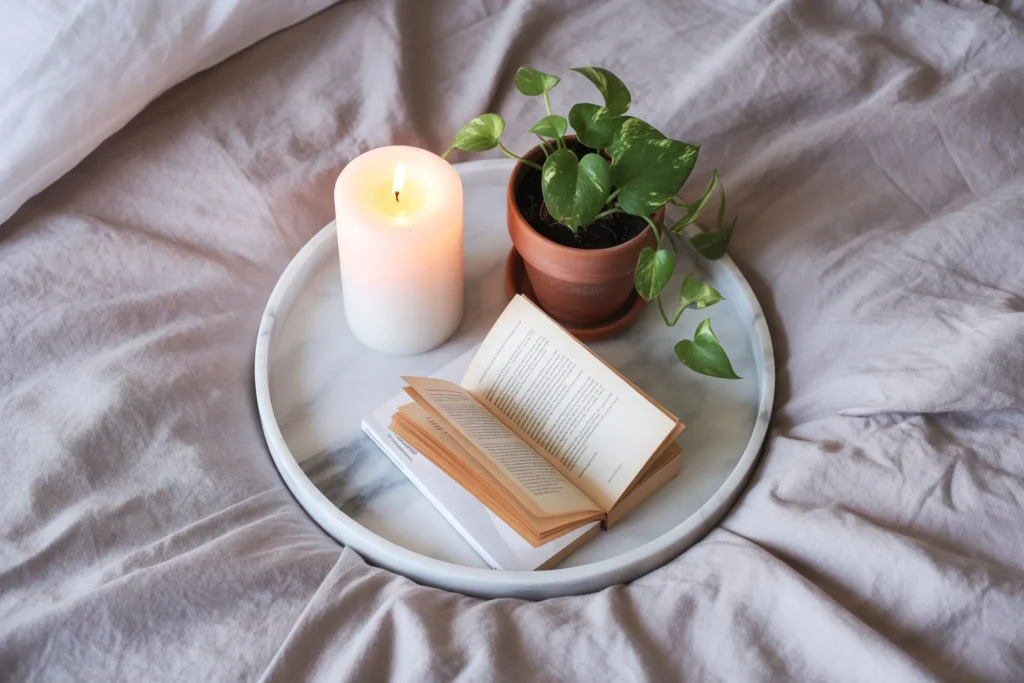
Choose a tray in marble, rattan, lacquered wood, or brushed metal. Keep it to three or four items maximum: a small candle, a book, a plant or crystal, and maybe a small lamp. That’s the sweet spot between styled and sparse.
5. Hang Curtains High and Wide to Make Ceilings Feel Taller
Hanging curtains as close to the ceiling as possible, and extending the rod at least 8 to 12 inches wider than the window frame, makes any bedroom look taller and more expensive. This is one of the most used tricks in interior design because it visually stretches vertical space. It costs almost nothing extra.
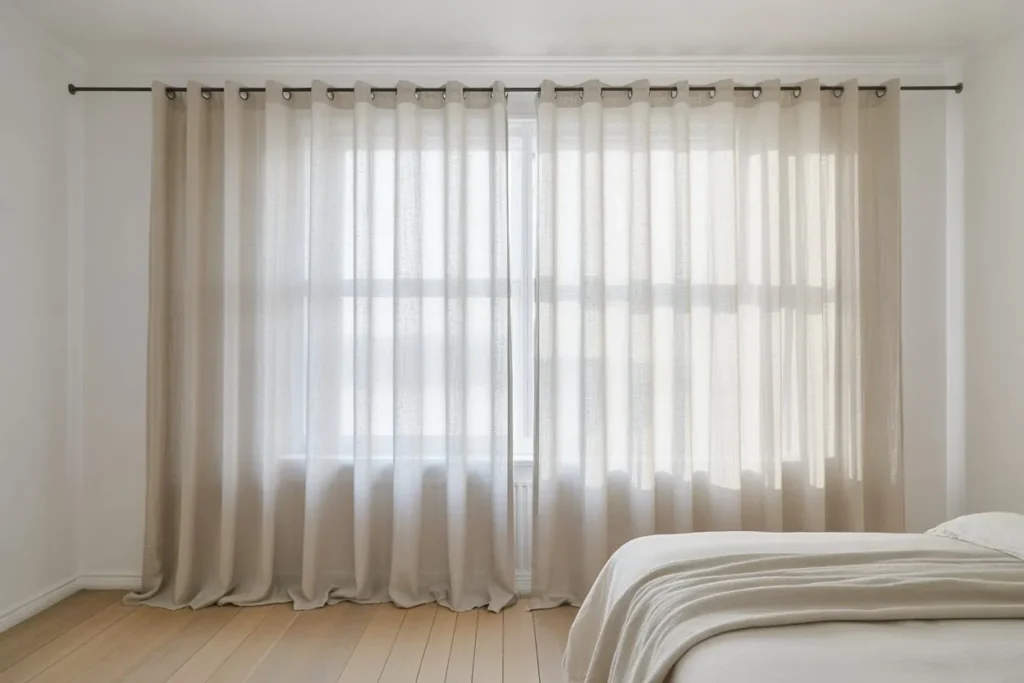
Most people hang curtain rods just a few inches above the window frame. That’s a mistake that makes windows look small and ceilings look low. Pulling the rod up to the ceiling and letting the fabric pool slightly at the floor changes the whole sense of proportion in a room.
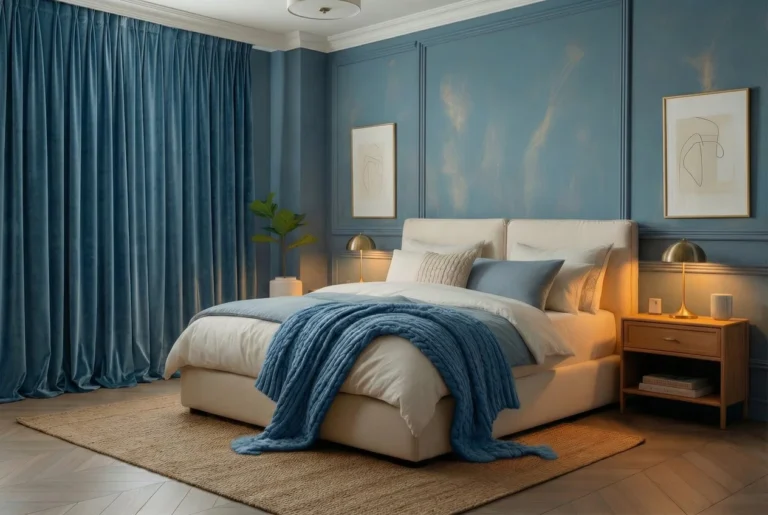
Linen, velvet, or thick cotton curtains in white, warm cream, charcoal, or dusty blush work best for this look. Avoid stiff, synthetic fabrics as they break the illusion. The drape and movement of natural fabrics is what gives the room that magazine-worthy feel.
6. Style a Bed with Layered Throw Pillows in Odd Numbers
Layering throw pillows in groups of three or five creates a styled, intentional look that mimics high-end hotel and showroom bedrooms. Odd numbers feel more visually balanced than even groupings because the eye moves naturally between items without settling symmetrically. This is a basic design principle used by professional stagers.
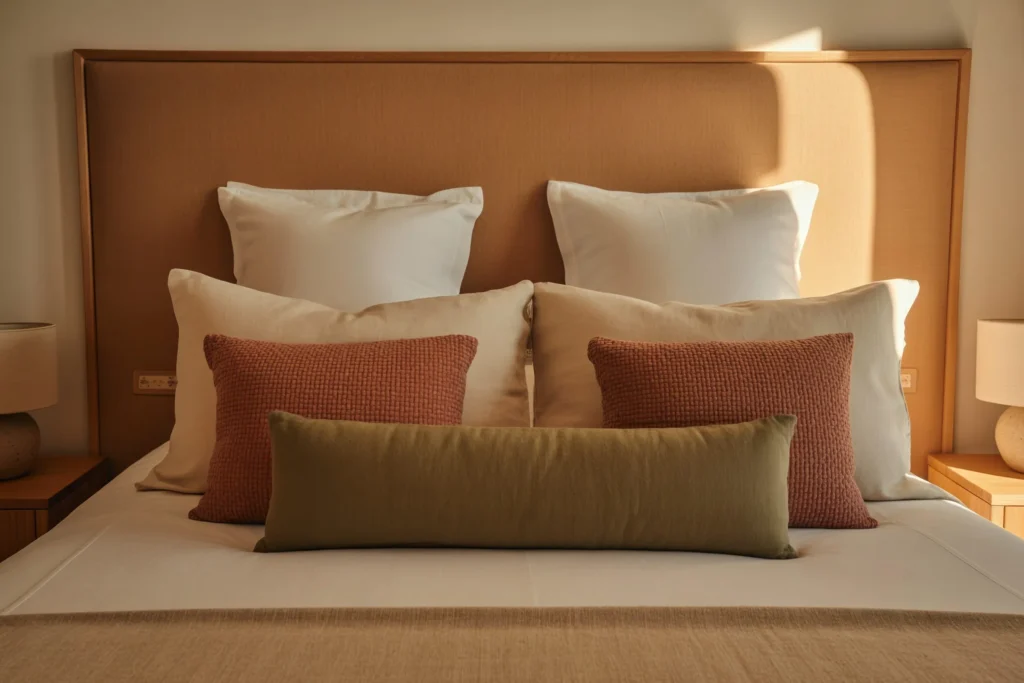
The key is mixing sizes and textures, not just colors. Start with two standard sleeping pillows in a plain case at the back. Layer two Euro shams in front. Add one or three decorative pillows or a lumbar cushion at the front. That progression creates depth without looking overdone.
Stick to a limited color palette: two neutrals and one accent. For example, white, warm oat, and a deep rust or forest green. Mixing too many colors makes the bed look chaotic rather than curated.
7. Add a Rug Under the Bed to Ground the Space
A rug placed under the bed is one of the top interior design tips for making a bedroom look expensive and complete. Without a rug, even a well-styled bedroom can feel like it’s floating, or like it’s missing something. The rug anchors the entire furniture arrangement and adds warmth, texture, and color to the floor plane.
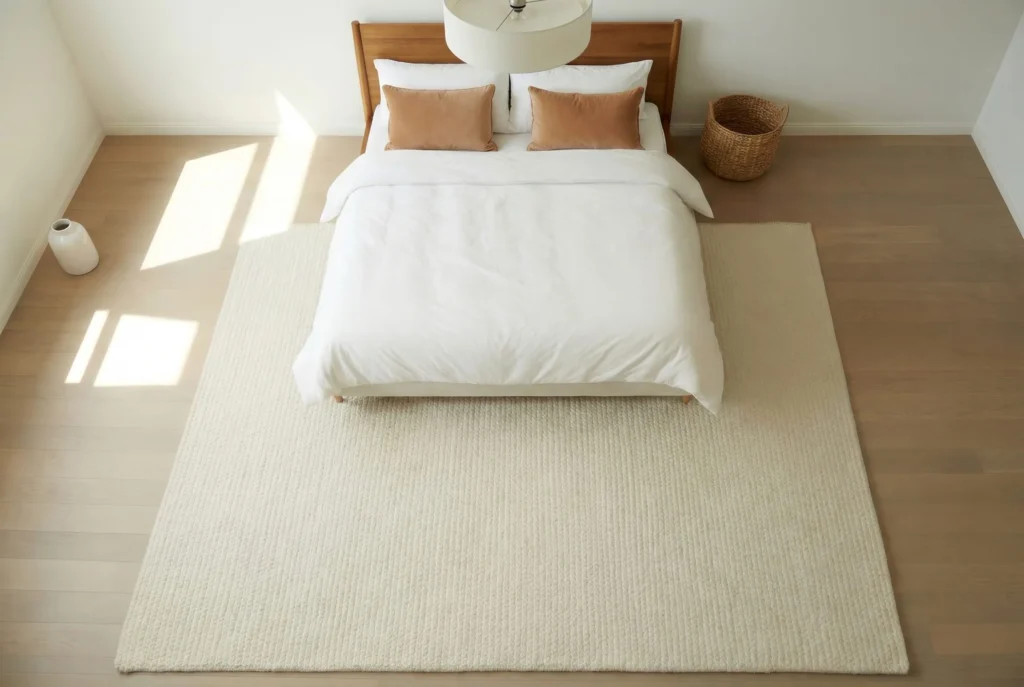
The most common mistake is buying a rug that’s too small. For a queen bed, go with at least a 8×10 foot rug. For a king, a 9×12 works best. The rug should extend at least 18 to 24 inches beyond each side of the bed, so you step onto it every morning.
Natural materials like jute, wool, or cotton work beautifully in bedrooms. A low-pile, neutral rug in ivory, warm grey, or camel adds softness without competing with the bedding. A subtle pattern, like a diamond weave or herringbone, adds visual interest without overwhelming the room.
8. Use a Consistent Color Palette of 2-3 Colors Max
A bedroom with two to three coordinated colors always looks more expensive than one with five or more competing tones. Color restriction is one of the first principles interior designers apply when creating a cohesive, high-end space. A limited palette makes every element feel like it belongs.
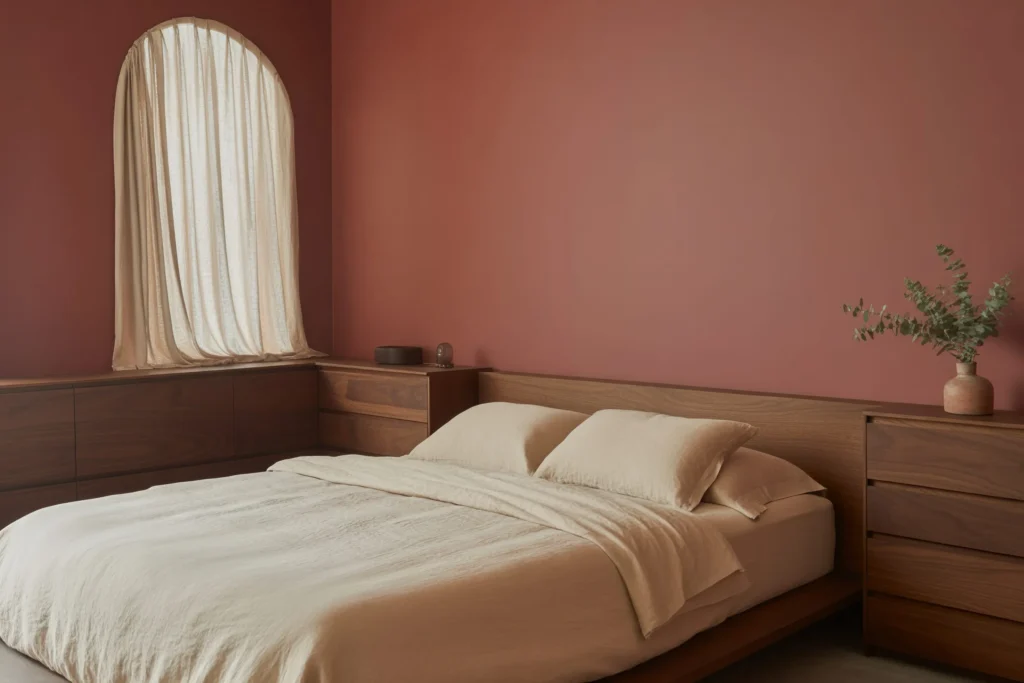
Pick a base color for your walls and large items like the bedframe or wardrobe. Add a secondary color for bedding or a rug. Then choose one accent color for smaller details like cushions, vases, or art. That structure alone is enough to tie everything together visually.
The most popular luxury bedroom palettes in 2026 are warm terracotta with cream and sage, navy with gold and white, and deep charcoal with blush and natural wood. All three palettes feel rich without being loud, which is the sweet spot for expensive-looking spaces.
9. Declutter and Follow the ‘One Surface, Three Items’ Rule
Decluttering is free, and it might be the single biggest thing that separates a messy bedroom from an expensive-looking one. The ‘one surface, three items’ rule means every flat surface in your room should hold a maximum of three intentional objects. That level of restraint is what creates a clean, curated feel.
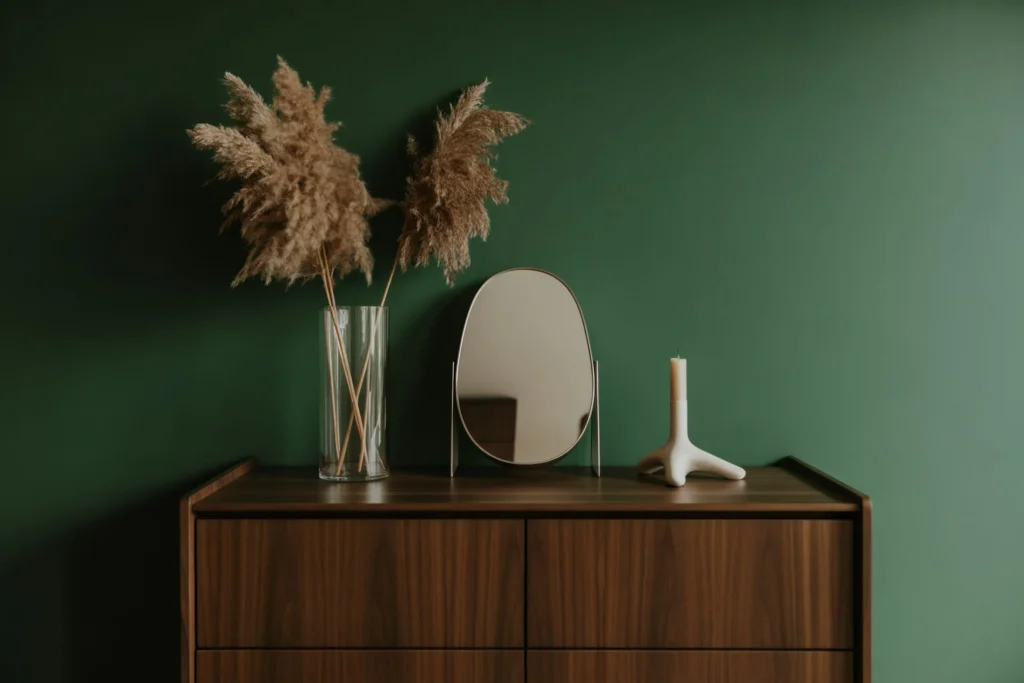
Clutter is the visual equivalent of noise. Even beautiful furniture and quality bedding look diminished when surrounded by too many items. Clearing surfaces and keeping only the most meaningful or beautiful objects forces you to be selective, and that selectivity shows.
For each surface, think: one functional item, one decorative item, and one natural item. On a dresser, that might be a perfume bottle, a framed photo, and a small plant. On a nightstand, a lamp, a book, and a small crystal or candle. Simple, but it reads as thoughtfully designed.
10. Hang Wall Art in Clusters, Not Alone
Single pieces of wall art in a bedroom often look lonely and undersized, which actually makes the room look cheaper. Hanging art in a curated cluster, or gallery wall arrangement, immediately adds a visual anchor that reads as intentional and expensive. The key is to treat the arrangement as one unit.
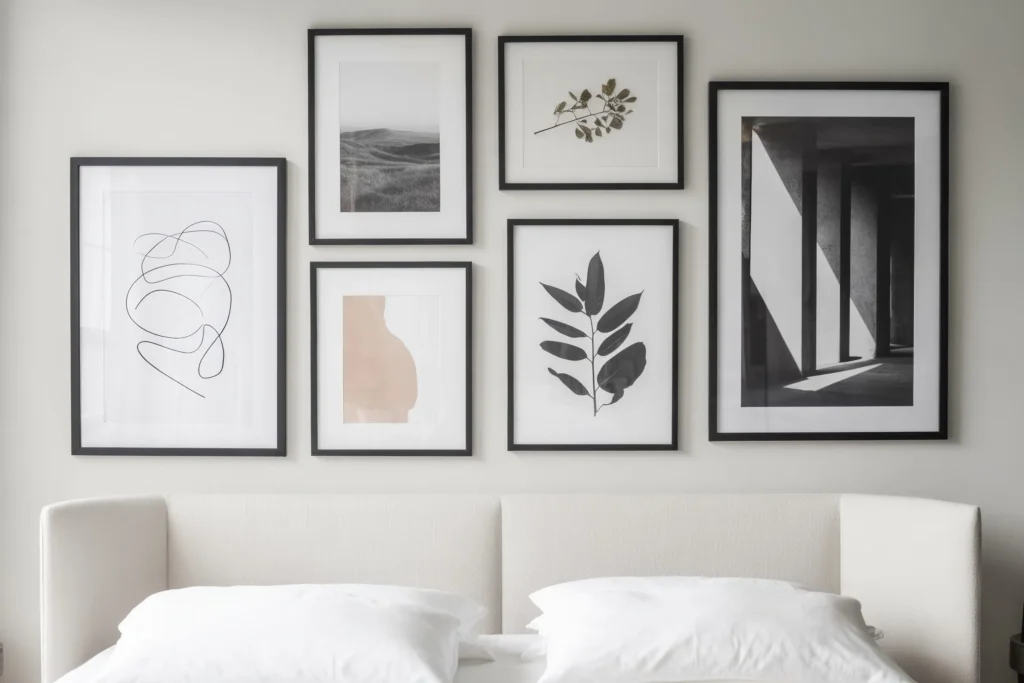
Start by choosing a cohesive theme for your art cluster: black-and-white photography, botanical prints, abstract shapes, or minimalist line art. Pick frames in the same color or material, even if the sizes vary. A mix of gold frames in different shapes and sizes reads as collected, not mismatched.
Lay out your arrangement on the floor first, then transfer it to the wall. The cluster should feel like a rectangle or square shape when viewed from across the room. Leave 2 to 3 inches of space between each frame for a clean, gallery-like appearance.
11. Add Indoor Plants for Natural, Organic Texture
Indoor plants add life, color, and organic texture to a bedroom in a way that no artificial decoration can match. A well-placed plant draws the eye, softens hard lines, and makes a room feel cared for. Designers use plants as one of the easiest ways to add depth to a space without spending much money.
You don’t need a jungle. Two or three plants in complementary pots is enough. A tall floor plant like a fiddle-leaf fig or snake plant in one corner, a trailing pothos on a shelf, and a small succulent on a nightstand create visual movement at different heights.
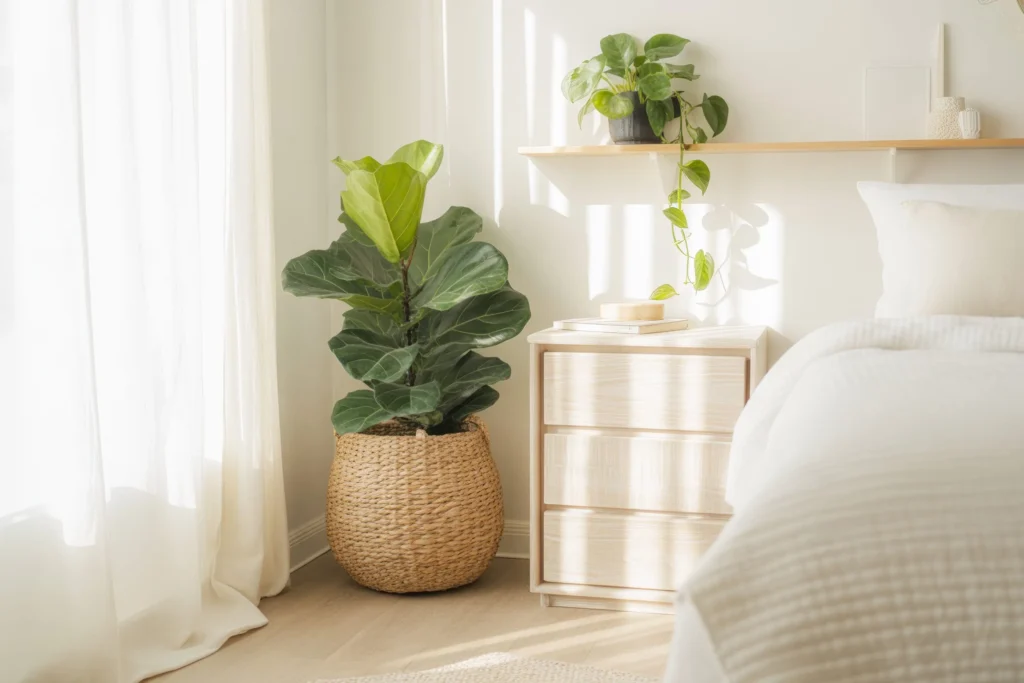
Choose pots that match your room’s color palette. Terracotta pots pair beautifully with warm, earthy interiors. Matte white ceramic suits minimal and Nordic spaces. Woven rattan baskets work with natural and bohemian aesthetics. The pot matters as much as the plant itself.
12. Replace Cheap Hardware with Brushed Gold or Matte Black
Swapping out generic silver or builder-grade hardware on dressers, wardrobes, and nightstands is one of the cheapest, highest-impact bedroom upgrades available. New drawer pulls and cabinet handles in brushed gold, aged brass, or matte black cost as little as $2-$5 per piece, but they signal quality immediately.
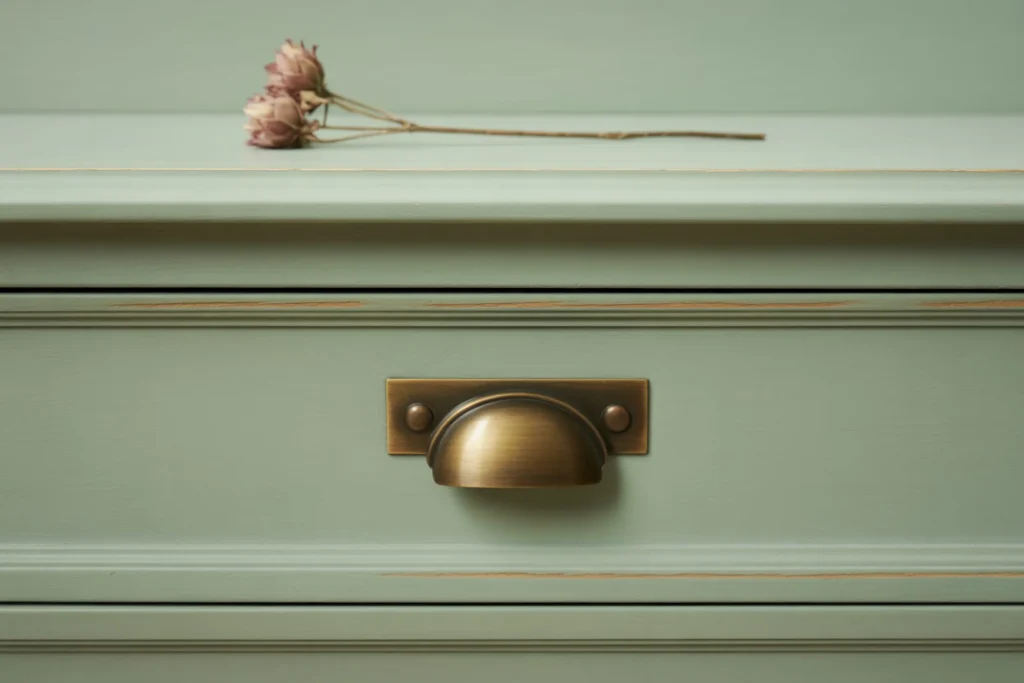
Hardware is the jewelry of a room. Just like a plain outfit looks more polished with the right accessories, a budget dresser looks far more expensive with quality hardware. It’s a detail most people don’t notice consciously, but everyone feels it.
Brushed gold works best in warm, earthy, or maximalist spaces. Matte black suits minimal, modern, or industrial aesthetics. Aged brass reads as vintage and collected. Pick one finish and use it consistently across all furniture in the room for a cohesive, curated look.
13. Use a Headboard to Anchor the Bedroom’s Main Wall
A headboard is the visual anchor of any bedroom, and adding one is the fastest way to make a bed look intentional and expensive. Without a headboard, even a great mattress and bedding setup feels unfinished. A padded, wooden, or rattan headboard instantly defines the space and gives the room a focal point.
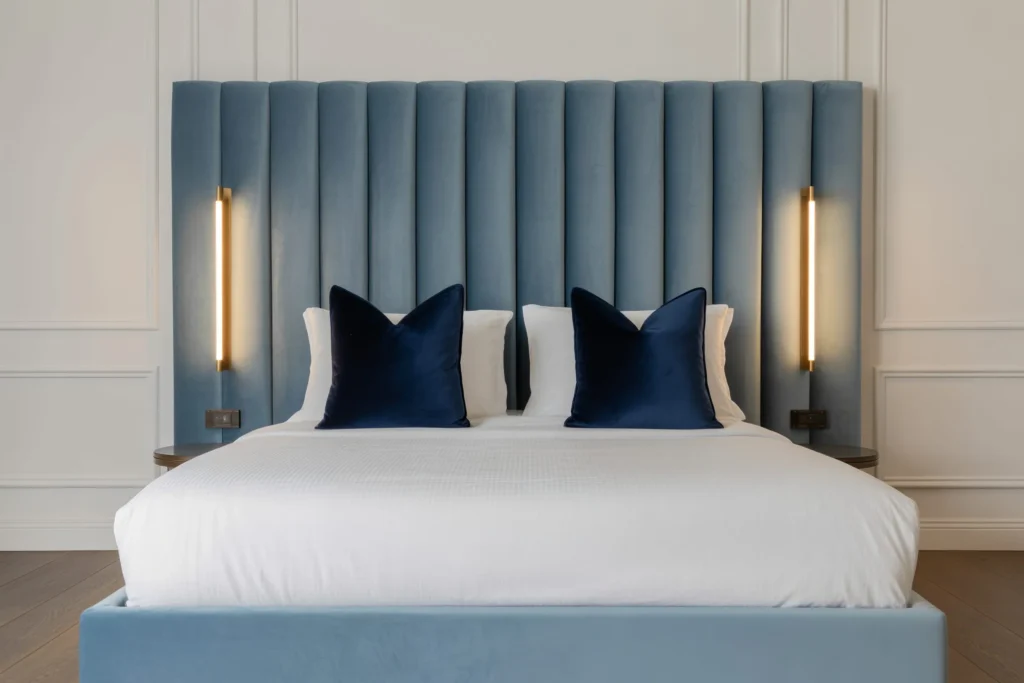
You don’t need to buy an expensive piece. A DIY fabric-wrapped headboard, a wooden panel cut to size, or even a floor-to-ceiling wainscoting panel behind the bed works just as effectively. The goal is to create a clear visual backdrop for the bed.
Upholstered headboards in linen, velvet, or boucle look the most luxurious. Neutral shades like warm white, oat, and charcoal are the most versatile. A tall headboard that reaches at least halfway up the wall behind the bed makes the ceiling feel higher and the room feel grander.
14. Introduce a Scent with Candles
A bedroom that smells good feels expensive, full stop. Scent is one of the most powerful sensory cues we have, and a room with a signature, calming scent immediately feels more intentional and cared for. A quality soy candle or reed diffuser in a clean, glass vessel also adds to the visual styling of a space.

You don’t need to spend a lot on designer candles. A simple ceramic or clear glass vessel with a clean-burning soy candle in a scent like sandalwood, cedarwood, fig, or bergamot reads as elevated. The vessel itself becomes part of the decor when placed on a tray or nightstand.
Reed diffusers work better in rooms where you can’t safely burn candles, and they maintain a consistent background scent throughout the day. Look for diffusers in simple, architectural glass bottles. A cluster of three diffusers in different heights on a dresser top doubles as a visual display.
15. Style a Corner Nook with a Chair and a Floor Lamp
A styled reading corner or accent corner in a bedroom adds function and visual interest that automatically makes the space look more expensive and thoughtful. A single armchair, a small side table, and a floor lamp in an empty corner transforms wasted space into a focal point. It signals that the room was designed with intention, not just filled with furniture.
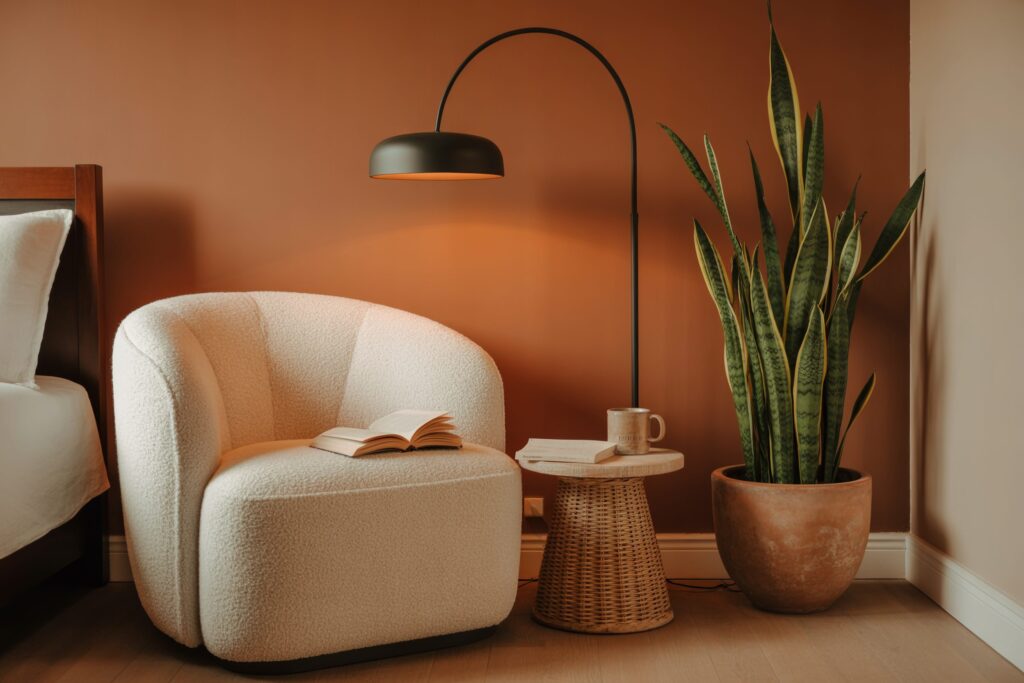
The chair doesn’t need to be large or expensive. A compact accent chair in a contrasting fabric, such as a boucle armchair in a room with linen bedding, creates textural variety that designers love. Pair it with a slim tripod or arched floor lamp, and a small table or stool for a book and a drink.
Add one plant near the floor lamp to bridge the gap between the chair arrangement and the floor. This creates a cohesive vignette, which is basically a small, self-contained scene. Professional designers use vignettes in every room to create visual stories that draw the eye.
Final Thoughts
A bedroom that looks expensive isn’t about how much you spend. It’s about how carefully you choose what goes in. Pick better textiles. Hang art with intention. Control clutter. Layer your light. Do those four things, and the room transforms itself.
Every idea on this list is doable in a weekend. Start with one or two that feel most relevant to your current space, and build from there. The result is a bedroom that feels like it belongs in a magazine, because you treated it like one.