Budget-Friendly Bedroom Decor Ideas for a Stylish Look
Most people assume a great-looking bedroom costs a lot. It doesn’t. The rooms you see on Pinterest and in design blogs aren’t expensive they’re intentional. And intentional is free. This guide gives you 14 specific, affordable ideas organized by impact, with real price ranges so you know exactly what you’re working with before you start.
Total budget you actually need: $50–$300 depending on how many ideas you apply. Some of these cost nothing at all.
1. Repaint One Wall The $35 Makeover That Changes Everything
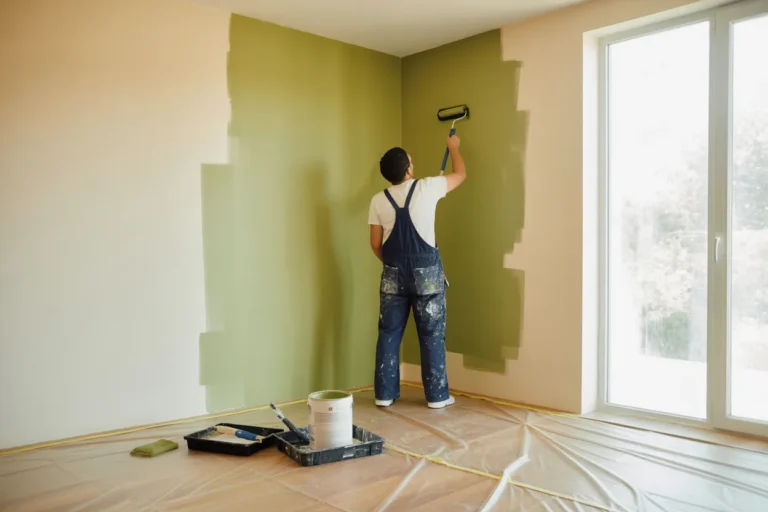
A single accent wall repainted in a new color is the highest-ROI change you can make in a bedroom. It takes one weekend, costs $25–$40 for a quart of paint, and completely shifts the room’s personality without touching a single piece of furniture.
The wall behind your bed is the right choice every time. It becomes the natural focal point when you walk in, anchors the bed visually, and works as the backdrop for everything else in the room.
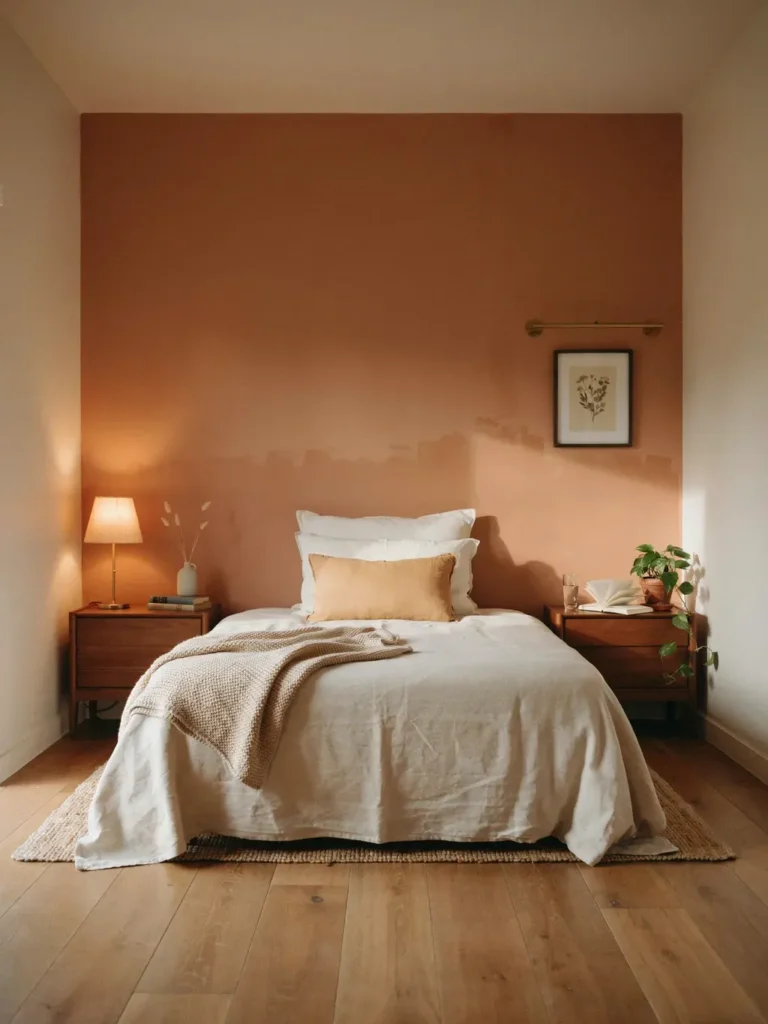
Color choices that work at this price point:
- Warm terracotta or rust (Sherwin-Williams “Cavern Clay” SW 7701): earthy, current, pairs with cream bedding and brass hardware
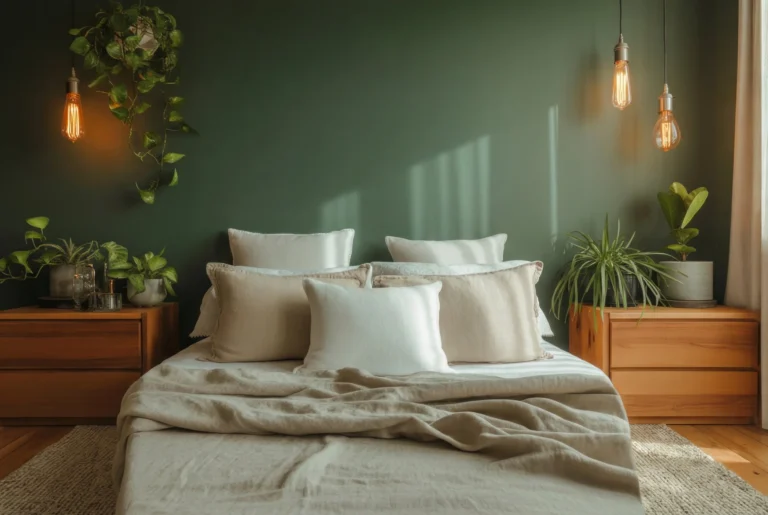
- Dusty sage green (Benjamin Moore “October Mist” 1495): calming, neutral enough to work with almost anything
- Deep navy or charcoal: dramatic and cozy best for rooms with decent natural light
- Warm off-white on all four walls: if the current color isn’t working, a full-room refresh with warm white (not stark white) costs under $70 and opens everything up immediately
Not ready to commit to paint? Peel-and-stick wallpaper from brands like Tempaper, NuWallpaper, or RoomMates runs $30–$50 per roll, covers a standard 10-foot-wide wall with 2–3 rolls, and peels off cleanly without damaging paint which makes it safe for renters.
What competitors miss: They say “repaint your walls” without telling you which wall, which color, or how much. That vagueness is why people freeze and do nothing.
2. Build a Gallery Wall for Under $30 Using Thrifted Frames
A gallery wall is the easiest way to fill a large blank wall with personality without buying expensive art. The secret is thrifted frames mismatched sizes, different finishes unified by a single coat of spray paint. Choose flat white, matte black, or warm gold, and suddenly a $3 thrift store frame looks intentional.
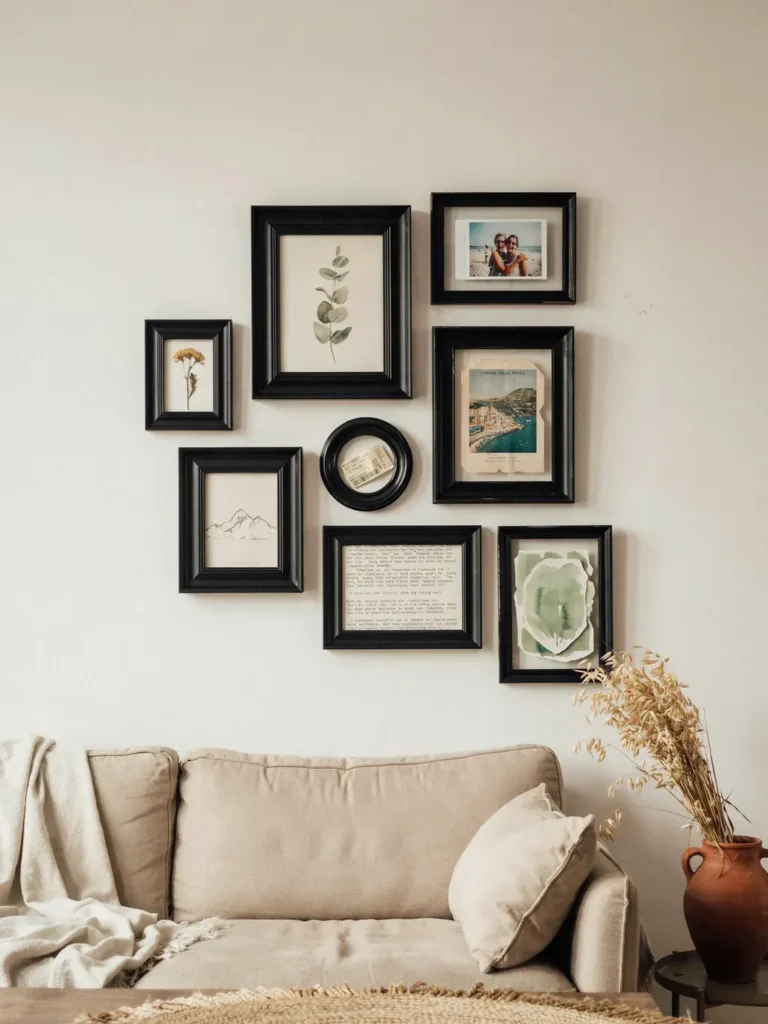
Step-by-step for under $30:
- Visit 2–3 thrift stores and pick up 6–10 frames in varied sizes ($0.50–$3 each)
- Spray paint them one consistent color (one can of spray paint = $6–$8, covers all frames)
- Fill frames with free printable art from Unsplash.com, Pexels.com, or Canva search “minimalist art print” or “botanical illustration” and print at home or at a print shop for $1–$3 per sheet
- Lay the arrangement on the floor first to test spacing before putting anything on the wall
- Hang using removable adhesive strips (Command strips, $8–$12) no tools needed, renter-safe
The content inside the frames doesn’t need to be “art” in any formal sense. Pressed flowers between glass panels, a postcard from a trip, printed lyrics to a song that matters to you, a page torn from a coffee table book all of these work. The frames are the design; what’s inside is personal.
3. Layer Your Bedding , The Trick That Makes a $50 Bed Look Like $500
The most common reason a bedroom looks flat and uninspiring isn’t the furniture or the walls it’s the bed. A single flat duvet thrown over a mattress never looks designed. Layering is what makes beds in hotels and design photographs look that way.
The layering formula:
- Fitted sheet white or neutral base, 200+ thread count for the look (Target, $20–$30)
- Flat sheet fold the top 8–10 inches back over the duvet for the “hotel fold”
- Duvet or comforter your main color; keep it solid or with one subtle pattern
- Folded throw blanket draped across the foot of the bed or folded in thirds at the bottom; adds texture and a second tone
- Pillows in three sizes two sleeping pillows in shams, two Euro squares behind them, two or three decorative pillows in front
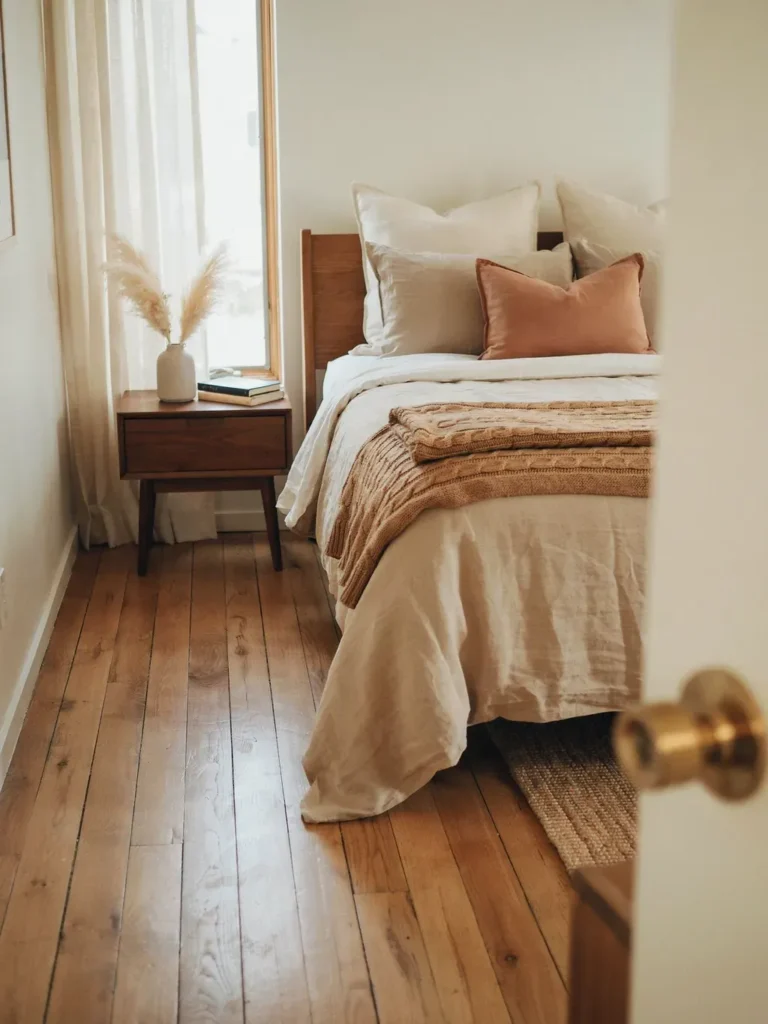
You don’t need to buy everything new. Thrift stores consistently carry quality pillow covers and throws at a fraction of retail. Buy the covers, not new pillows a $3 thrifted pillow cover slipped over an existing insert looks identical to a $40 retail cushion from a distance.
Color rule: Stick to 2–3 tones maximum. Pick one main color (usually the duvet), one neutral (usually white or cream for the flat sheet), and one accent (the throw or decorative pillows). More than three colors looks cluttered regardless of the budget.
4. Swap Drawer Hardware for $2–$5 Per Piece
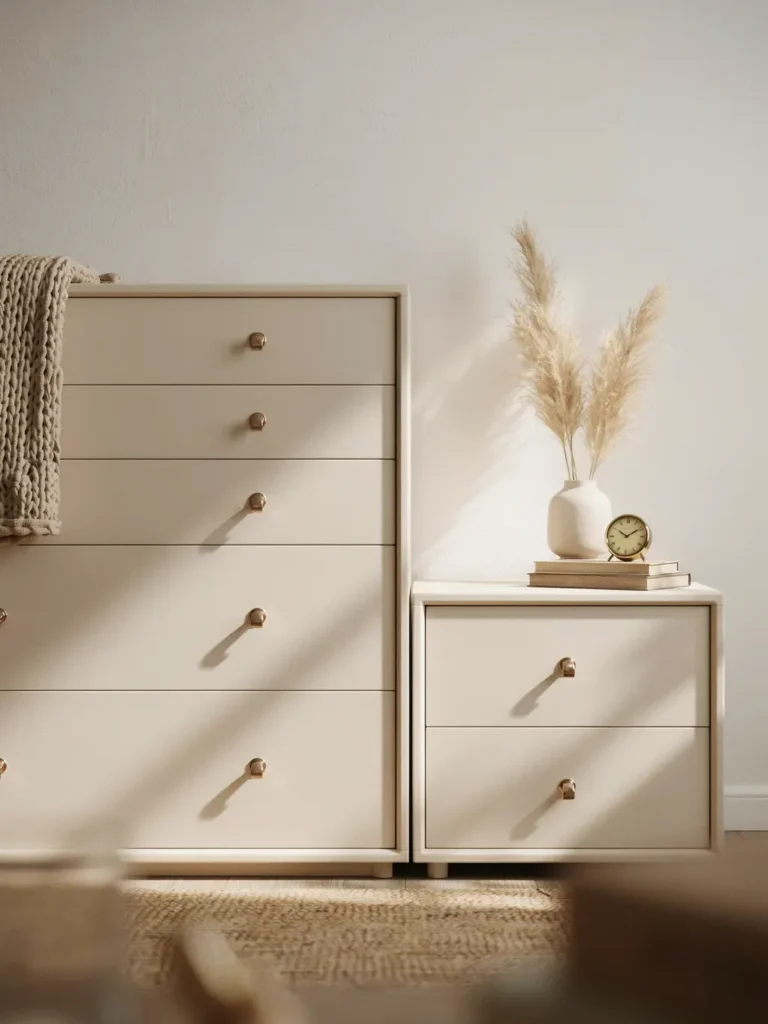
This is the most underrated change in bedroom decorating. Drawer pulls and knobs are tiny details with outsized visual impact they’re the first thing the eye lands on when looking at a dresser or nightstand, and cheap or dated hardware immediately makes furniture look cheap.
Replacing them costs almost nothing. New hardware at IKEA runs $2–$4 per piece. Amazon carries ceramic, brass, matte black, and brushed nickel options at $3–$8 per piece. Craft stores like Hobby Lobby and Michaels often have designer-style knobs at $2–$5 each.
What to choose:
- Brushed brass or antique gold: warm and current, works with cream, white, and earthy tones
- Matte black: modern and clean, pairs with any neutral palette
- White ceramic with a simple silhouette: classic, works in Scandi, minimalist, or cottage styles
- Aged bronze: vintage feel, suits warmer bedroom tones
The rule: pick one finish and use it consistently on every piece of furniture in the room. Matching hardware across the dresser, nightstand, and any other storage creates visual cohesion that reads as intentional design exactly what people mean when they say a room looks “put together.”
5. Hang Curtains at Ceiling Height, Not Window Height
This doesn’t cost anything if you already have curtain rods and curtains. It’s a matter of moving the rod up.
Mount the curtain rod 2–4 inches below the ceiling (or the crown molding if you have it), and extend the rod 8–12 inches past each side of the window frame. Use floor-length curtains even if your window only reaches halfway down the wall.
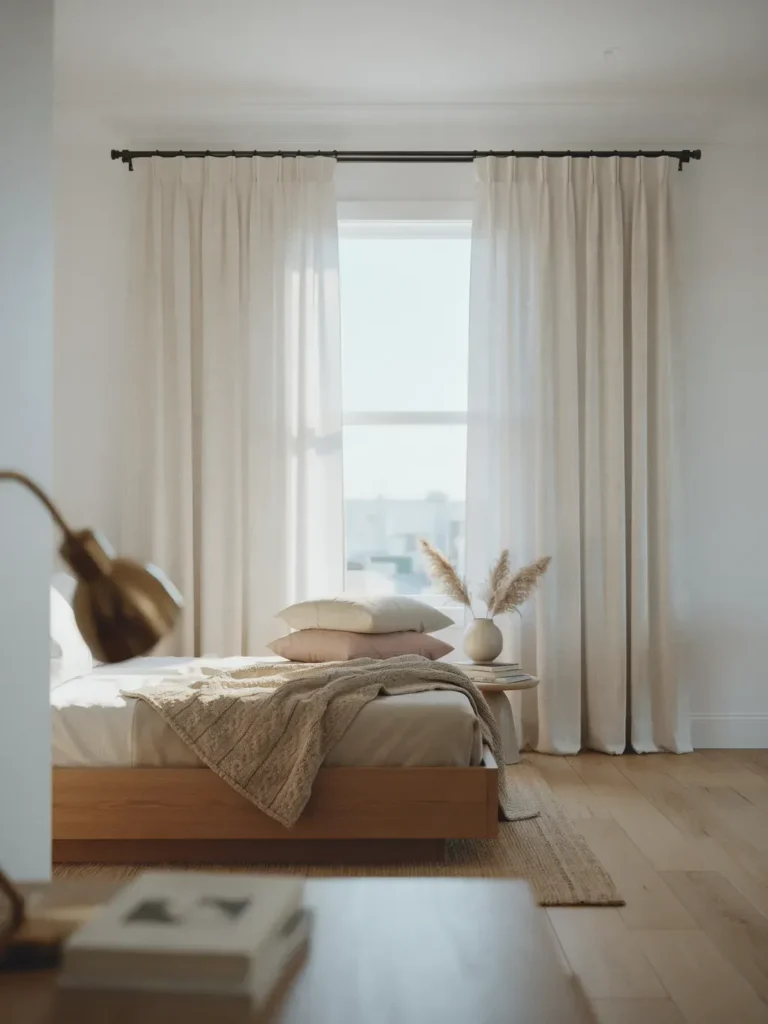
The visual effect: your window looks significantly larger, your ceiling reads as higher, and the room feels more proportioned all from repositioning the same hardware.
If you’re buying curtains, linen-look panels from IKEA (MAJGULL, HANNALILL) run $20–$40 per pair. Neutral white, off-white, or dusty blush work in almost any bedroom. Go with full-length panels (84 inches minimum for standard 8-foot ceilings; 96 inches for 9-foot ceilings) and let them just touch the floor or puddle slightly that slight pool of fabric is the editorial detail that makes cheap curtains look expensive.
6. Use Mirrors to Visually Double the Room
A well-placed mirror does two things at once: it reflects natural light across the room and creates the illusion of depth, making the room feel significantly larger than it is.
Where to find affordable mirrors:
- Facebook Marketplace and Craigslist: full-length mirrors frequently list for $10–$30
- IKEA NISSEDAL: $60 full-length mirror, one of the most consistently recommended budget picks
- Target and HomeGoods: leaning arch mirrors at $50–$80 during sales
- Thrift stores: decorative wall mirrors with ornate frames can be spray-painted to modernize for under $20 total
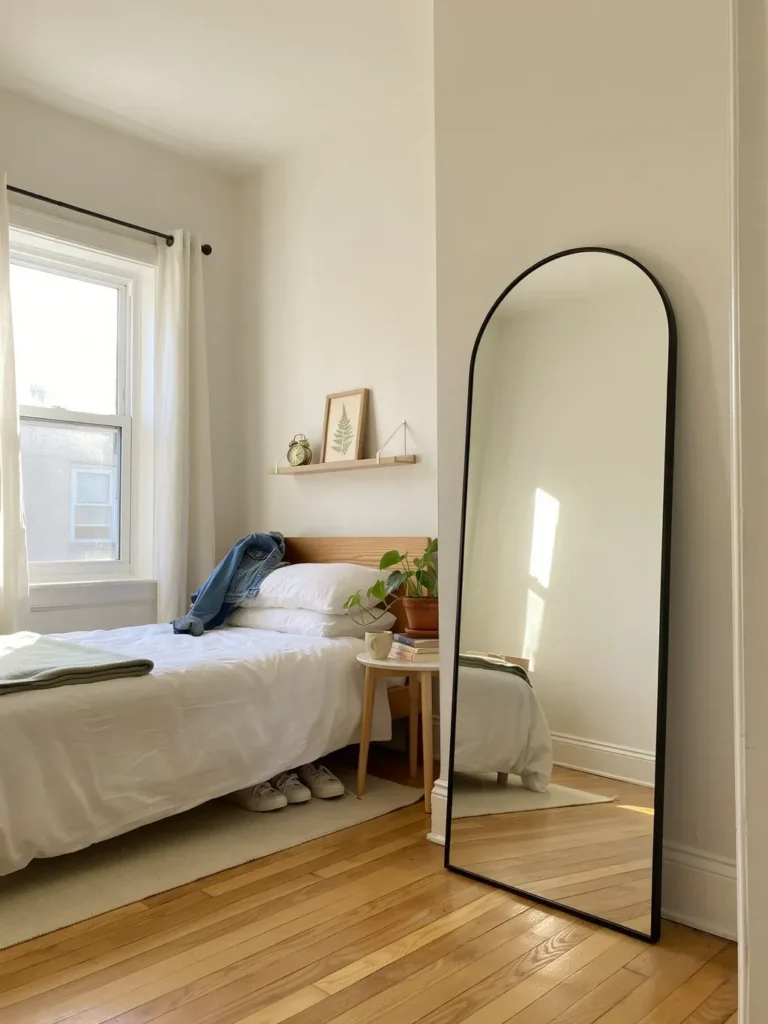
Placement: Position the mirror opposite a window whenever possible. This bounces natural light across the full room rather than just reflecting the wall. In a bedroom with limited natural light, this single change can make the room feel noticeably brighter without adding a single fixture.
A full-length leaning mirror also serves a practical function, getting dressed, which means it earns its place without needing to justify itself as “just decor.”
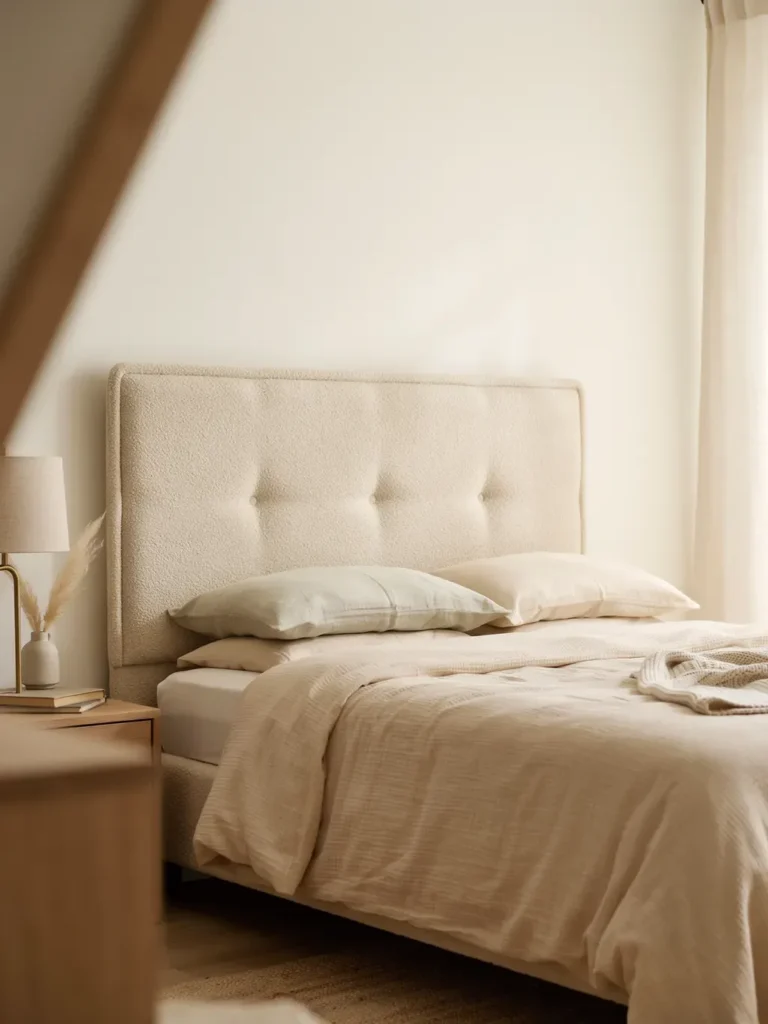
7. DIY a Fabric Headboard for Under $50
A headboard is the single item that most transforms a bed from “mattress on a frame” to “bedroom.” Without one, beds float in the room unanchored. With one, the whole space has a focal point.
A DIY upholstered headboard costs $35–$60 in materials and takes 2–3 hours with no power tools required.
Materials list:
- 1 sheet of plywood or MDF cut to your bed width (most hardware stores will cut for $5–$10): $15–$25
- 2-inch foam sheet cut to the same size: $10–$15 at fabric stores
- Quilt batting (1 layer): $5–$8
- Fabric of your choice (1.5–2 yards is enough for a queen): $8–$25 depending on type
- Staple gun with staples: borrow from a neighbor or buy for $12
Fabric options by style:
- Bouclé or teddy fabric: textured, cozy, very current in 2025–2026 decor
- Linen or canvas: clean, Scandinavian feel, works with neutral palettes
- Velvet: dramatic and luxurious-looking, especially in dusty pink, sage, or navy
- A bold print or pattern: works as your one statement piece if everything else is neutral
Mount directly to the wall behind the bed using heavy-duty adhesive strips (3M Command Large strips, rated for 16 lbs per pair) or wall anchors. The result looks custom and professional.
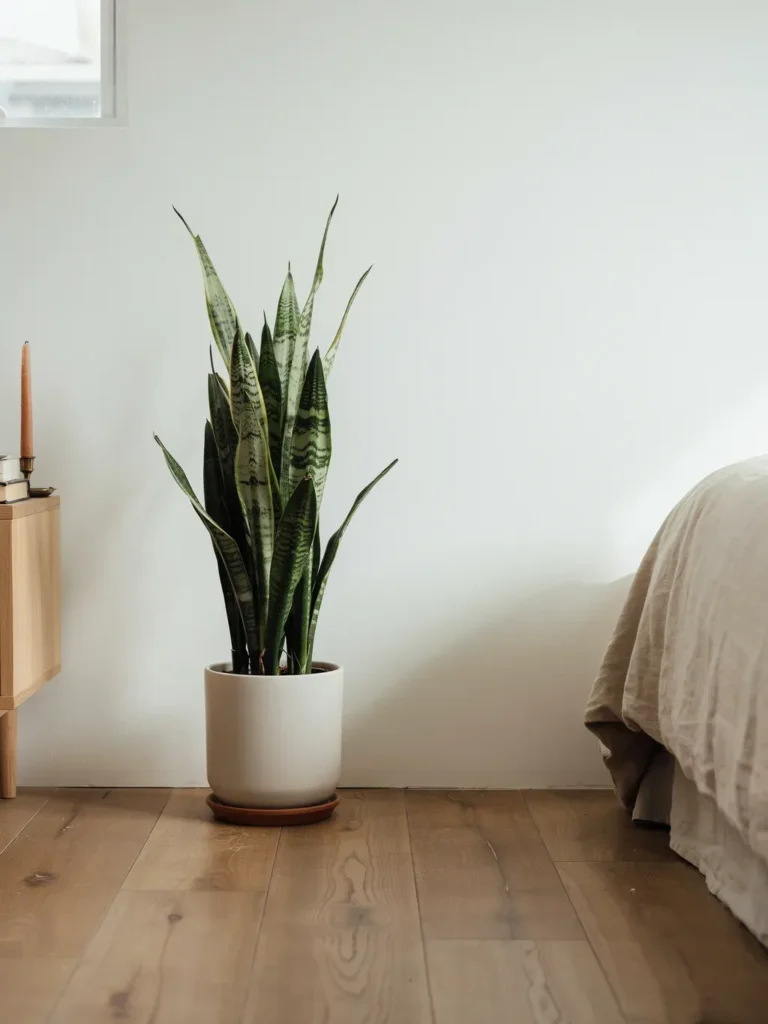
8. Add One Plant , The $5-$15 Detail That No Decor Item Replicates
Plants add something to a bedroom that manufactured decor simply cannot: they look genuinely alive. The organic color, the natural asymmetry, the slight movement – all of it reads as warmth in a way that a candle or a throw pillow never quite achieves.
One plant is all you need in a bedroom. Two at most. Beyond that it starts to read as a collection rather than a design decision.
Best plants under $15 for bedrooms:
- Pothos (devil’s ivy): $5–$8 at grocery stores and garden centers. Trails from shelves or nightstands. Tolerates low light and inconsistent watering. Nearly impossible to kill.
- Snake plant (Sansevieria/Dracaena trifasciata): $8–$15. Upright and architectural, perfect for floor corners. Filters air at night, which is a genuine sleep benefit.
- ZZ plant: $10–$15. Shiny dark leaves, extremely drought-tolerant, works in low-light bedrooms.
- Spider plant: $5–$8. Fast grower, produces hanging “babies,” does well in indirect light.
Put it in a simple terracotta pot or a matte white ceramic – available for $3–$6 at most garden centers or dollar stores. Keep the container simple; the plant is the decoration.
9. Replace Overhead Lighting With Layered Warm Lighting
This is the single most overlooked bedroom upgrade. The right lighting turns a mediocre room into a retreat. The wrong lighting – a single harsh overhead fixture – ruins even a well-designed one.
Warm-toned bulbs in the 2700K–3000K range (labeled “soft white” or “warm white” on the box) make every surface in a room look better: skin tones, fabric textures, wood grain, wall colors. Replace every bulb in your bedroom with these first. A 4-pack of warm LED bulbs costs $8–$12 and takes ten minutes.
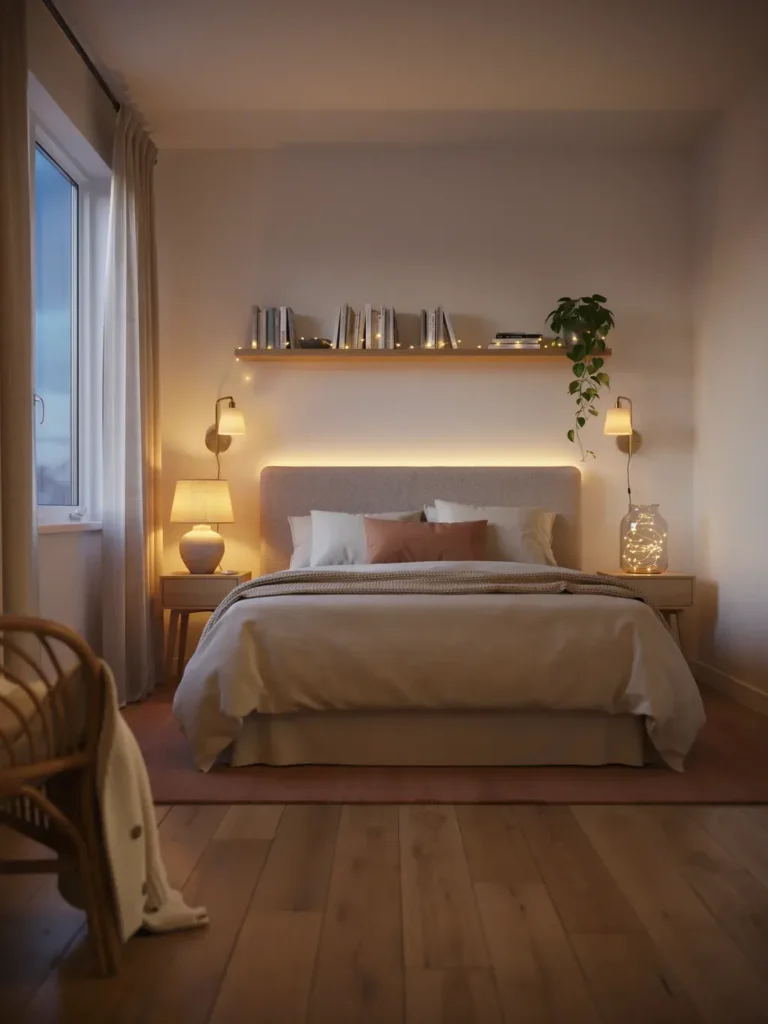
Affordable layered lighting options:
- Plug-in wall sconces ($15–$30 each at Amazon or IKEA): mount on each side of the bed using the included hardware or adhesive cable management strips. No electrician needed.
- Bedside table lamps ($20–$40): thrift stores frequently carry quality lamp bases. Buy a new shade if needed ($8–$15).
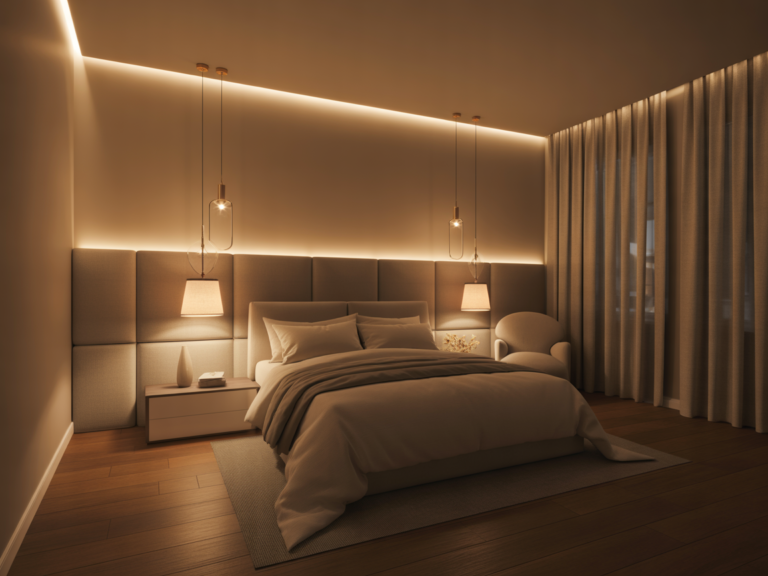
- LED strip lights behind the headboard ($12–$20 for a 16-foot reel): creates a warm glow behind the bed that’s the bedroom equivalent of golden-hour lighting. The effect is dramatic for very little cost.
- Fairy string lights ($8–$15): drape along a shelf, headboard, or in a glass vase for a soft ambient layer.
The goal is three light sources minimum: overhead for general brightness, bedside for reading, and one low ambient source for mood. Together they make a bedroom feel designed rather than functional.
10. Style Your Shelves With the Rule of Three
Open shelves that look curated are free decor. The same shelves, loaded with random objects, are visual clutter. The difference is arrangement.
The rule of three: Group items in odd numbers (three or five objects per cluster), vary the heights within each group, and leave intentional empty space between groups. Empty space isn’t wasted it’s what makes the objects you kept look considered.
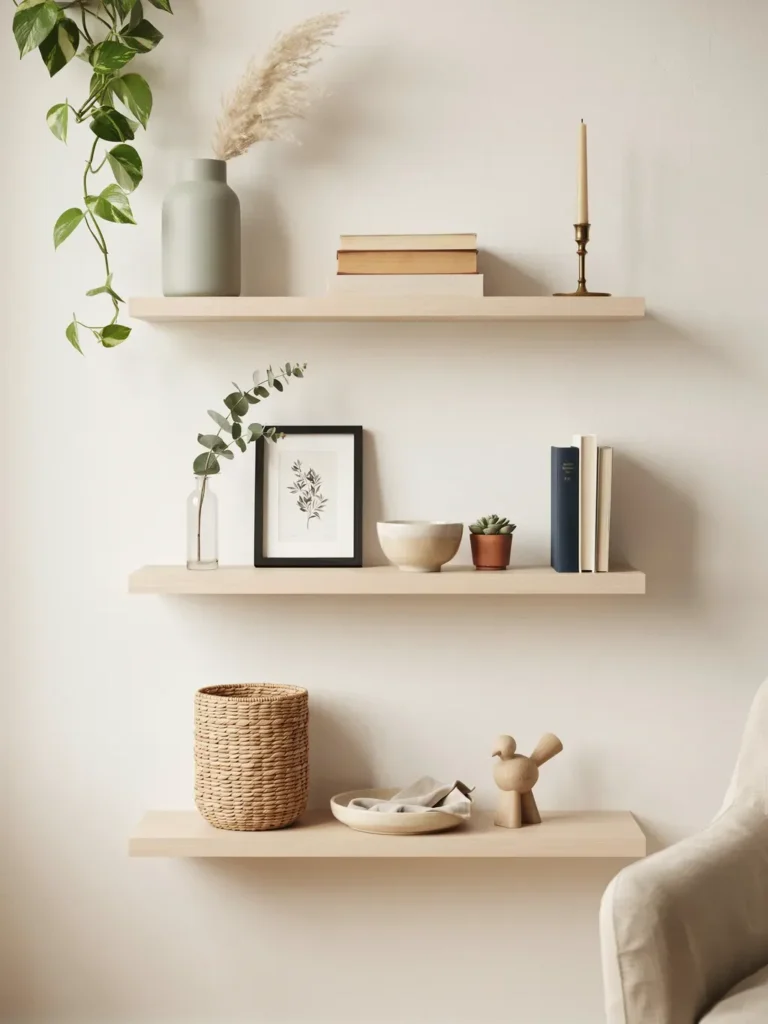
A shelf-styling formula that consistently works:
- Tall item (a vase, a plant, a candle in a tall holder): provides height
- Medium item (a small framed photo, a stack of books laid flat, a ceramic dish): grounds the tall item
- Small item (a small plant, a figurine, a candle): fills the visual gap at the base
Rotate through items you already own before buying anything new. Most people have everything they need in their bedroom, living room, or a storage box somewhere it just hasn’t been arranged yet.
Limit yourself to three colors on any single shelf: one neutral, one warm tone, one accent. The constraint forces cohesion.
11. Rearrange Your Furniture , The Free Upgrade
Before spending a dollar, move things around. The layout of a bedroom affects how spacious, functional, and comfortable it feels more than almost any decor decision.
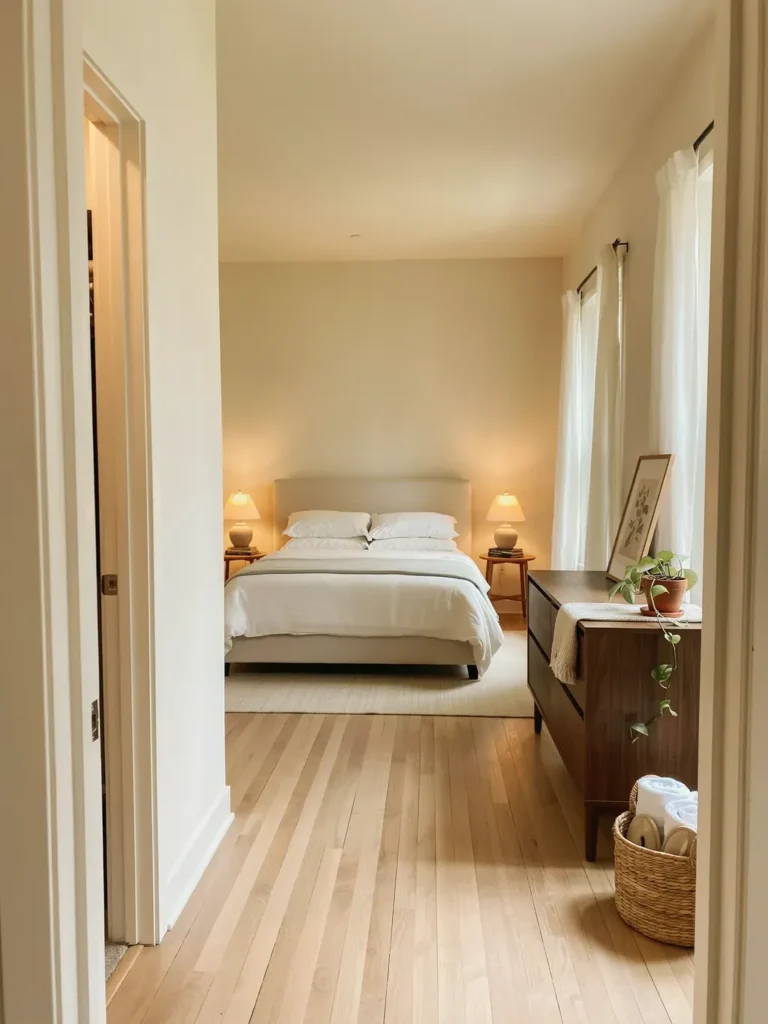
Standard rules that work in most bedrooms:
- Bed against the longest wall: maximizes circulation space and keeps the walking path clear from door to closet
- Bed away from the door: gives a clear sightline to the entrance without the foot of the bed blocking the path
- Dresser on the wall opposite the window: avoids blocking natural light and keeps the brightest wall reflective
- Nightstands equal distance from the wall: symmetry on both sides of the bed reads as more designed, even with mismatched tables
If your bedroom has felt cramped or awkward and you haven’t tried a different layout, do that before buying anything. Furniture in the wrong positions can make even a generously sized room feel small.
12. Upcycle Existing Furniture With Paint and New Hardware
Before replacing a dresser or nightstand that isn’t working, try transforming it. Chalk paint (Rust-Oleum Chalked, Annie Sloan) adheres to almost any surface without priming or sanding, dries in 30 minutes, and costs $15-$20 per quart, enough to cover a full dresser or two nightstands.
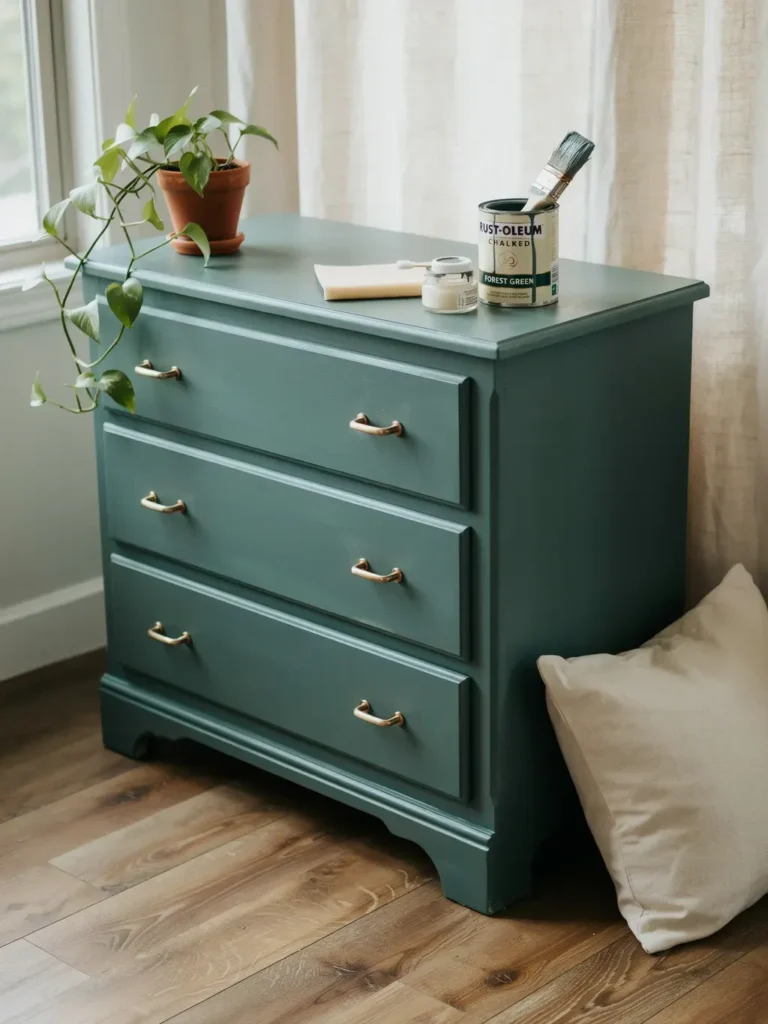
The most impactful combinations:
- Off-white or linen chalk paint + brushed brass hardware: classic, works in almost every bedroom style
- Dark forest green or navy + matte black hardware: dramatic, makes a piece look like a bespoke designer item
- Terracotta or warm rust + wooden handles: earthy and current, especially for boho or organic modern styles
- Matte white + white ceramic knobs: seamless and clean, disappears into the room and draws no attention to itself
Sand lightly between coats (220-grit sandpaper) and seal with a clear wax or water-based topcoat ($8–$12) to protect the finish. Total transformation cost per piece of furniture: $25–$45.
13. Create a Cozy Reading or Styling Corner
Even a 2-foot-wide corner of a bedroom can become a designed moment rather than dead space. A small chair, a floor lamp, and a side table – all thrifted – turn an awkward corner into the most photographed spot in the room.
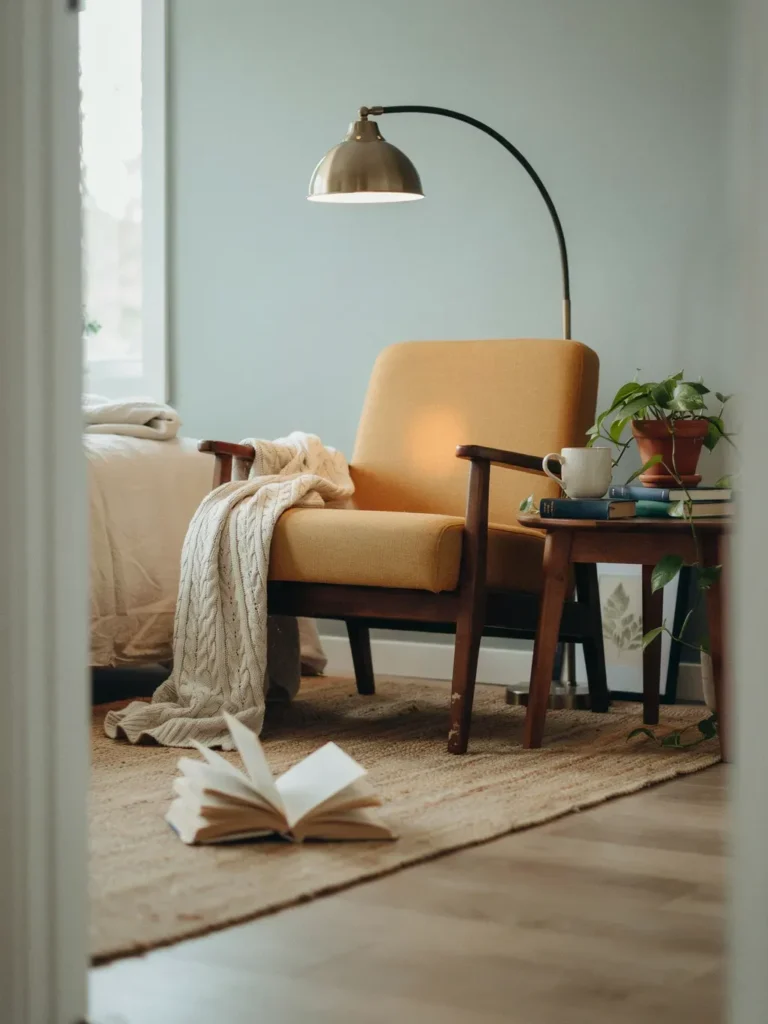
Corner styling on a budget:
- Thrifted accent chair: Facebook Marketplace or Craigslist, $20–$60. Reupholster the seat cushion with fabric and a staple gun if the frame is good but the fabric isn’t.
- Arc floor lamp: IKEA HEKTAR or similar, $30–$50. Provides task light for reading and adds vertical design interest.
- Small side table or plant stand: a stool, a wooden crate, or a thrifted plant stand, $5–$20.
- One throw and one plant: the final two layers that make the corner feel occupied rather than staged.
This corner also solves a common small bedroom problem: the “I don’t know what to put there” dead zone that exists in most rooms and becomes a dumping spot for clothes and bags.
14. Declutter Down to What Belongs , Then Style What Remains
The last idea on this list is the most important and costs nothing. A bedroom with $1,000 worth of new decor layered on top of clutter still looks like a cluttered bedroom. Decluttering is not minimalism – it’s making room for the things you chose to keep to actually be seen.
A practical audit process:
- Remove everything from every surface (shelves, nightstand, dresser top, floor)
- Sort into three piles: keep, store (seasonal/occasional use), remove from room entirely
- Return only items that have either a function or deliberate aesthetic purpose
- Count visible objects from the center of the room – if the number exceeds 20–25, edit further
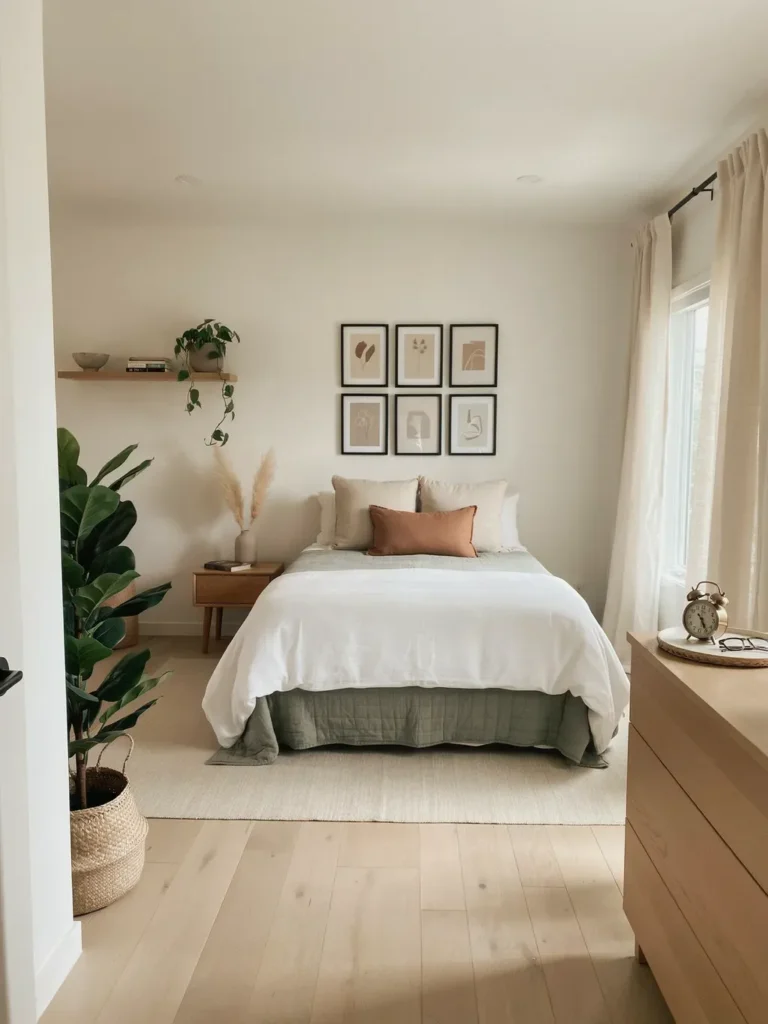
Once the room is clear, every idea from this list shows up properly. The gallery wall reads as art instead of noise. The layered bedding looks styled instead of piled. The plant looks placed instead of stuffed into a corner.
Clutter is the single most affordable thing to remove from a bedroom – and the change it makes is immediate.
Complete Budget Breakdown
| Idea | What You Need | Estimated Cost |
|---|---|---|
| Accent wall repaint | 1 quart paint + brush | $25–$45 |
| Peel-and-stick wallpaper | 2–3 rolls for one wall | $50–$90 |
| Thrifted gallery wall | Frames + spray paint + prints | $20–$35 |
| Bedding layers | Throw + pillow covers | $25–$60 |
| Drawer hardware swap | 6–10 new knobs or pulls | $15–$50 |
| Curtain rehang | Just move the rod (free) or new panels | $0–$50 |
| Thrifted mirror | Floor mirror from Marketplace | $10–$60 |
| DIY fabric headboard | Plywood + foam + fabric | $35–$60 |
| One plant + pot | Pothos or snake plant + ceramic pot | $8–$20 |
| Warm light bulbs | 4-pack soft white LEDs | $8–$12 |
| Plug-in sconces or lamps | Thrifted or budget retail | $20–$60 |
| Shelf styling | Items you already own | $0 |
| Furniture rearrange | None | $0 |
| Chalk paint upcycle | Paint + hardware + topcoat | $25–$50 |
| Reading corner | Chair + lamp + side table (thrifted) | $40–$120 |
Minimum total (2–3 ideas): $35–$100 Full transformation (8–10 ideas): $150–$300
Frequently Asked Questions
How can I decorate my bedroom cheaply?
Start with the free and near-free changes: rearrange the furniture, declutter every surface, rehang your curtains higher and wider, and swap out the light bulbs for warm 2700 K bulbs. These four things together cost $0–$15 and make a measurable difference before you spend anything on decor.
What is the cheapest way to make a bedroom look nice?
Paint is the cheapest room-changing upgrade: a quart of paint covers one accent wall for $25–$40. After that, rethink your bedding layers – adding a throw blanket and adjusting your pillow arrangement costs nothing if you already own the items.
How do I make my bedroom look aesthetic on a budget?
Pick one aesthetic direction first (minimalist, warm maximalist, boho, Scandinavian, dark romantic) before buying anything. The reason most budget bedrooms look incoherent is that people buy items they like individually without a unifying concept. Once you have a direction, every purchase decision becomes easier and the result looks curated rather than assembled.
What should I buy first when decorating a bedroom on a budget?
In this order: (1) warm light bulbs — $8–$12, immediate impact; (2) a throw blanket in your accent color — $15–$30; (3) new drawer hardware if your furniture has dated pulls — $15–$40. These three purchases alone can transform how a bedroom feels for under $80.
Can I decorate a bedroom for $100?
Yes. A realistic $100 bedroom transformation: warm bulbs ($10) + one accent wall quart of paint ($35) + thrifted full-length mirror ($25) + two plug-in sconces ($30) = $100 and a completely different room. That’s four of the ideas above applied at their minimum cost.
Where is the best place to find cheap bedroom decor?
Facebook Marketplace and Craigslist for furniture, mirrors, and lamps (often free or under $20). IKEA for curtains, throws, and lighting ($10–$50 range). Thrift stores for frames, plants, decorative objects, and lamp bases. Unsplash, Pexels, and Canva for free printable art. Dollar stores for candles, small ceramics, and storage baskets.
Does cheap bedroom decor look cheap?
Not if it’s cohesive. The difference between a room that looks “budget” and one that looks “thoughtfully designed on a budget” is consistency – matching metal finishes, a defined color palette of 2–3 tones, clean surfaces, and intentional arrangement. A room with three inexpensive items that work together always looks better than a room with ten expensive items that don’t.